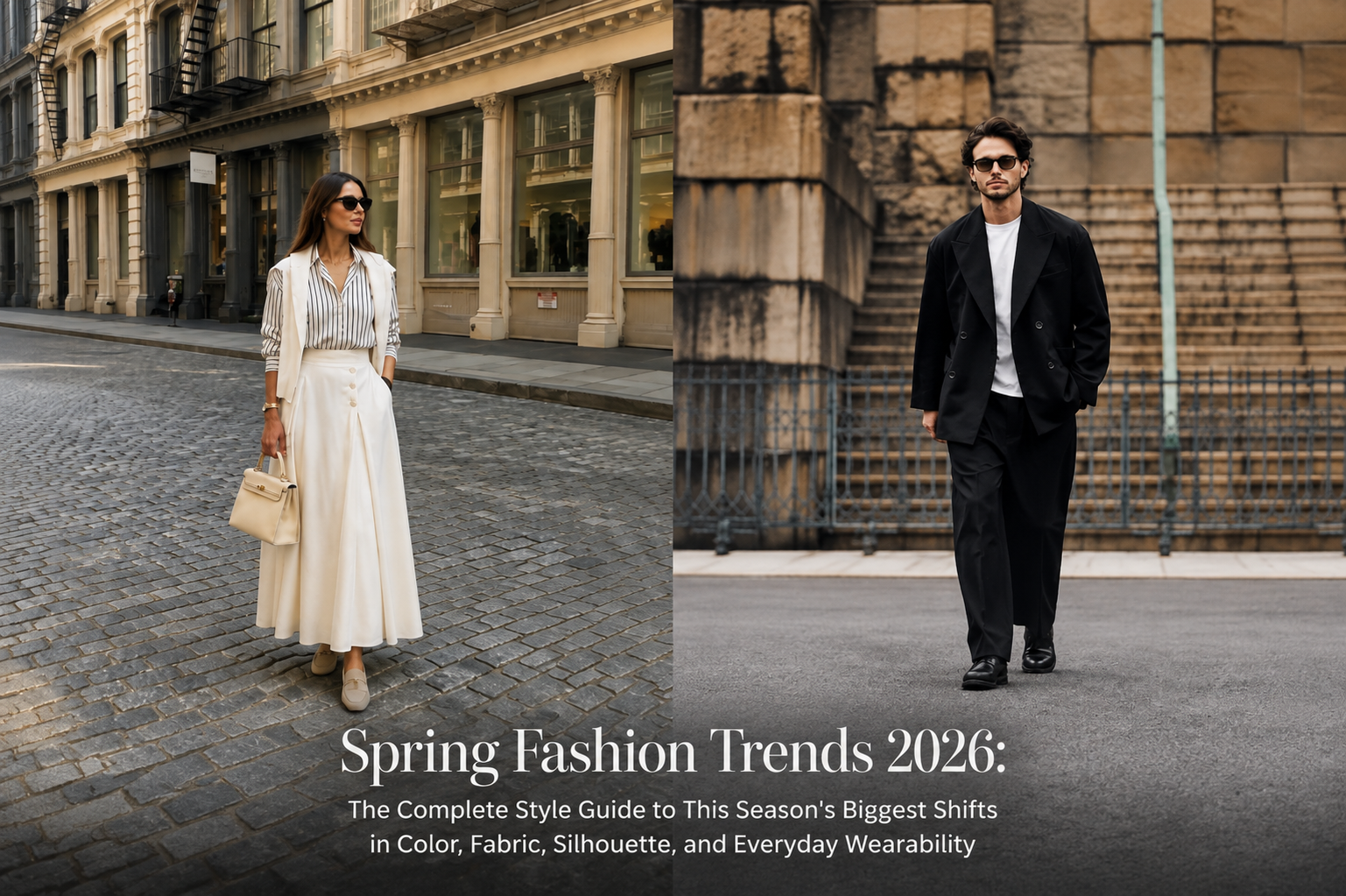
Every year around late winter, the same question starts popping up in group chats, styling appointments, and comment sections: what’s actually worth buying this season? The spring fashion trends 2026 cycle answers that question with a mix of comfort-driven tailoring, quietly bold color choices, and a noticeable shift away from fast, disposable pieces toward garments people actually plan to keep. This isn’t a season built on gimmicks. It’s built on wearability, texture, and a kind of confident simplicity that reads as expensive without necessarily being expensive.
What makes this guide different from a typical trend roundup is that it’s grounded in what’s actually showing up on runways, in showroom previews, and on the racks of retailers who plan collections a full year ahead. Fashion editors, stylists, and buyers have been talking about these directions since the fall 2025 shows, and by now the patterns are consistent enough to trust. Below, we break down every major shift defining spring fashion trends 2026, along with practical advice on how to actually wear this stuff without looking like you raided a mood board.
The Color Story: Soft Neutrals Meet Unexpected Pops
The dominant palette driving spring fashion trends 2026 leans heavily on what colorists call “quiet luxury neutrals” — think butter yellow, sage, oat, and a warm greige that photographs beautifully in natural light. These tones aren’t new to fashion, but their prominence this season is notably stronger, largely because consumers have grown fatigued with the loud maximalism of the early 2020s. Pantone’s Color of the Year selections and the color forecasting done by WGSN both point toward this same restrained, earthy direction, which tells us this isn’t a single brand’s aesthetic experiment but a broader cultural mood shift.
At the same time, designers haven’t abandoned color entirely. A handful of saturated accent shades — cherry red, cobalt blue, and a punchy coral — are showing up as intentional pops against otherwise neutral outfits. The effect is similar to how an interior designer might use one bold accent wall in an otherwise muted room. A stylist I spoke with while researching this piece put it well: “Nobody wants to wear head-to-toe neon anymore, but everybody still wants that one piece that makes people stop and look.” That balance between calm and controlled boldness is arguably the defining tension of spring fashion trends 2026, and it’s a genuinely useful principle for anyone building a capsule wardrobe this season.
Fabric and Texture: Why Natural Materials Are Having a Real Moment
If there’s one area where spring fashion trends 2026 diverges sharply from previous years, it’s fabric choice. Linen, raw silk, and lightweight wool blends are dominating both runway pieces and retail buys, driven largely by a growing consumer awareness around textile sustainability and garment longevity. Brands are also leaning into visible texture — slubbed weaves, subtle basketweave knits, and hand-finished seams — as a way of signaling quality in a market where shoppers have become far more skeptical of synthetic blends that pill, sag, or lose shape after a handful of wears.
This textural emphasis isn’t purely aesthetic. It solves a real problem. Fast fashion’s reliance on polyester and cheap viscose blends created a wardrobe crisis for a lot of people: closets full of clothes that look tired after one season. The solution designers are offering this spring is a return to fabrics with proven durability and natural fiber content, even at accessible price points. Retailers like Everlane, COS, and Reformation have all leaned into this shift, offering linen-cotton blends and recycled wool options that hold their structure. If you’re shopping spring fashion trends 2026 with an eye toward cost-per-wear, prioritizing fabric quality over trend-chasing silhouettes is probably the single smartest move you can make.
Silhouettes: Structured Ease Replaces Both Skinny and Baggy Extremes
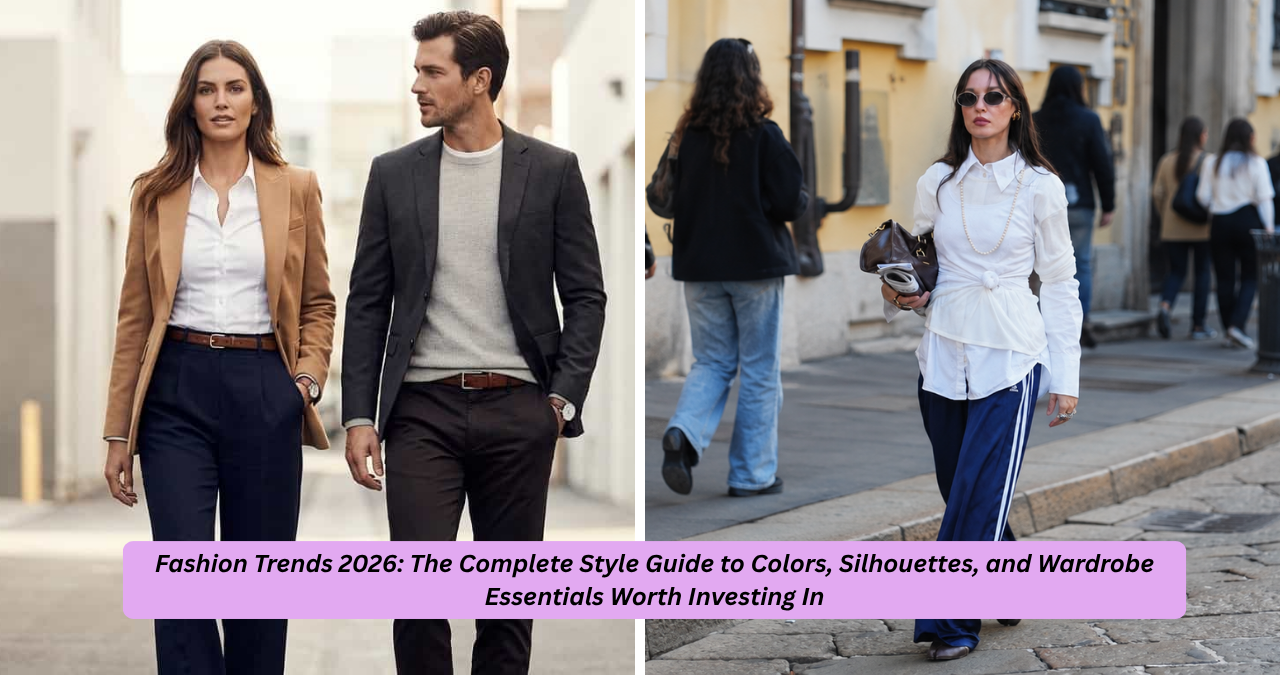
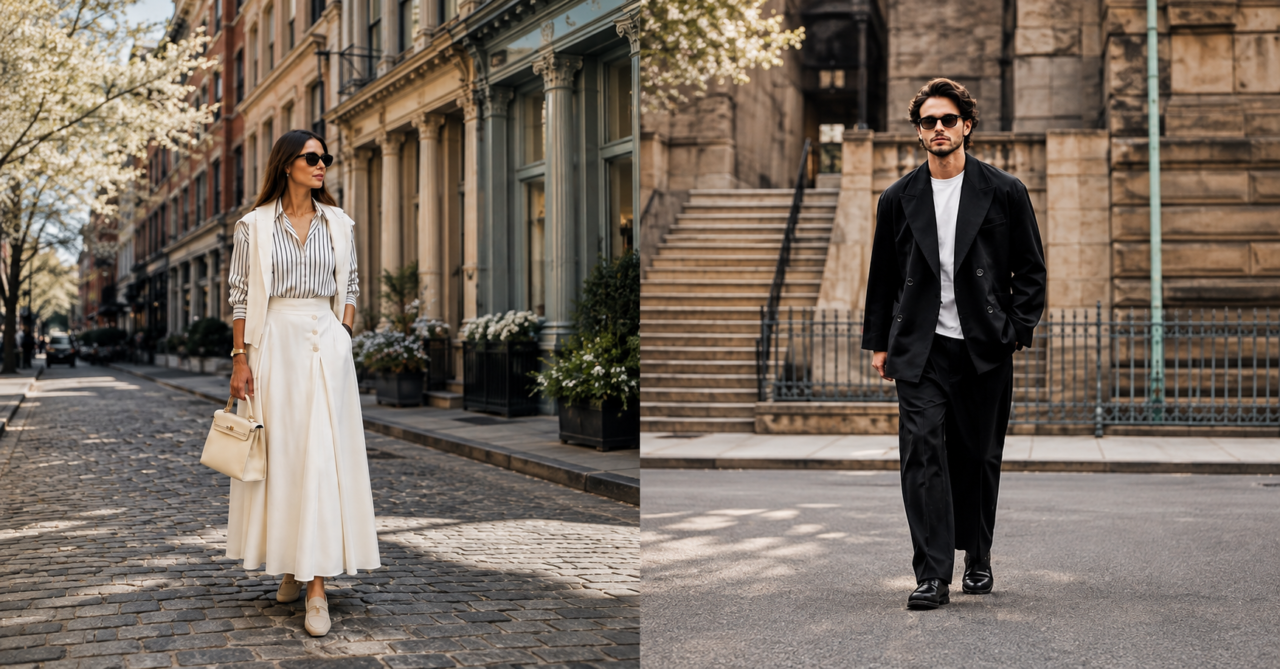
For the last several years, fashion has swung between two extremes — the ultra-skinny silhouettes of the 2010s and the oversized, borderline shapeless pieces that dominated the post-pandemic years. Spring fashion trends 2026 settle somewhere in the middle with what industry insiders are calling “structured ease.” Think tailored trousers with just enough room to move, blazers with a defined shoulder but a relaxed body, and dresses that skim rather than cling or swallow the frame.
This middle-ground silhouette works because it’s genuinely flattering across body types, which is part of why it’s showing up so consistently across brands ranging from Toteme to Zara. A well-cut pair of wide-leg trousers with a slight taper at the ankle, for instance, elongates the leg while still allowing for comfortable movement — something neither skinny jeans nor oversized joggers reliably deliver. The takeaway for anyone navigating spring fashion trends 2026 is that fit now matters more than fabric quantity. A blazer that’s tailored at the shoulder but loose through the body will always look more intentional than one that’s simply oversized everywhere.
Denim Reimagined: Wide Legs, Raw Hems, and Vintage Washes
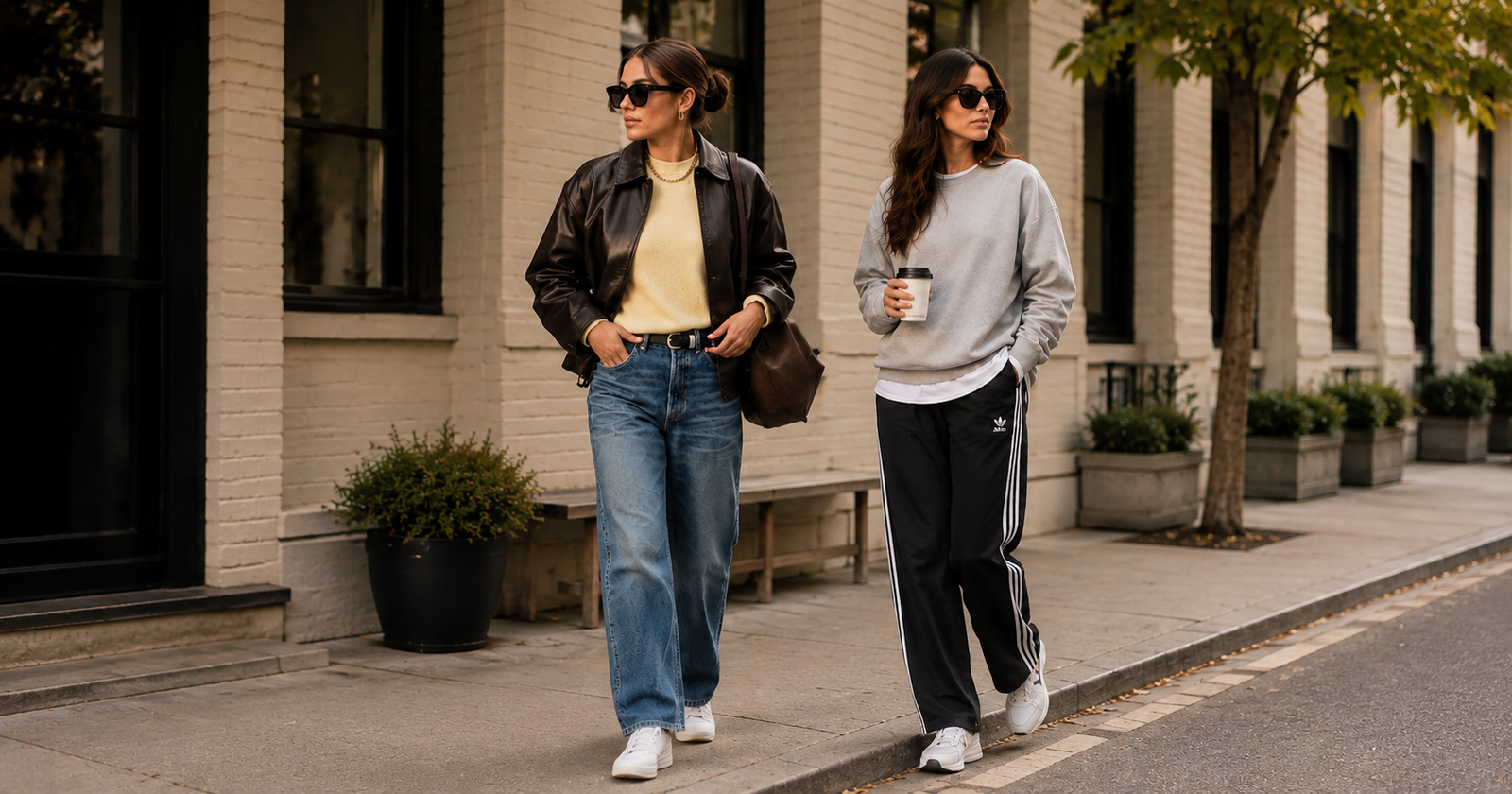
Denim remains a cornerstone of nearly every seasonal fashion conversation, and spring fashion trends 2026 is no exception. Wide-leg and barrel-shaped jeans continue their reign, but this season introduces more textural variety — raw, unfinished hems, vintage-inspired mid-blue washes, and a resurgence of low-slung waistlines paired intentionally with cropped tops for a Y2K-adjacent silhouette. Brands like Levi’s and Agolde have both released collections leaning into this exact combination, which suggests staying power rather than a fleeting micro-trend.
What’s particularly interesting is how denim is being styled this season — not as a standalone casual piece, but dressed up with tailored blazers, silk camisoles, or structured button-downs. This “elevated denim” approach reflects a broader theme running through spring fashion trends 2026: the blurring of formal and casual dress codes. Workwear no longer means a suit, and dressing up no longer means avoiding denim altogether. It’s a genuinely practical shift for anyone whose week includes both office meetings and weekend errands, because it means fewer separate wardrobe categories to maintain.
Accessories and Footwear: Function Meets Statement
Accessories this season are doing double duty — they need to look good and actually hold up to daily use. Structured leather totes, woven raffia bags, and mini crossbody styles with adjustable straps are dominating the accessory conversation within spring fashion trends 2026, largely because they solve a real logistical problem: people want a bag that photographs well but also fits a laptop, a water bottle, and everything else modern life requires.
Footwear tells a similar story. Ballet flats have made a full comeback, but this season’s iterations come with slightly reinforced soles and pointed or squared toes rather than the delicate, flimsy versions of a decade ago. Meanwhile, low-heeled mary janes and woven sandals are picking up momentum as transitional options between winter boots and summer sandals. The common thread across every accessory category in spring fashion trends 2026 is comfort-conscious design — nobody’s willing to sacrifice their feet or their back for a trend anymore, and brands have clearly gotten the memo.
Sustainability and Slow Fashion: A Structural Shift, Not Just a Marketing Angle
It would be incomplete to discuss spring fashion trends 2026 without addressing the sustainability conversation underpinning nearly every other trend on this list. Resale platforms like The RealReal and Vestiaire Collective have seen consistent year-over-year growth, and that consumer behavior is directly influencing how brands design and market new collections. Capsule wardrobes, fabric transparency labeling, and “cost-per-wear” thinking have moved from niche sustainability circles into mainstream shopping habits.
This matters because it changes the calculus of what’s actually “trendy.” A trend that requires constant repurchasing to stay current is increasingly viewed as a red flag rather than a selling point. Instead, spring fashion trends 2026 favor pieces designed to transition across seasons — a linen blazer that works in March and again in September, a pair of well-constructed trousers that don’t scream “2026” so loudly they’ll feel dated by 2027. The problem fast fashion created was disposability; the solution this season is offering is intentionality, and it’s a welcome correction for anyone tired of constantly refreshing their closet.
How to Actually Shop This Season Without Overspending
Understanding spring fashion trends 2026 is one thing — translating that into a smart shopping strategy is another. The most effective approach is to identify two or three trends from this list that genuinely fit your existing wardrobe and lifestyle, rather than trying to chase every single shift at once. If you already own several neutral basics, investing in one or two accent-colored pieces will stretch much further than an entirely new seasonal wardrobe.
It’s also worth prioritizing fit over fabric buzzwords when working with a limited budget. A well-tailored trouser in a blended fabric will often outperform a “trendy” linen piece that doesn’t fit properly, especially since alterations are widely available and relatively affordable. The goal with spring fashion trends 2026, much like any seasonal shift, isn’t to overhaul everything — it’s to make a handful of strategic additions that update your existing wardrobe without requiring a complete reset.
| Trend Category | Key Pieces | Best For |
|---|---|---|
| Color Palette | Butter yellow, sage, oat, cherry red accents | Everyday layering and office wear |
| Fabric | Linen, raw silk, recycled wool blends | Durability and warm-weather comfort |
| Silhouette | Structured-ease blazers, tapered wide-leg trousers | Flattering fit across body types |
| Denim | Wide-leg, raw hem, low-rise with cropped tops | Casual-to-dressy transitions |
| Footwear | Reinforced ballet flats, woven sandals, mary janes | All-day comfort without sacrificing style |
| Accessories | Structured totes, raffia bags, mini crossbodies | Function-first daily use |
Frequently Asked Questions
What are the biggest spring fashion trends 2026 to know about?
The standout directions this season include soft, earthy neutrals paired with occasional bold accent colors, natural fabrics like linen and raw silk, structured-ease silhouettes that avoid both skinny and oversized extremes, wide-leg denim with textural details, and function-forward accessories. Together, these elements define the overall mood of spring fashion trends 2026, which favors intentional, wearable pieces over fast-moving micro-trends.
Are skinny jeans coming back as part of spring fashion trends 2026?
Not really. While denim silhouettes evolve constantly, current spring fashion trends 2026 data points overwhelmingly toward wide-leg, barrel, and straight-leg cuts rather than a skinny jean revival. Some brands are experimenting with slightly tapered ankles, but the dominant shape remains relaxed through the leg rather than fitted throughout.
What colors are trending for spring fashion trends 2026?
Soft neutrals like butter yellow, sage green, and warm oat tones anchor most collections, while cherry red, cobalt blue, and coral serve as intentional accent colors. This combination allows for versatile, mix-and-match wardrobes rather than outfits built entirely around a single seasonal hue.
How can I incorporate spring fashion trends 2026 on a budget?
The most cost-effective strategy is choosing two or three trends that genuinely complement pieces you already own, rather than replacing your entire wardrobe. Prioritizing fit and fabric quality over trend-specific items, and considering resale platforms for higher-quality basics, both help stretch a limited budget further while still updating your look meaningfully.
Is sustainability actually part of spring fashion trends 2026, or is it just marketing?
It’s a genuine structural shift rather than pure marketing language. Growth in resale platforms, increased demand for fabric transparency, and a broader consumer move toward cost-per-wear thinking have all measurably influenced how brands design and price their spring 2026 collections, making sustainability a real driver behind this season’s aesthetic choices rather than an afterthought.
Final Takeaway
Spring fashion trends 2026 ultimately reward thoughtfulness over impulse. The season’s defining elements — soft neutral palettes, natural fabrics, structured-ease silhouettes, and function-first accessories — all point toward a wardrobe philosophy built on longevity rather than novelty for its own sake. Rather than chasing every micro-trend that surfaces this spring, the smarter move is identifying which of these shifts genuinely fit your lifestyle and building outward from there. Do that, and you’ll end up with a wardrobe that doesn’t just follow spring fashion trends 2026, but actually holds up well beyond the season itself.