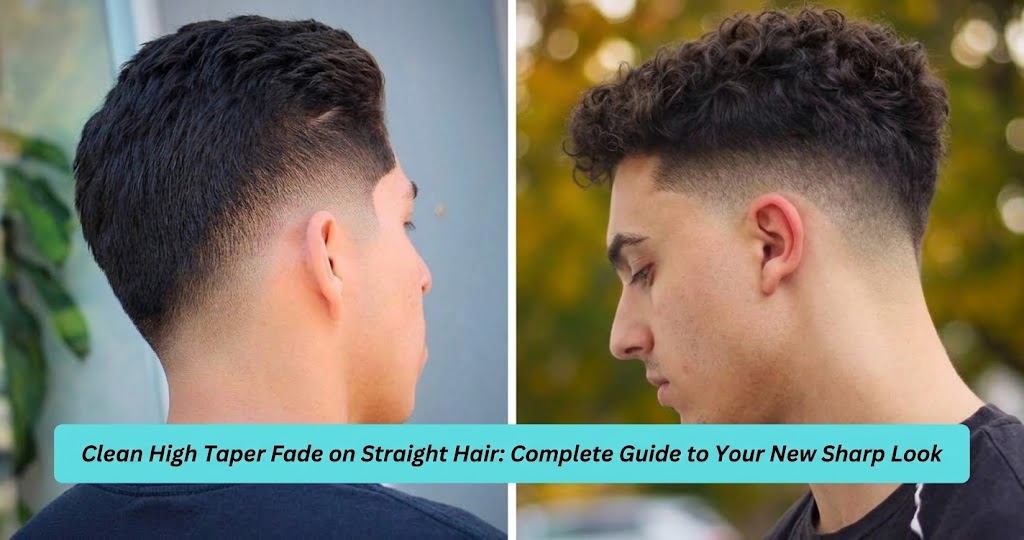
Few haircuts look as deliberate as a high taper fade straight hair combination. The sides and back melt from short to almost nothing, the top stays clean and controlled, and the whole shape reads as polished without looking like you tried too hard. It works in a boardroom, at a wedding, and on a Saturday night, which is why barbershops from London to Los Angeles keep it near the top of their most requested list.
Straight hair adds a wrinkle, though. Fine, flat strands show every clipper line, every uneven blend, and every patch where the taper wasn’t finished properly. That means a bad haircut can’t hide, but a good one looks spectacular. This guide covers what the cut is, how it behaves on straight strands, how to talk to your barber, how to style it, and how to keep it looking fresh between appointments.
What Is a High Taper Fade on Straight Hair?
A high taper fade is a haircut where the hair gradually shortens from the top of the head down toward the neckline and around the ears. “High” means the fade begins up near the temple and parietal ridge, roughly where the head starts to curve inward, rather than low around the ears and nape. A high taper fade straight hair cut keeps the length on top and blends the sides and back into skin or a very tight guard, usually at or near a zero-to-one setting on clippers like the Wahl Senior or Andis Master.
The word “taper” matters. A taper leaves some hair at the very bottom, so the neckline stays soft and natural. A full skin fade, by contrast, goes all the way to bare skin. Many people confuse the two, but the taper is the more conservative option and grows out more gracefully, which is why it suits offices and dress codes better than a dramatic bald fade.
Think of it like a sunset gradient. A well-blended fade should have no visible stripes, just a smooth shift in density from dark to light. When it’s done properly on straight hair, you shouldn’t be able to point to the spot where one guard ends and the next begins.
Why Straight Hair Changes the Way a Fade Looks
Straight hair lies flat against the scalp and reflects light evenly, so any imperfection in the blend becomes obvious. Curly or coily textures naturally break up the line of a fade, which hides small mistakes. Straight strands don’t. A barber working on a fine, straight-haired client has to be more precise with clipper-over-comb work and scissor blending than they would with a wavy client.
Density and hair thickness matter just as much as direction. Thick, coarse straight hair, common in many East Asian clients, tends to stand up when cut short and can look bristly on the sides. Fine, thin straight hair, more common in people of Northern European descent, can look patchy where the scalp shows through. The same high taper fade straight hair request will therefore look different on two different heads, and a skilled barber adjusts the starting height and guard sequence accordingly.
There is also the cowlick factor. Many people with straight hair have a crown swirl or a front hairline that grows in a stubborn direction. Because the top of a taper fade is often kept long enough to style, you need to plan around those growth patterns instead of fighting them.
High Taper vs Low Taper vs Skin Fade: A Quick Comparison
When comparing your options, the high taper fade straight hair style sits between subtle and bold. The table below shows how it stacks up against the other popular choices, so you can decide before you sit in the chair.
| Haircut | Where the Fade Starts | Skin Visible | Best For | Typical Touch-Up Window |
|---|---|---|---|---|
| Low taper | Just above the ear and nape | Minimal | Conservative offices, first-time fade wearers | 3 to 4 weeks |
| Mid taper | Around the temple line | Light to moderate | Balanced everyday look | 2 to 3 weeks |
| High taper | Upper temple, near the parietal ridge | Moderate | Clean, modern, high-contrast style | 2 to 3 weeks |
| High skin fade | Upper temple, down to bare skin | High | Bold, sharp, fashion-forward looks | 1 to 2 weeks |
| Classic scissor taper | Blended with shears, no fade | None | Traditional, longer cuts | 4 to 6 weeks |
The main trade-off is contrast versus upkeep. The higher the fade climbs, the sharper the look, but the faster it grows out. A high taper gives you noticeable definition without the constant maintenance of a skin fade, which is exactly why so many barbers recommend it for people who want a strong shape but a realistic grooming routine.
Face Shapes That Suit a High Taper Fade
An oval face is the easiest canvas, since almost any proportion works. A round face benefits the most, because the high sides create the illusion of length and add angles where the face is naturally soft. A square face pairs well with a high taper too, provided the top isn’t cut too boxy, since a slightly textured crop softens the jawline. Long or oblong faces need more caution, because a very high fade can make the head look narrower and longer, so a mid taper with more volume on top is usually smarter.
Forehead height is another quiet factor. If your hairline is receding, a high taper can emphasize it, so ask your barber to keep the top slightly longer and brush it forward. If you have a full hairline and strong temples, the cut will frame your face cleanly. Ears also play a role. Prominent ears look more pronounced with a very high fade, so a lower start point can balance them.
A saying many barbers repeat is, “The fade frames the face, but the top tells the story.” That’s why the length and shape on top deserve as much thought as the taper itself.
How to Ask Your Barber for the Perfect Cut
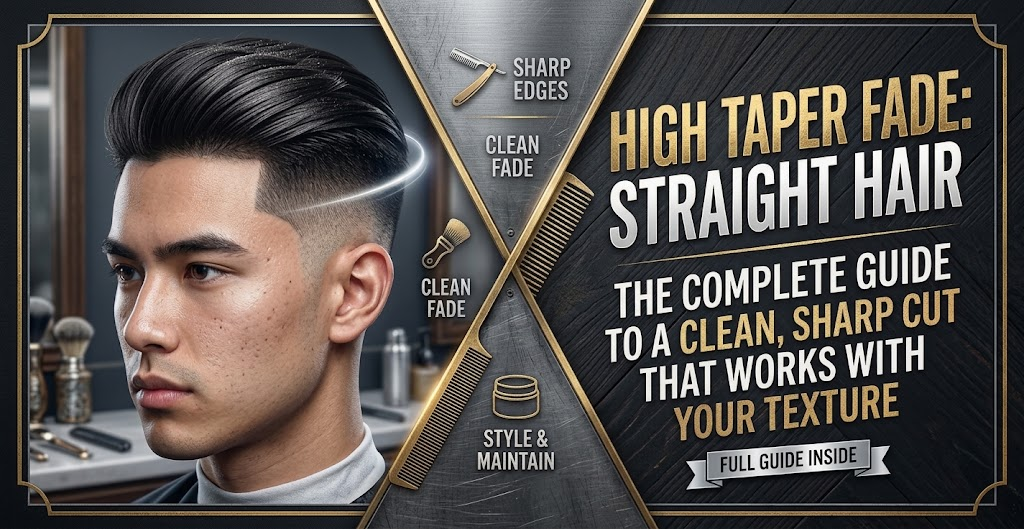
Bring a reference photo, but don’t rely on it alone. Explain the parts in plain language: where you want the fade to begin, how short it should end, and how much length you want on top. A clear script for a high taper fade straight hair request sounds like this: high taper starting at the temple, a number one guard at the sides, softly tapered at the nape, and about three to four inches left on top for a side part.
Ask about the blend method as well. Some barbers use only clippers, while others finish with shears or a trimmer to soften the transition. On straight hair, a clipper-over-comb finish usually produces the smoothest result. It’s also worth asking whether they’ll cut the neckline squared, rounded, or tapered. A tapered neckline grows out more naturally, so it’s the safest choice for most people.
Communication is half the haircut. A useful rule of thumb from barber schools is “Tell me where the fade ends, not just where it starts.” Describing the finish line prevents the classic mistake of a fade that’s too high or too bald for your comfort.
Styling Straight Hair on Top of a High Taper Fade
Styling starts with the right length. For most straight hair, three to four inches gives enough weight to lie flat for a side part or slick back, and it’s short enough to look sharp. Shorter tops, around one to two inches, suit a textured crop or French crop with a forward fringe. A classic side part works well with a high taper fade straight hair combination because the contrast between the tight sides and the neat top looks deliberate and refined.
Start with towel-dried hair, apply a pre-styling product, and blow-dry in the direction you want the hair to fall. Straight hair holds a shape best when you set it with heat first, then lock it with a finishing product. For a natural, matte finish, work a small amount of clay through the roots. For a glossy, old-school look, use a water-based pomade and comb it through. If the hair falls flat by midday, a light mist of sea salt spray and a quick blast from a hairdryer brings volume back.
Here’s a simple analogy. Think of your hair like a shirt. The blow dryer is the iron, and the product is the starch. Skip the iron and the starch won’t hold.
Best Products and Tools for Straight Hair Fades
Straight hair is prone to greasiness and limpness, so heavy waxes can weigh it down. A matte clay or fiber paste from brands like American Crew, Uppercut Deluxe, or Reuzel is usually a better match. Sea salt sprays add grit and lift for fine hair, while a light-hold pomade suits thicker hair that needs discipline. A boar-bristle brush distributes natural oils and adds shine, while a wide-tooth comb creates clean parts.
For touch-ups at home, invest in a decent trimmer and a set of guards. The Wahl Detailer or Andis T-Outliner are common favorites for neckline cleanups, but only clean the edges and never try to redo the fade itself. A little discipline saves you from a costly correction later. A sensible shampoo and conditioner routine keeps the scalp healthy, since exposed skin around the taper is more prone to dryness and irritation.
How to Maintain the Cut Between Barber Visits
A fade shows growth fast, so plan on a visit every two to three weeks if you want it razor-sharp. If you can stretch to four weeks, the taper will soften but still look decent, especially with a low-key neckline. Between visits, wash your hair regularly, moisturize the exposed skin, and avoid picking at stray hairs with clippers.
Sun protection deserves a mention. Once the sides are cut short, your scalp and ears are much more exposed, so a light sunscreen prevents burns. If you notice razor bumps, switch to a gentler aftershave or ask your barber to use a soothing balm. Consistency matters more than perfection, and a short standing appointment every few weeks keeps the cut looking intentional rather than overgrown.
Common Problems and Practical Solutions
The most frequent complaint is a visible line where the fade stops. This usually happens when the barber skips a guard step or rushes the blend. The solution is to return within a few days and ask for a touch-up, since most reputable shops fix blend issues for free. Another problem is a fade that sits too high and looks severe. If that happens, let it grow a week and request a mid taper the next time.
Straight hair can also look too flat on top. To fix it, ask for light layering or point cutting, which adds movement, and use a volumizing powder. If your hair is thinning, keep the sides slightly longer and avoid a very high fade, which can exaggerate the contrast. If you struggle with a stubborn cowlick, have the barber leave extra length on that spot so the weight holds it down. Small adjustments like these turn a decent haircut into one that suits you.
Frequently Asked Questions
What is a high taper fade straight hair cut?
It’s a haircut where the sides and back shorten gradually, starting high on the head near the temples, while the top stays longer and lies flat thanks to the natural texture of straight strands. Unlike a skin fade, a taper usually leaves a little hair at the neckline, which keeps the shape clean but not stark.
Does a high taper fade work on thin straight hair?
Yes, but the execution matters. Fine straight hair can show scalp through short sides, so ask your barber to use a slightly longer guard and keep some density on top. Using a matte texture product also creates the appearance of thickness, which makes a high taper fade straight hair look fuller and more balanced.
How often should I get a high taper fade touched up?
Most people need a refresh every two to three weeks to keep the lines crisp. If you prefer a softer look, four weeks is acceptable, though the blend will begin to lose definition, especially around the ears and neckline.
How long should the top be for straight hair?
Three to four inches suits a side part or slick back, while one to two inches works better for a crop or fringe. Straight hair tends to lie down as it grows, so extra length usually means a smoother, easier-to-style top.
Is a high taper fade professional enough for the office?
Generally yes. The taper keeps a little length at the neckline, which looks more conservative than a full skin fade. Pair it with a neat side part and a subtle matte finish, and it fits most corporate environments comfortably.
What products work best for straight hair with a fade?
Matte clays, fiber pastes, and light pomades hold well without weighing the hair down. Add a sea salt spray for volume, and use a blow dryer to set the shape before applying styling product.
Conclusion
A high taper fade straight hair cut earns its popularity by combining sharp structure with everyday practicality. It flatters most face shapes, adapts to different hair densities, and offers plenty of room on top for personal style, from a classic side part to a modern textured crop. The real secret is precision. Straight hair exposes every mistake, so a skilled barber, a clear request, and a steady maintenance routine make all the difference.
Take a reference photo, describe both the start and the finish of your fade, and be honest about your grooming habits. The best cuts are the ones that fit your life, not just your mirror. As barbers often say, a great fade is invisible when done right, because all anyone notices is that you look sharp.