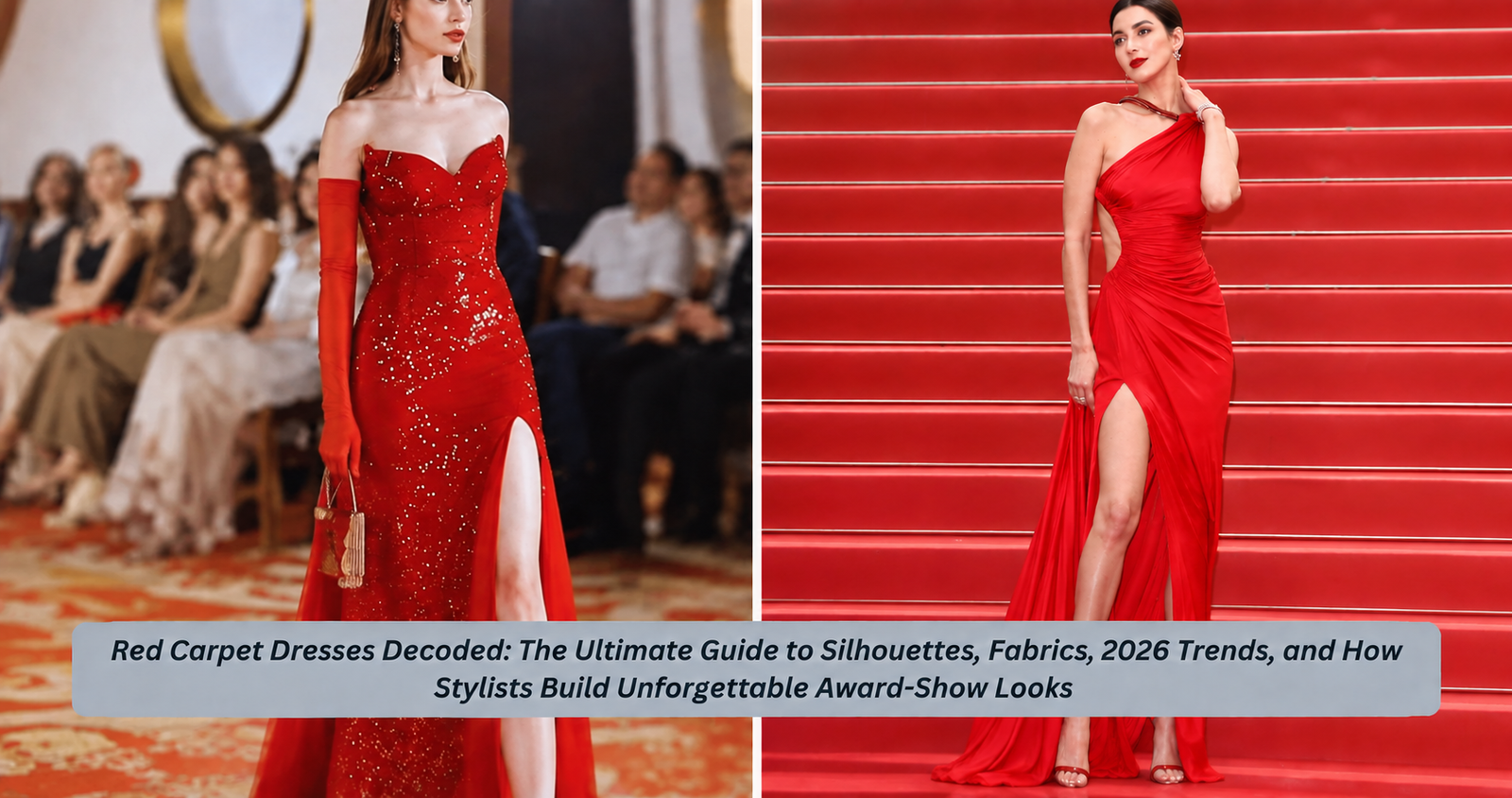
Every awards season starts the same way. Photographers line up, flashbulbs fire, and within minutes the internet is dissecting who wore what. Red carpet dresses have become a cultural language of their own, one that communicates status, taste, artistic risk, and sometimes even politics without a single word spoken. Whether you are a fashion student, a stylist in training, or someone shopping for a gala or prom, understanding how these looks are built gives you a real advantage.
This guide covers the full picture. You will find a clear definition, a short history, what the 2026 season showed us at the Golden Globes, the Oscars, and the Met Gala, and a technical breakdown of silhouettes and fabrics. You will also learn how stylists work behind the scenes and how to borrow the same principles on a normal budget. Where trends are mentioned, they come from named fashion outlets and event coverage, and personal taste is flagged as taste rather than fact.
What Are Red Carpet Dresses? A Clear Definition
Red carpet dresses are formal, high-impact gowns and evening looks worn to premieres, award shows, film festivals, and galas where guests are photographed by the press. What separates them from ordinary formalwear is purpose. A wedding guest dress needs to be flattering in a room, while a red carpet gown needs to be flattering in a room, on a staircase, from every camera angle, under harsh strobe light, and in a still image that may circulate for years.
That extra layer of demand shapes almost every design choice. Designers think about how a train falls when someone climbs steps, how a neckline reads in a cropped headshot, and how fabric reflects flash. A gown may look subtle in a showroom yet vanish on camera, or it may look loud in person and photograph beautifully. The best red carpet looks succeed on three fronts at once: they fit the wearer, suit the event, and tell a small story about the person inside.
From Edith Head to Instagram: The History of Red Carpet Dresses
The modern story of red carpet dresses begins in old Hollywood, when studios controlled image-making and costume designers like Edith Head shaped how stars appeared in public. Head, who won eight Academy Awards, designed the pale aqua-green satin gown Grace Kelly wore to accept her Oscar in 1955, a dress still cited in fashion history books. Head is credited with the line, “You can have anything you want in life if you dress for it,” which captures why stars and studios treated the carpet as a stage.
The next big shift came when celebrities took control of their own image. Elizabeth Hurley’s black Versace safety-pin gown in 1994 turned a premiere into a global news story, and Jennifer Lopez’s plunging green Versace dress at the 2000 Grammys became so heavily searched that it is often credited with inspiring Google’s image search. Björk’s swan dress and Julia Roberts’ vintage Valentino at the 2001 Oscars showed how a single dress could dominate a news cycle. Today, social media has multiplied that effect, so a look now needs to work in a live broadcast and in a phone-sized image at the same time.
What 2026 Taught Us: Golden Globes, Oscars, and Met Gala Trends
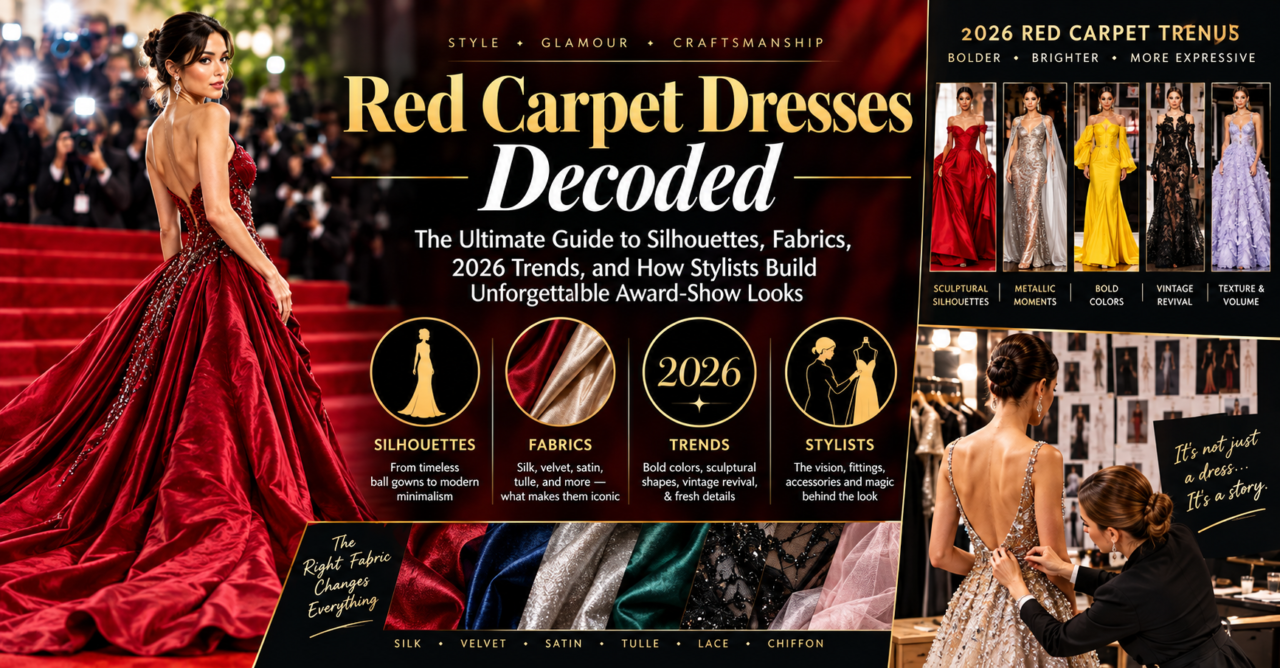
The 2026 season gave fashion editors plenty to write about. At the 83rd Golden Globes, a redesigned red carpet with a staircase rewarded dramatic movement, and WWD noted that trains, sweeping hems, sculptural volume, and elongated proportions stood out, along with metallics, bright greens, and a healthy amount of sheer fabric. At the Oscars, Anne Hathaway wore a black velvet Valentino Garavani haute couture gown with floral embroidery, and Who What Wear pointed to embroidered florals as a look likely to carry into spring.
The Met Gala turned art history into a dress code. The 2026 theme, Costume Art, asked guests to “celebrate the countless depictions of the dressed body throughout art history.” Beyoncé, a co-chair, wore a glittering skeleton-inspired dress with a feathered cape by Olivier Rousteing, while Zoë Kravitz mixed a Victorian pannier skirt with modern see-through lace. Doechii, in a sinuous purple Marc Jacobs wrap, said she wanted something “human and grounded,” and she went barefoot. Together these looks show that the strongest red carpet dresses of 2026 pair a clear concept with excellent craft, whether the mood is theatrical or quiet.
Silhouettes Explained: The Shapes Behind Iconic Looks
Every gown you admire starts with a silhouette, the overall outline of the dress. Choosing the right one is less about rules and more about proportion, movement, and how the piece will be photographed. The table below summarizes the most common shapes and what to think about with each.
| Silhouette | What It Looks Like | Works Best When | Watch Out For |
|---|---|---|---|
| Ball gown | Fitted bodice with a full, voluminous skirt | The event is formal and there is room to move | Bulk in tight spaces and cars |
| Mermaid or trumpet | Fitted through hips, flaring near the knee | You want a dramatic, sculpted outline | Limited stride and tricky stairs |
| Column or sheath | Straight, streamlined line from shoulder to floor | You prefer minimalism and clean lines | Wrinkling and visible seams |
| A-line | Gently widening from waist to hem | Comfort and versatility matter | Can look plain without strong fabric |
| Empire | High waistline with a flowing skirt | You want an elegant, romantic feel | Proportions can shift on camera |
| Corset-led | Structured bodice with boning | A sculpted, couture look is the goal | Comfort and breathing during long events |
Necklines matter as much as shapes. Sweetheart and plunging V-necks add drama, halter styles frame the shoulders, and asymmetric cuts read well in photographs because they create a diagonal line. Stylists often choose a silhouette first and then pick details around it, the way an architect chooses a foundation before finishing touches.
Fabrics, Colors, and Embellishments That Photograph Well
Fabric can make or break a look. Satin and silk crepe give a liquid drape that moves well on stairs, while tulle and organza add volume without heavy weight. Velvet reads rich and dramatic, like Hathaway’s Valentino gown, and sequins and beading catch flash, which makes them popular at night events. The tradeoff is that heavily embellished gowns can be heavy and hard to sit in, so comfort is worth testing before the big day.
Color is equally strategic. Saturated jewel tones such as emerald, ruby, and sapphire tend to photograph richly under flash, while pastels and ivory can look washed out if the fabric is too thin. Black is classic and slimming but can lose detail in photos, and metallics reflect light in ways that create a glowing effect. A practical rule from stylists is to think about contrast: a mid-tone dress against a dark backdrop or a bold shade against a neutral one will pop in almost any photograph.
Behind the Scenes: How Stylists and Designers Choose the Look
A red carpet look is the result of weeks of planning. Stylists usually begin by reading the event’s dress code and theme, then request gowns from fashion houses in a process called pulling. Celebrities attend multiple fittings, and seamstresses adjust hems, bodices, and straps until the dress works from every angle. The final choice balances aesthetics, brand relationships, and the story the client wants to tell that night.
The economics are worth understanding too. Fashion houses often lend or custom-make gowns because a well-photographed appearance generates enormous media exposure, which analytics firms such as Launchmetrics try to quantify as media impact value. The problem is that exposure is unpredictable. A gown can be beautiful yet blend into a crowd, or it can go viral for the wrong reasons. The solution stylists use is preparation: test the look under bright light, check movement on a staircase, and confirm the dress works with hair, jewelry, and shoes as a complete picture. The result is that the most memorable red carpet dresses look effortless only because a lot of work went into them.
Dress Codes by Event: Matching the Look to the Occasion
Not every carpet demands the same approach. Understanding the event is the first step in choosing a dress that feels appropriate rather than accidental. The table below summarizes typical expectations, although invitations always take priority over general rules.
| Event | Typical Dress Code | What Works |
|---|---|---|
| Academy Awards (Oscars) | Formal black tie, gowns and tuxedos | Elegant gowns, couture details, classic silhouettes |
| Golden Globes | Formal, slightly more relaxed than the Oscars | Statement colors, metallics, dramatic trains |
| Met Gala | Theme-driven, creative black tie | Concept-heavy, sculptural, art-inspired looks |
| Cannes Film Festival | Formal evening wear on the steps | Long gowns with trains and structured detail |
| Premieres | Varies from cocktail to gown | Stylish, camera-ready pieces with personality |
Matching red carpet dresses to the event is partly about respect and partly about strategy. A theme-driven night like the Met Gala rewards risk, while the Oscars typically reward polish. If you are unsure, err on the side of slightly more formal, since it is easier to dress down with simple accessories than to fix an underdressed impression.
How to Choose Red Carpet Dresses for Your Own Big Night
You do not need a celebrity budget to use celebrity thinking. Start with the event and your comfort. Prom, a black-tie wedding, a charity gala, and a gala dinner all call for slightly different choices, but the process is the same: pick a silhouette that suits how you like to move, choose a fabric that photographs well, and confirm the fit before buying. Many people fall in love with a dress on a hanger and then discover it does not work when they sit, dance, or climb stairs.
Use four simple tests before committing. The sit test checks whether you can sit comfortably for an hour. The stair test confirms you can climb without tripping on the hem. The car test makes sure you can get in and out without crushing the skirt. The bathroom test, less glamorous but essential, checks whether you can manage the dress independently. Passing all four is a better predictor of a good night than any trend report, and borrowing that logic from professional stylists makes red carpet dresses feel wearable rather than intimidating.
Budget Options: Renting, Buying Vintage, or Going Custom
Cost is the biggest barrier for most shoppers, but there are smart routes. Rental services let you wear designer gowns for a fraction of the retail price, and they suit one-time events. Vintage and consignment shops are treasure hunts for well-made older pieces, a strategy Julia Roberts famously used with her vintage Valentino at the 2001 Oscars. Made-to-measure and local tailors can build a custom gown at a lower price than couture, especially if you supply inspiration photos and choose accessible fabrics.
The problem with cheap formalwear is usually fit rather than price. A modestly priced dress that is altered well will almost always look better than an expensive one that is off by an inch. The solution is to budget for tailoring from the start, typically a modest additional cost, and to choose fabrics that hold their shape. This approach makes red carpet dresses accessible in spirit even when the original designer piece is out of reach.
Common Mistakes and How to Fix Them
Even professionals run into wardrobe trouble. Frequent issues include a dress that rides up when walking, straps that slip, a neckline that gapes, or a hem that catches on stairs. Fashion tape, discreet stitching, and shapewear or built-in bra cups solve many of these, and a small emergency kit with safety pins, tape, and a stain remover pen can save the evening. Steam the dress ahead of time, because wrinkles show up more clearly in photographs than in person.
Another common mistake is choosing style over comfort. Tight corsetry, heavy embellishment, and high heels can be beautiful but exhausting. If you plan to be on your feet for hours, choose a dress with some flexibility or a design that allows comfortable movement. Confidence is visible in photographs, and it is much easier to look confident when you are not worried about your outfit.
Finishing Touches: Jewelry, Hair, and Shoes
Accessories should support the dress rather than compete with it. A strong neckline usually pairs best with earrings, while a simple neckline can carry a bold necklace. Hair should be chosen with the neckline and back of the dress in mind, since updos show off detail and loose waves soften structure. Shoes matter more than people expect, because they are often hidden by long hems yet essential for movement and posture.
A useful principle is to choose one focal point. If the dress is heavily beaded or sculptural, keep jewelry minimal, and if the dress is simple, let one bold accessory do the talking. This is the same logic stylists apply for major events, and it works just as well for a school dance or a wedding.
Sustainability and Repeat Wearing on the Carpet
Fashion’s environmental footprint has become part of the red carpet conversation. Some stars now re-wear gowns or choose vintage pieces, and Joaquin Phoenix famously wore the same Stella McCartney tuxedo throughout the 2020 awards season to make a statement about sustainability. Brands have also experimented with recycled materials, upcycled fabrics, and made-to-order production to reduce waste.
For everyday shoppers, the takeaway is practical. Renting, buying secondhand, and re-styling an existing gown are all sustainable choices that also save money. A well-made dress can be worn multiple times with different accessories, and there is a growing sense that repeat wearing is a sign of confidence rather than a fashion mistake.
Frequently Asked Questions
What are red carpet dresses made of?
They are made from a wide range of fabrics, including silk, satin, crepe, tulle, chiffon, organza, velvet, lace, and sequined or beaded materials. Designers choose fabrics for how they move, how they reflect light, and how they hold structure in photographs. Couture pieces often combine multiple materials and hand-finished details, which is part of why they take so long to create.
How much do red carpet dresses cost?
Prices vary enormously. Couture gowns from luxury houses can cost tens of thousands of dollars or more, and many are custom-made or loaned to celebrities rather than sold. Ready-to-wear evening gowns, rental options, and vintage pieces are much more affordable. If you are shopping for a school dance or a formal event, you can find beautiful options at a fraction of the cost by choosing rental, secondhand, or tailored pieces.
Who designs most red carpet dresses?
Fashion houses like Valentino, Dior, Chanel, Versace, Armani, Oscar de la Renta, Balmain, Schiaparelli, and Prada regularly dress celebrities, along with independent designers such as Christian Siriano. Stylists play a key role by selecting and coordinating the final look. In 2026, examples included Valentino at the Oscars and Balmain and Marc Jacobs at the Met Gala.
What colors photograph best on the red carpet?
Saturated jewel tones, deep reds, emerald greens, and metallics often photograph well because they hold color under flash and stand out against dark or neutral backgrounds. Very pale shades and thin white fabrics can look washed out if the material is too sheer. Testing a dress in bright light before the event is the most reliable way to check.
Can I wear a red carpet-style dress to a wedding or prom?
Yes, provided it suits the dress code and the setting. Wedding guests should avoid white, ivory, or anything that competes with the bride, while prom offers more freedom for dramatic styles. Choose a silhouette you can move in, and consider tailoring for the best fit.
Should I follow trends or choose a timeless look?
Both approaches work. Timeless silhouettes such as columns and A-lines remain flattering across years, while trends like embroidered florals, metallics, or sculptural volume add current energy. A good compromise is to choose a classic base and add one trendy detail through color, jewelry, or hair.
Conclusion
Red carpet dresses are more than beautiful clothing. They are engineered to look striking under intense scrutiny, they reflect the culture of each event, and they show how design, personality, and preparation come together. The 2026 season made that clear, from the staircase-friendly trains at the Golden Globes to the embroidered velvet at the Oscars and the art-history references at the Met Gala.
The final insight is that the secret to great red carpet dresses is not price or fame, it is intention. Choose a silhouette that suits how you move, a fabric that suits the light, and a story that suits the occasion, and even a modest dress can carry the same confidence. Fit, comfort, and clarity will always outshine trend-chasing, and that is a lesson stylists, designers, and everyday shoppers can all use.