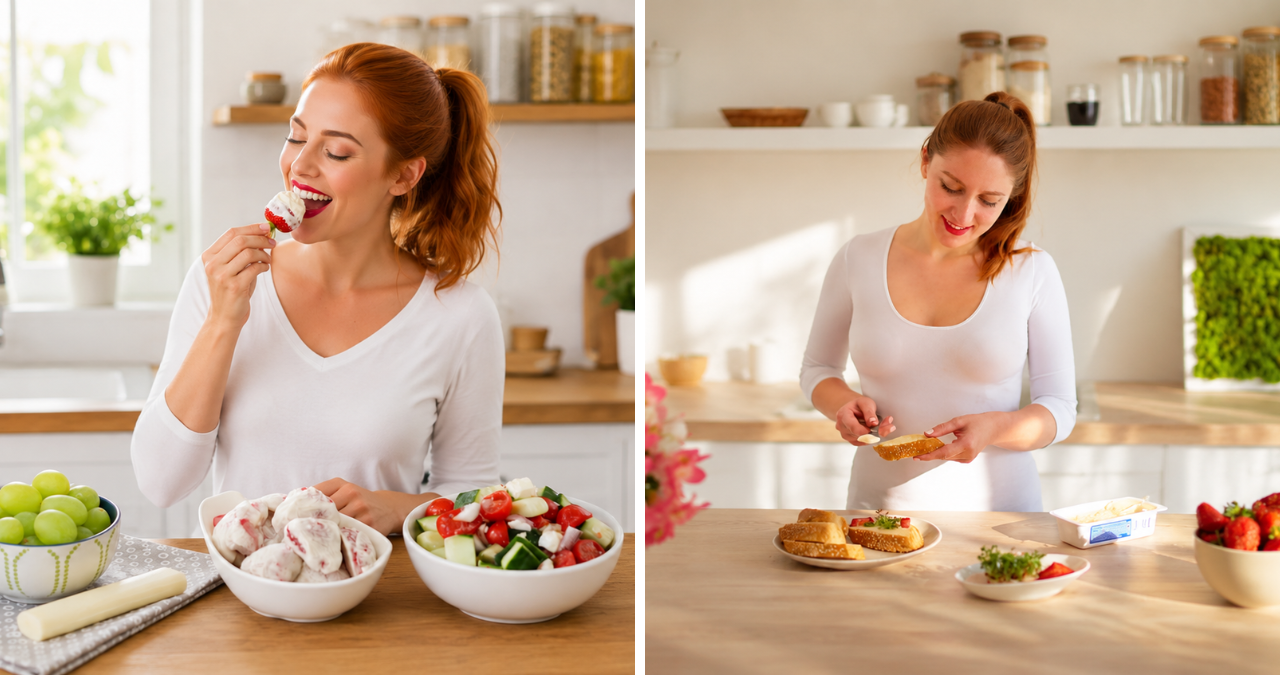
Most people don’t struggle with knowing what healthy choices look like on paper. They struggle with actually making them consistently, especially on a Tuesday night after a long day when the couch and a bag of chips feel a lot more appealing than a salad and a workout. That gap between knowledge and action is where most health advice quietly fails people, and it’s exactly what this guide is built to address. Rather than another list of foods to avoid or workouts to try, this article focuses on the psychology, structure, and real-world logistics behind healthy choices that survive contact with an actual busy life.
What makes this guide different is its grounding in behavioral science and practical experience rather than restrictive rules. Registered dietitians, behavioral psychologists, and public health researchers have spent decades studying why some healthy choices stick while others fall apart within weeks, and the patterns are remarkably consistent. Below, we break down the core principles behind sustainable healthy choices, along with concrete strategies you can start applying today, regardless of your starting point.
Why Willpower Alone Isn’t Enough for Healthy Choices
There’s a persistent myth that healthy choices come down to discipline — that people who eat well and exercise consistently simply have more willpower than everyone else. Behavioral researchers have largely debunked this idea. Willpower functions more like a limited daily resource than a fixed personality trait, which is why someone can resist dessert all day at work only to cave completely by 9 p.m. once decision fatigue sets in. This is a documented phenomenon called ego depletion, and it explains why relying purely on willpower to sustain healthy choices tends to fail over time, regardless of how motivated someone starts out.
The more effective approach, according to behavioral psychologist Wendy Wood, whose research on habit formation is widely cited in public health circles, involves reducing the number of decisions required in the first place. “The best-kept secret of self-control is that it works by controlling the environment, not the self,” Wood has explained in her research. Translated into everyday terms, this means healthy choices become dramatically easier when the healthier option is also the most convenient one — pre-cut vegetables sitting at eye level in the fridge, workout clothes laid out the night before, or simply not keeping trigger foods in the house. The problem isn’t a lack of motivation; it’s an environment working against the outcome you actually want.
Building an Environment That Supports Healthy Choices
Environmental design is arguably the single most underrated tool for sustaining healthy choices long-term. Most people focus exclusively on information — reading more about nutrition, watching more fitness content, downloading another calorie-tracking app — while ignoring the physical and social environment shaping their daily decisions. A kitchen stocked with processed snacks at eye level will consistently undermine even the most well-intentioned healthy choices, simply because proximity and visibility are powerful behavioral triggers.
Consider a common real-world scenario: someone decides to eat more fruit but keeps it in an opaque drawer in the fridge while chips sit in a bowl on the counter. Within days, the chips win, not because of weak willpower but because of basic behavioral economics. Flip that setup — fruit in a bowl on the counter, chips moved to a high, hard-to-reach cabinet — and healthy choices become the path of least resistance instead of an uphill battle. The same principle applies to exercise: someone who has to drive twenty minutes to a gym will make healthy choices around movement far less consistently than someone with a resistance band and a yoga mat already unrolled in their living room.
The Role of Nutrition Literacy in Everyday Healthy Choices
Understanding basic nutrition science remains foundational to making informed healthy choices, even though environment and habit design carry much of the practical weight. Concepts like macronutrient balance, fiber intake, and glycemic index aren’t just academic trivia — they directly explain why some meals leave you satisfied for hours while others leave you hungry again within ninety minutes. The USDA’s Dietary Guidelines for Americans, along with resources from the Academy of Nutrition and Dietetics, consistently emphasize whole foods, adequate protein, and minimizing added sugars as cornerstones of sustainable eating patterns.
That said, nutrition literacy only translates into healthy choices when it’s simplified enough to apply under real-world time pressure. Nobody standing in a grocery store aisle at 6 p.m. after work is going to calculate precise macronutrient ratios. A more practical mental model, often used by registered dietitians, is the “plate method” — roughly half the plate filled with vegetables, a quarter with lean protein, and a quarter with whole grains or starchy vegetables. This single visual heuristic captures most of what matters nutritionally without requiring any math, which makes it dramatically easier to apply consistently across different meals, cuisines, and dietary preferences.
Healthy Choices Around Movement and Physical Activity
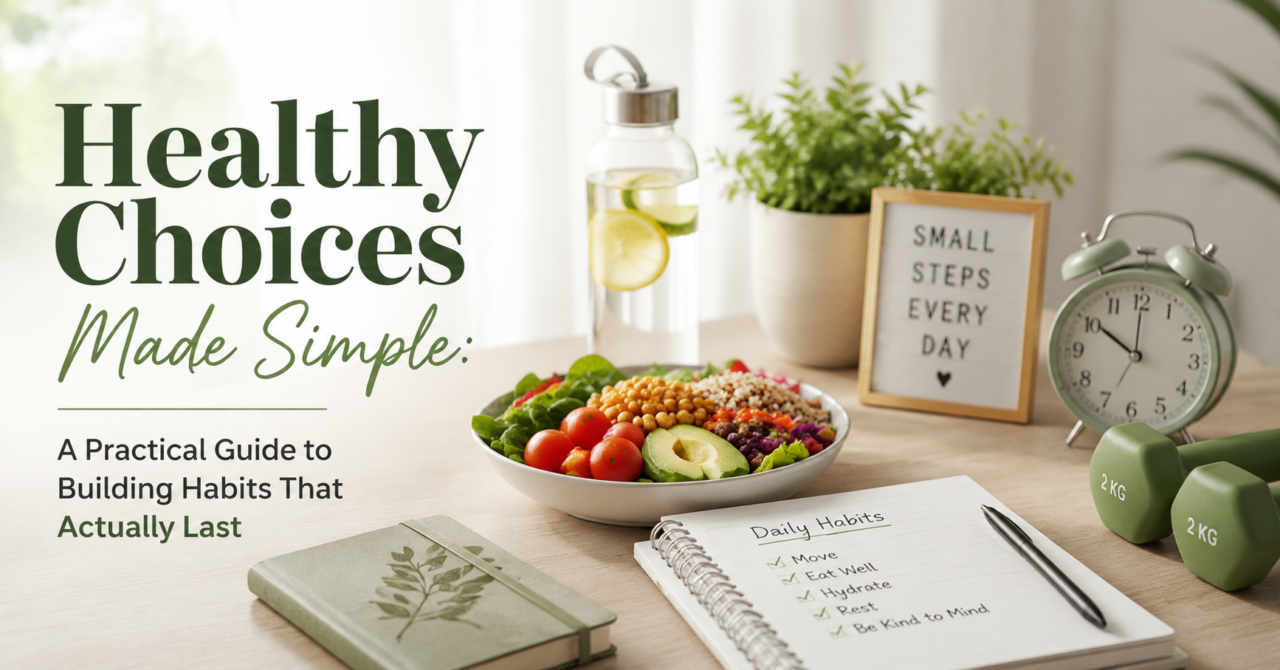
Physical activity is just as central to the broader conversation around healthy choices as nutrition, yet it’s often treated as a separate, optional category rather than an integrated part of daily life. The Centers for Disease Control and Prevention recommends at least 150 minutes of moderate-intensity activity per week for adults, but that number can feel intimidating when framed as a single block of gym time rather than something woven into an existing routine. The more sustainable approach treats movement as a series of smaller healthy choices distributed throughout the day — taking stairs instead of elevators, parking farther from the entrance, or turning a phone call into a walking meeting.
This distributed approach matters because it removes the all-or-nothing thinking that derails so many fitness attempts. Someone who believes exercise only “counts” if it happens in a structured hour-long gym session will often skip movement entirely on busy days, whereas someone who views healthy choices around activity as cumulative will still get value from a fifteen-minute walk or a few flights of stairs. Research published in the British Journal of Sports Medicine has shown that even short bursts of activity accumulated throughout the day meaningfully reduce cardiovascular risk, which reinforces that consistency matters more than intensity when it comes to sustainable healthy choices.
Emotional Eating and the Psychology Behind Healthy Choices
No honest discussion of healthy choices can ignore the emotional dimension of eating, since a huge percentage of food decisions are driven by stress, boredom, or emotional regulation rather than actual hunger. This is a problem plenty of nutrition plans completely ignore, focusing entirely on what to eat while ignoring why people reach for food in the first place. Someone stress-eating after a difficult day isn’t failing at willpower; they’re using food as an accessible coping mechanism, often because it’s faster and more socially acceptable than other forms of stress relief.
The solution isn’t to eliminate comfort eating through sheer restriction, which tends to backfire and create a cycle of guilt and overeating. Instead, licensed therapists specializing in eating behavior often recommend building a small toolkit of alternative coping strategies — a short walk, a phone call with a friend, five minutes of deep breathing — that address the underlying emotional need without requiring perfect discipline around food. Over time, this approach makes healthy choices feel less like punishment and more like genuine self-care, which is a far more durable foundation than restriction-based willpower ever provides.
Practical Framework for Making Healthy Choices Stick
| Strategy | What It Solves | Example Application |
|---|---|---|
| Environment design | Reduces reliance on willpower | Keep produce visible, snacks out of reach |
| Plate method | Simplifies nutrition decisions | Half vegetables, quarter protein, quarter grains |
| Movement snacking | Removes all-or-nothing exercise thinking | Short walks, stairs, stretching breaks |
| Emotional coping toolkit | Addresses non-hunger eating triggers | Breathing exercises, calling a friend, journaling |
| Habit stacking | Builds consistency without extra decisions | Pairing a new habit with an existing routine |
Frequently Asked Questions
What are considered healthy choices in everyday life?
Healthy choices generally refer to decisions around nutrition, physical activity, sleep, and stress management that support long-term wellbeing rather than short-term convenience. This includes things like choosing whole foods over heavily processed options, staying physically active throughout the day, prioritizing sleep quality, and developing non-food-based coping strategies for stress, all of which compound over time to meaningfully improve health outcomes.
Why is it so hard to stick to healthy choices long-term?
Most people struggle with consistency because they rely primarily on willpower rather than restructuring their environment to support better decisions automatically. Since willpower is a limited daily resource that depletes with use, healthy choices become significantly easier to maintain when the healthier option requires less effort and fewer decisions than the alternative, rather than relying on motivation alone.
How can I start making healthier choices without feeling overwhelmed?
The most effective starting point is picking one or two small, specific changes rather than overhauling an entire lifestyle at once. Focusing on environmental adjustments, like keeping healthier snacks visible and accessible, tends to produce more sustainable healthy choices than attempting a complete diet and exercise overhaul simultaneously, which often leads to burnout within a few weeks.
Do healthy choices always require strict discipline or willpower?
No, and this is one of the most common misconceptions in popular health advice. Sustainable healthy choices rely far more on environmental design, habit formation, and addressing emotional triggers than on raw discipline, since willpower alone tends to fail under stress, fatigue, or busy schedules regardless of someone’s underlying motivation.
How do healthy choices around food and exercise work together?
Nutrition and physical activity reinforce each other in ways that make healthy choices in one area easier to sustain in the other. Regular movement often naturally improves appetite regulation and food choices, while balanced nutrition supports the energy levels needed for consistent physical activity, creating a positive feedback loop rather than two separate, unrelated habits.
Final Takeaway
Healthy choices aren’t about perfection, restriction, or relying on willpower to override every temptation you encounter. They’re about designing an environment, a routine, and an emotional toolkit that make the better option the easier option most of the time. Whether it’s rearranging your kitchen, using the plate method instead of calorie math, or building a short list of non-food coping strategies, small structural changes consistently outperform sheer motivation when it comes to sustaining healthy choices over months and years. Start with one change you can realistically maintain, build from there, and trust that consistency, not perfection, is what actually moves the needle.