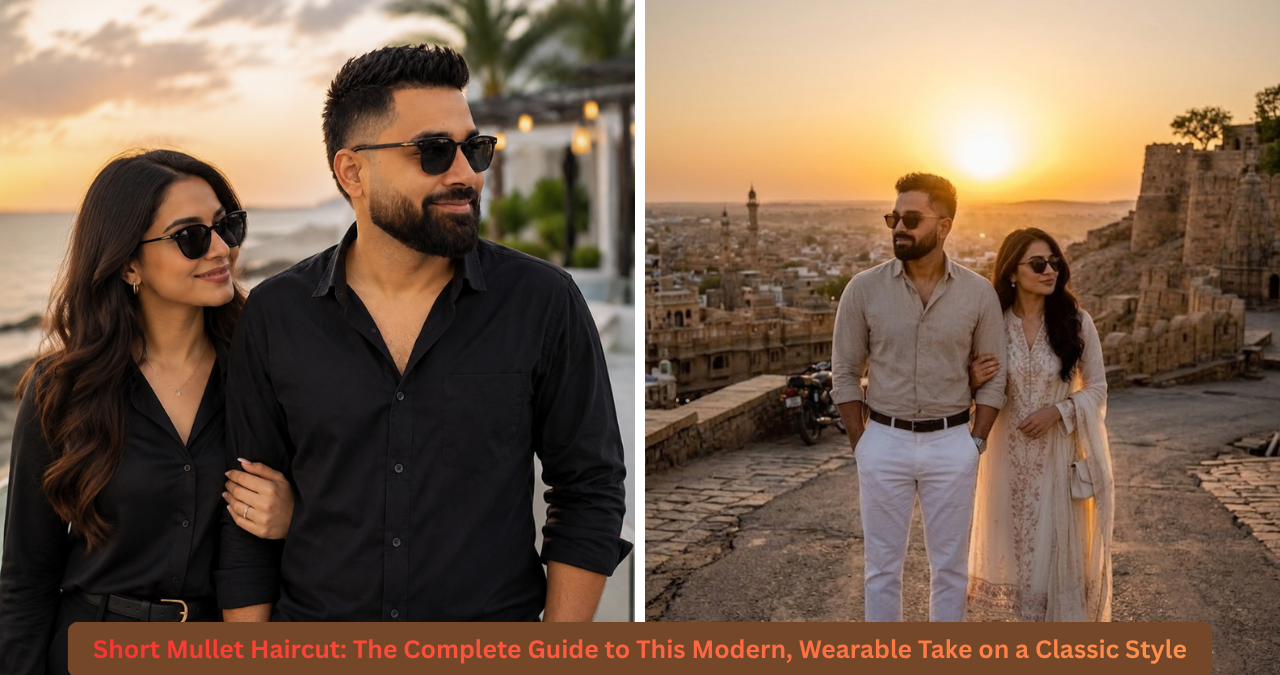
The short mullet haircut has become one of the most requested styles in barbershops over the last few years, and honestly, it makes a lot of sense once you understand why. Traditional mullets, the ones people associate with the eighties, always carried a certain over-the-top drama, long flowing hair in the back and short business-like sides up front. A short mullet haircut takes that same “business up front, party in the back” concept and dials it down into something far more manageable, modern, and genuinely wearable in everyday professional settings without sacrificing that distinctive edge.
What makes the short mullet haircut so interesting from a styling perspective is how it bridges two very different hair philosophies. It keeps enough length in the back to maintain that rebellious mullet identity, while trimming everything else down to lengths that feel closer to a standard fade or crop. Barbers have told me this balance is exactly why the style has surged in popularity again, since it lets people experiment with a bold silhouette without fully committing to the dramatic length of a traditional mullet. If you’re considering this cut, understanding its structure, styling requirements, and maintenance needs will help you walk into your next barber appointment with confidence.
What Exactly Is a Short Mullet Haircut
A short mullet haircut is a modern variation of the classic mullet, defined by shorter overall length throughout the cut while still preserving the core structural feature of longer hair at the nape and back of the head compared to the sides and top. Unlike a traditional mullet, which can extend several inches past the collar, a short mullet haircut typically keeps the back length in the one-to-three-inch range, creating a subtler contrast that reads as intentional and stylish rather than dated or exaggerated.
This shorter approach also tends to include tighter fades or tapers on the sides, which further modernizes the overall silhouette. Where a classic mullet from decades past often paired long hair with minimal shaping on the sides, today’s short mullet haircut usually incorporates clean fade work, giving the style a sharper, more structured appearance. The result is a cut that nods to the mullet’s rebellious history while looking distinctly current, something you’d actually see on a barbershop Instagram feed rather than in an old yearbook photo.
Why the Short Mullet Haircut Has Made a Comeback
Fashion cycles are notoriously repetitive, and hairstyling trends are no exception, but the resurgence of the short mullet haircut isn’t purely nostalgic recycling. Part of its comeback ties directly to a broader cultural shift toward individuality in men’s and women’s grooming choices, where people increasingly want a style that stands out rather than blending into generic, safe haircuts. A short mullet haircut delivers exactly that kind of statement without requiring the same commitment or maintenance burden as a full-length mullet.
Celebrity and athlete influence has also played a role here. Musicians, skateboarders, and even professional athletes have been spotted with variations of the short mullet haircut, which lends the style a certain cultural credibility that filters down into everyday barbershop requests. One barber I spoke with, who specializes in modern fades, described the shift this way: “People used to ask for a mullet ironically, now they’re asking because they genuinely think it looks good, and honestly, the shorter version is way easier to sell to a nervous first-timer.” That comment captures a lot about why the short mullet haircut specifically, rather than the traditional long version, has become the entry point for people curious about this style.

Who Should Consider a Short Mullet Haircut
Not every face shape or hair type pairs equally well with a short mullet haircut, and understanding this before your appointment can save you from a result that doesn’t quite land the way you hoped. Round and oval face shapes tend to benefit significantly from this style, since the added volume and length at the back create visual balance without overwhelming the face the way a longer traditional mullet sometimes can. Square-jawed individuals also tend to do well with this cut, particularly when the sides are faded tightly, since the contrast between short sides and longer back complements strong facial angles.
Hair texture matters just as much as face shape when it comes to the short mullet haircut. Straight and wavy hair types tend to show the layered structure of this cut more clearly, since the distinction between the shorter top and longer back reads cleanly without added texture interference. Curly and coily hair types can absolutely wear a short mullet haircut too, but the style often needs slightly more length retained in the back to account for shrinkage, since curl patterns naturally pull hair upward and can make the mullet’s signature length difference less visually obvious if cut too short initially.
How to Style a Short Mullet Haircut
Styling a short mullet haircut is generally more forgiving than styling a traditional long mullet, largely because the reduced length throughout minimizes the risk of the back looking stringy or unkempt. For daily styling, a light pomade or texturizing spray applied to damp hair, followed by natural air drying or a quick blow-dry with fingers for texture, usually delivers the best results without requiring heavy product buildup. The goal is generally to keep some separation and movement in the back section while maintaining a cleaner, more structured look up front and on the sides.
For people wanting a slightly more polished version of the short mullet haircut, a blow-dryer with a round brush can help create lift at the crown, which enhances the contrast between the shorter top and the longer back length. This technique works particularly well for special occasions or more formal settings, where you might want the mullet’s signature look to feel a bit more refined. On the other hand, for a more relaxed, everyday version, simply scrunching a bit of sea salt spray into damp hair before letting it air dry tends to give the back section natural texture and movement without looking overly styled or fussy.

Maintenance and Upkeep Requirements
One of the practical advantages of a short mullet haircut compared to its longer counterpart is the maintenance schedule. Because the overall length stays relatively short throughout, regrowth is less noticeable week to week, meaning most people can comfortably stretch appointments to every four to six weeks without the style losing its shape. This is a meaningful difference from longer mullets, which often require more frequent trims to keep the back section from growing unevenly or looking neglected.
That said, the sides and top of a short mullet haircut, particularly if they include a fade, will need more frequent touch-ups than the back to maintain that sharp contrast that defines the style. Most barbers recommend a fade touch
-up every two to three weeks even if the back length is left largely untouched during that visit, since a grown-out fade paired with a still-short back section tends to blur the intentional structure that makes this cut work in the first place. Communicating this maintenance split clearly with your barber, some sections needing more frequent care than others, will help keep your short mullet haircut looking sharp between full cuts. <table> <tr><th>Hair Section</th><th>Typical Length</th><th>Touch-Up Frequency</th></tr> <tr><td>Back/Nape</td><td>1–3 inches</td><td>Every 4–6 weeks</td></tr> <tr><td>Sides</td><td>Faded or tapered</td><td>Every 2–3 weeks</td></tr> <tr><td>Top</td><td>Short to medium</td><td>Every 3–4 weeks</td></tr> <tr><td>Overall Style</td><td>Business up front, subtle length in back</td><td>Full reshape every 6–8 weeks</td></tr> </table>
Common Mistakes to Avoid
One frequent mistake with the short mullet haircut is going too subtle with the back length, to the point where the mullet structure becomes barely noticeable and the cut just looks like an uneven regular haircut rather than an intentional style. While the appeal of this cut is its restraint compared to a traditional mullet, there still needs to be a clear, visible length difference between the back and the rest of the head for the style to read correctly. If you’re nervous about commitment, it’s better to start with a slightly more noticeable back length and trim it down later than to end up with something too timid to actually look like a mullet at all.
Another common issue is neglecting the fade or taper on the sides while focusing all the styling attention on the back section. A short mullet haircut relies heavily on that contrast between structured, shorter sides and the longer back to create its signature look, and letting the sides grow out unevenly undermines the entire concept. Regular maintenance on the fade, even between full haircut appointments, is essential to keeping the style looking sharp rather than simply looking like hair that’s growing out without direction.
Frequently Asked Questions
What makes a short mullet haircut different from a traditional mullet?
A short mullet haircut keeps the overall length shorter throughout, typically one to three inches longer in the back compared to the sides and top, whereas a traditional mullet often features several inches of length in the back. This shorter approach creates a more subtle, modern silhouette that’s easier to maintain and wear in professional or everyday settings.
Is a short mullet haircut suitable for curly hair?
Yes, a short mullet haircut can work well with curly hair, though barbers often recommend leaving slightly more length in the back to account for natural shrinkage that occurs with curl patterns. Without this adjustment, the length contrast that defines the mullet style may not read as clearly once the curls settle into their natural pattern.
How often do I need to get a short mullet haircut trimmed?
The back section of a short mullet haircut typically only needs trimming every four to six weeks, but the sides and any fade work usually require touch-ups every two to three weeks to maintain the sharp contrast that defines the style. Communicating this maintenance split with your barber helps keep the cut looking intentional between full appointments.
Can I style a short mullet haircut for formal occasions?
Absolutely, a short mullet haircut can be styled more formally by using a blow-dryer with a round brush to add lift and structure, particularly at the crown, which enhances the contrast between the shorter top and longer back. This creates a more polished, refined version of the style suitable for professional or formal settings.
Does a short mullet haircut work for all face shapes?
While a short mullet haircut can be adapted for most face shapes, it tends to work especially well for round, oval, and square face shapes, since the added length at the back balances facial proportions without overwhelming stronger or softer angles. A skilled barber can adjust the length and fade intensity to complement other face shapes as needed.
Final Thoughts
The short mullet haircut has earned its place as one of the more clever modern haircut trends precisely because it takes a once-divisive style and makes it genuinely accessible. By trimming down the dramatic length of a traditional mullet while preserving its signature structural contrast, this cut delivers personality and edge without demanding the same commitment or maintenance burden as its longer predecessor. Whether you’re easing into the mullet trend for the first time or looking for a fresher, more manageable version of a style you already love, a well-executed short mullet haircut offers a sharp, intentional look that holds up in both casual and professional settings alike