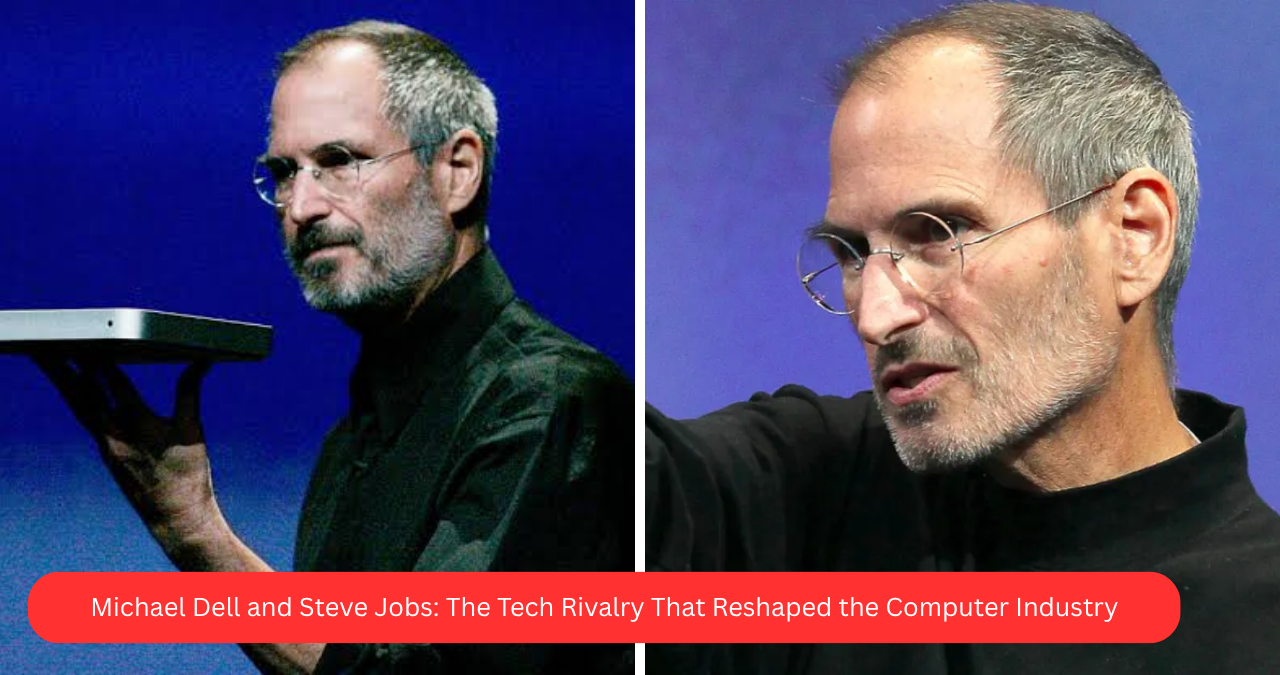
Few rivalries in business history carry as much lasting symbolic weight as the story of Michael Dell and Steve Jobs. On the surface, it looks like a simple exchange of harsh words between two competing tech executives, but underneath that surface sits a genuinely fascinating case study in corporate strategy, personal ego, and one of the most dramatic corporate turnarounds in modern business history. Michael Dell and Steve Jobs represented two fundamentally different philosophies about how to build a technology company, and the way their paths crossed in the late 1990s ended up shaping how both Dell and Apple approached the following decades.
Understanding the relationship between Michael Dell and Steve Jobs requires looking past the famous soundbite that most people associate with their rivalry and examining the broader context of where each company stood at the time, what each leader believed about their industry, and how dramatically the outcome diverged from what nearly everyone expected in 1997. This is a story with real business lessons buried inside it, not just a quotable moment of corporate trash talk.
The 1997 Comment That Started It All
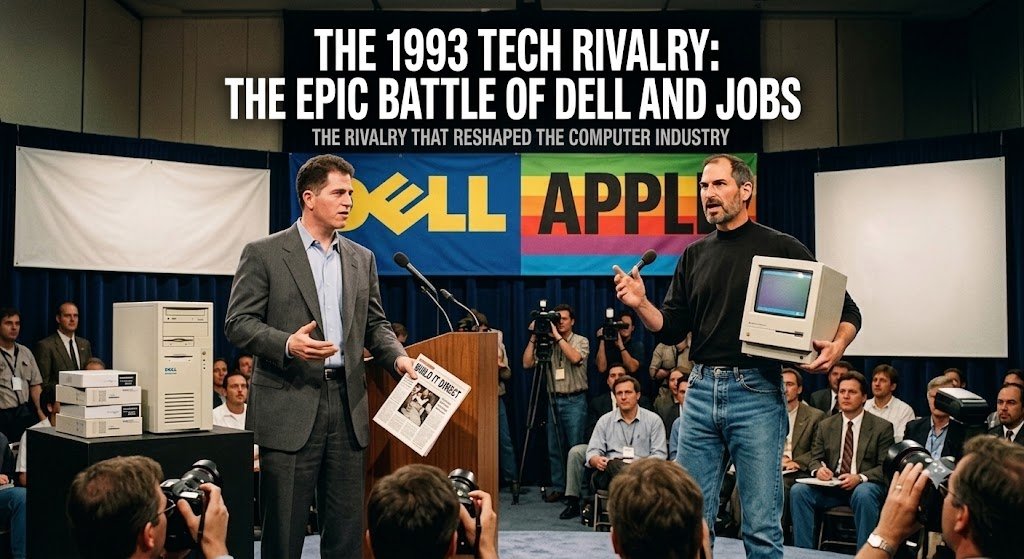
The defining moment in the Michael Dell and Steve Jobs rivalry took place in October 1997 at a Gartner Symposium, where Michael Dell was asked what he would do if he were in charge of the struggling Apple. At the time, Apple was in genuinely rough shape, having just posted some of the largest losses in its history, and Steve Jobs had only recently returned to the company as interim CEO after being ousted more than a decade earlier. Dell’s response became instantly infamous: he said he’d “shut it down and give the money back to the shareholders.”
At the time, this wasn’t an unreasonable prediction. Dell Inc. was thriving with its direct-to-consumer, built-to-order PC model, while Apple looked increasingly like a company on the verge of irrelevance in a Windows-dominated market. The comment stung specifically because it came from someone widely respected in the tech industry, not a random critic, which is part of why the exchange between Michael Dell and Steve Jobs became such a memorable moment in computing history rather than just another dismissed prediction that faded from memory.
Steve Jobs’s Response Behind the Scenes and On Stage
Steve Jobs did not take the comment quietly. Privately, reports indicate he was furious about Dell’s remark, and he made his frustration known internally among Apple employees. Publicly, though, Jobs channeled that anger into something far more strategically effective than an emotional outburst. During a subsequent presentation, Jobs directly addressed the comment, describing it as rude, and used the moment to lay out his vision for how Apple would compete, and eventually outperform, companies built purely around operational efficiency and logistics.
What makes this response so notable within the larger Michael Dell and Steve Jobs narrative is how precisely accurate Jobs’s counter-vision turned out to be. He essentially outlined a plan focused on matching or exceeding Dell’s strength in logistics, supply chain management, and retail experience, a goal that seemed ambitious at the time given Apple’s financial struggles. Looking back, this moment reads almost like a strategic blueprint rather than a defensive reaction, since Apple’s later dominance in retail experience, through its now-iconic Apple Stores, and its supply chain sophistication under Tim Cook’s operational leadership trace directly back to priorities Jobs articulated in the immediate aftermath of Dell’s comment.
How Apple’s Turnaround Changed the Narrative
The most striking part of the Michael Dell and Steve Jobs story isn’t the initial insult, it’s what happened afterward. Rather than shutting down, as Dell had suggested, Apple became profitable again the very next year, in 1998, largely on the strength of the newly launched iMac. That product alone signaled a shift in Apple’s design philosophy and market positioning that would define the company for the next two decades. Apple followed with the iBook in 1999, then entered an entirely new category with the iPod in 2001, fundamentally altering the trajectory that Dell’s 1997 comment had assumed was essentially fixed.
This turnaround illustrates a broader lesson that extends well beyond the specific feud between Michael Dell and Steve Jobs: predictions about a company’s future, even from genuinely successful and knowledgeable business leaders, can be spectacularly wrong when leadership, product vision, and execution shift dramatically. Dell’s comment wasn’t an
read of the data available in 1997, but it dramatically underestimated what a re-energized Steve Jobs, with clear creative control and a renewed sense of purpose, could accomplish. As one technology historian summarized the situation, “Jobs didn’t just prove Dell wrong, he built the receipts into Apple’s entire retail and supply chain strategy for the next decade.” That framing captures how directly Dell’s dismissive prediction seemed to fuel Apple’s subsequent strategic priorities.
The 2006 Email That Closed the Loop
Nearly a decade after the original comment, the rivalry between Michael Dell and Steve Jobs reached a symbolic conclusion. In 2006, after Apple’s market capitalization surpassed Dell’s for the first time, Jobs sent an internal email to Apple employees referencing the moment directly, noting with characteristic dry humor that Michael Dell hadn’t been perfect at predicting the future after all. The email reflected on how stock values fluctuate but framed the milestone as worth a moment of quiet reflection given the history between the two companies.
This moment mattered because it wasn’t gloating for its own sake, it was Jobs marking a genuine business milestone that validated years of strategic decisions made specifically in response to being publicly dismissed. The email also highlights something important about how Jobs operated throughout his career: criticism, even harsh or dismissive criticism, often became fuel for demonstrating results rather than simply provoking a verbal counterattack. Within the broader Michael Dell and Steve Jobs story, this 2006 moment functions almost like a final chapter, transforming what started as an off-the-cuff insult into a genuine, measurable business rivalry with a clear resolution.
Michael Dell’s Later Reflection on the Comment
Years later, Michael Dell addressed the infamous quote directly during a 2011 appearance at TechCrunch’s Web 2.0 Summit. By that point, Steve Jobs had passed away just weeks earlier, and Dell spoke about the moment with noticeably more nuance than the original soundbite suggested. He explained that his answer had been largely misconstrued, clarifying that he was simply expressing his personal focus on running Dell rather than making a genuine strategic recommendation about how to fix Apple.
This later reflection adds important context to the Michael Dell and Steve Jobs rivalry, since it reveals how much a brief, offhand comment can take on a life of its own once it becomes attached to a dramatic underdog turnaround story. Dell also spoke warmly about his personal history with Jobs, recalling meeting him decades earlier as a teenager at a local Apple user group, and expressed genuine respect for what Jobs ultimately built. That humanizing detail complicates the simple “rivalry” framing many people associate with the story, showing that beneath the corporate competition, there was also a degree of mutual professional recognition between the two.
Comparing Dell and Apple’s Business Philosophies
Part of what makes the Michael Dell and Steve Jobs story so instructive is how clearly it illustrates two fundamentally different approaches to building a technology company. Dell built its success around operational efficiency, direct-to-consumer sales, and minimizing costs through a build-to-order manufacturing model. Apple, particularly under Jobs’s renewed leadership, prioritized design, brand experience, and vertically integrated ecosystems, even when that approach meant higher costs and slower initial growth. <table> <tr><th>Aspect</th><th>Dell (Michael Dell’s Approach)</th><th>Apple (Steve Jobs’s Approach)</th></tr> <tr><td>Core Strategy</td><td>Direct sales, operational efficiency</td><td>Design-driven products, brand experience</td></tr> <tr><td>Manufacturing Model</td><td>Build-to-order, low inventory</td><td>Vertically integrated ecosystem</td></tr> <tr><td>Retail Approach</td><td>Direct-to-consumer, minimal physical presence</td><td>Flagship Apple Stores, curated experience</td></tr> <tr><td>1997 Market Position</td><td>Thriving, high growth</td><td>Struggling, recent major losses</td></tr> <tr><td>Long-Term Outcome</td><td>Went private in 2013</td><td>Became world’s most valuable company</td></tr> </table>
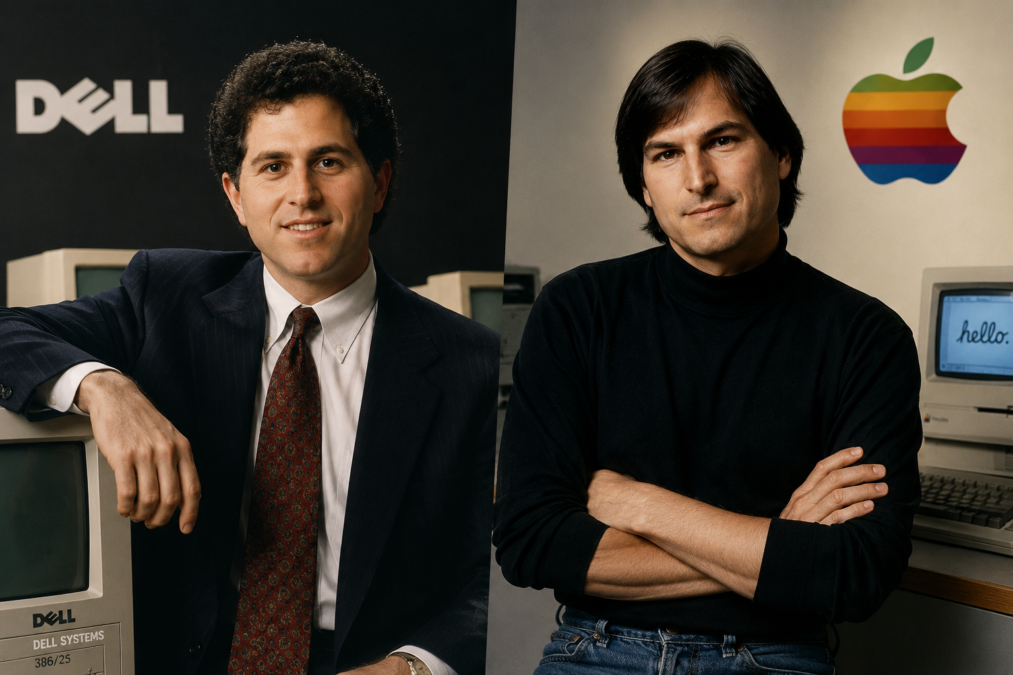
Neither philosophy was inherently wrong, and both companies achieved substantial success using their respective models for years. What the Michael Dell and Steve Jobs comparison ultimately demonstrates is how differently these two approaches performed under specific market conditions, particularly as consumer technology shifted toward mobile devices, integrated ecosystems, and experience-driven retail, areas where Apple’s model proved unexpectedly well-suited for the following two decades.
Frequently Asked Questions
What did Michael Dell say about Steve Jobs’s Apple in 1997?
At a Gartner Symposium in October 1997, Michael Dell said that if he were in charge of Apple, he would shut the company down and return the money to shareholders. This comment became one of the most infamous predictions in tech industry history once Apple’s fortunes dramatically reversed in the years that followed.
How did Steve Jobs respond to Michael Dell’s comment?
Steve Jobs was reportedly furious privately but responded publicly by addressing the comment during a company presentation, calling it rude and outlining Apple’s strategic plan to match or exceed competitors like Dell in logistics, operations, and retail experience. This response later proved remarkably accurate as Apple built out its retail stores and operational efficiency over the following decade.
Did Michael Dell ever apologize for his comment about Apple?
Michael Dell didn’t offer a formal apology, but he did clarify and contextualize the remark during a 2011 interview at TechCrunch’s Web 2.0 Summit, explaining that his comment reflected his personal focus on Dell rather than a genuine business recommendation for Apple. He also expressed respect for Steve Jobs and shared memories of meeting him personally decades earlier.
How did Apple’s stock compare to Dell’s after the rivalry began?
By 2006, Apple’s market capitalization had surpassed Dell’s for the first time, a milestone Steve Jobs acknowledged directly in an internal email to Apple employees. In the years since, Apple has grown into one of the most valuable companies in the world, while Dell eventually went private in 2013.
Why is the Michael Dell and Steve Jobs story still discussed today?
The Michael Dell and Steve Jobs story remains a popular case study in business and technology circles because it illustrates how dramatically a company’s fortunes can shift under strong leadership, and how a dismissive prediction from a respected industry figure can become a powerful motivating force. It’s frequently cited as an example of underestimating turnaround potential in the tech industry.
Final Thoughts
The story of Michael Dell and Steve Jobs endures because it captures something universally compelling about business rivalry, resilience, and the danger of underestimating a determined competitor. What began as a dismissive comment at a 1997 industry conference evolved into one of the most instructive examples of corporate turnaround in modern tech history, ultimately reshaping how both companies approached growth for years afterward. Whether viewed as a lesson in humility, strategic vision, or simply a memorable moment of tech industry drama, the relationship between Michael Dell and Steve Jobs remains a fascinating reminder that today’s confident predictions can look very different once given enough time to plants.