Anyone who has watched their iPhone battery drop from 40% to 5% during a long day out knows the particular panic that comes with it. Maybe you’re navigating a new city with Maps open, snapping photos at a wedding, or stuck at an airport gate waiting for a delayed flight. In all these situations, the difference between staying connected and going dark often comes down to one thing: having the best power bank for iPhone tucked into your bag. This guide walks through everything worth knowing before you buy one, drawing on real charging behavior, technical specifications, and practical field experience rather than just spec-sheet comparisons.
Choosing the right portable charger isn’t as simple as grabbing whatever has the biggest number printed on the box. iPhones have specific charging protocols, connector types, and power management systems that make some power banks a much better match than others. Understanding those nuances is the difference between a purchase that sits in a drawer unused and one that becomes a permanent fixture in your daily carry.
Why iPhone Users Need a Dedicated Charging Strategy
Apple’s charging ecosystem has its own quirks that make generic charging advice less useful than it seems. iPhones support fast charging through USB Power Delivery (USB-PD), but only when paired with a compatible power source and cable. Many older or budget power banks output charging power in ways that simply aren’t optimized for Apple’s charging curve, meaning you might plug in expecting a rapid top-up and instead get a charge that trickles along at a fraction of the speed advertised on the box.
This is precisely why searching for the best power bank for iPhone yields different results than a generic search for “portable charger.” iPhone-specific charging considerations include Lightning versus USB-C compatibility depending on your model, MagSafe magnetic alignment for wireless charging, and power delivery wattage that actually matches what your specific iPhone model can accept. A frequent traveler who reviews tech accessories once told me, “I’ve tested chargers that claim 20W fast charging, but half of them throttle down the moment they sense an Apple device, because they weren’t built with Apple’s charging protocol in mind.” That kind of insight only comes from hands-on testing, and it’s exactly why spec sheets alone don’t tell the whole story.
Key Features That Define a Great iPhone Power Bank
When evaluating any charger, a handful of features consistently separate excellent options from mediocre ones. Capacity, measured in milliamp-hours (mAh), determines how many full charges you can squeeze out of a single power bank charge. A 10,000mAh unit typically delivers around two full iPhone charges, while a 20,000mAh model can stretch to four or more, depending on your specific iPhone’s battery size and how much power is lost to heat and conversion inefficiency.
Beyond raw capacity, output wattage matters enormously. The best power bank for iPhone options on the market support at least 20W of USB-PD output, which allows compatible iPhone models to charge from roughly 0% to 50% in about 30 minutes under ideal conditions. Physical build quality also plays a bigger role than most buyers expect — a power bank that’s been dropped a few times or exposed to a hot car dashboard needs to have solid internal protections against overheating and overcharging, since lithium-ion cells are sensitive to both extremes. Finally, portability and form factor matter in ways that are easy to underestimate until you’re the one lugging around a brick-sized charger that barely fits in your jacket pocket.
MagSafe vs Wired Charging: Which Should You Choose
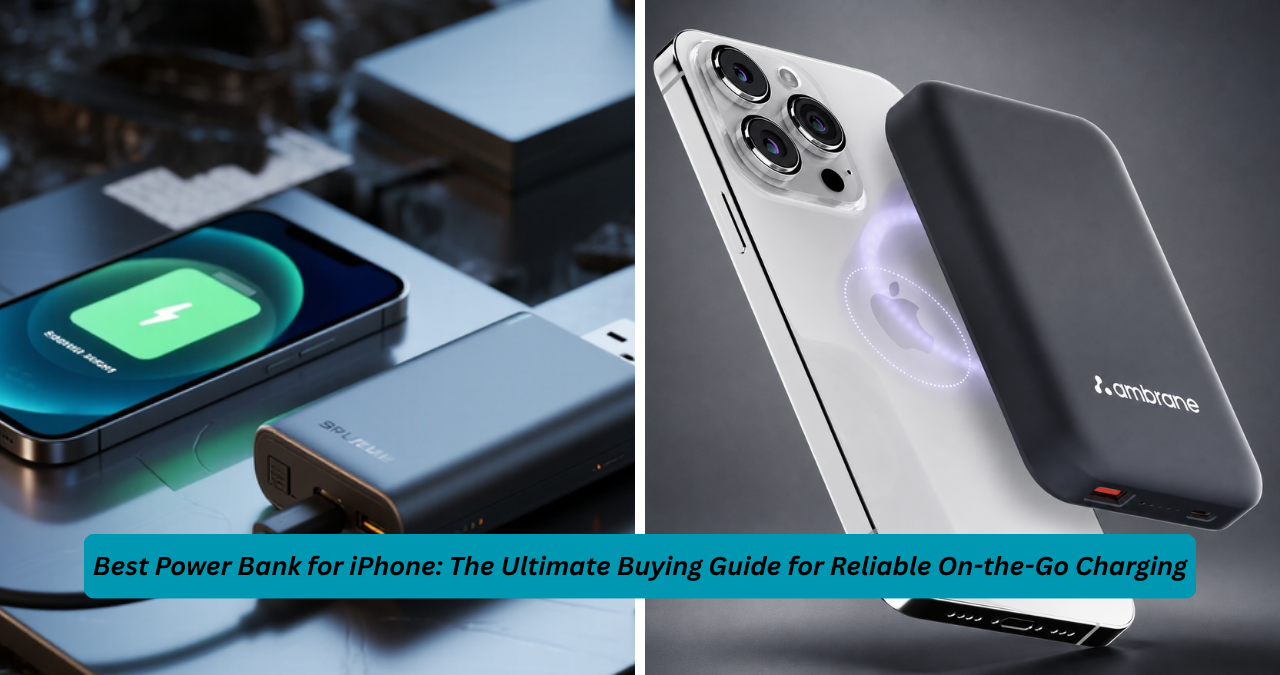
One of the biggest decisions when shopping for the best power bank for iPhone is whether to go wireless with MagSafe compatibility or stick with a traditional wired connection. MagSafe power banks attach magnetically to the back of compatible iPhone models, offering a genuinely convenient snap-on, snap-off experience that eliminates cable clutter entirely. The tradeoff is charging speed and efficiency — wireless charging generates more heat and typically charges slower than a direct wired connection, especially in colder or warmer ambient temperatures where iPhones intentionally throttle charging to protect the battery.
Wired options, by contrast, tend to be faster and more efficient, making them the better choice for anyone who prioritizes charging speed over convenience, such as someone charging during a short layover or a quick coffee break between meetings. That said, many people find a hybrid approach works best: a MagSafe-compatible power bank for casual daily use like commuting or working from a coffee shop, paired with a higher-capacity wired power bank reserved for travel days or emergencies. Think of it the way you might think about owning both sneakers and dress shoes — different situations call for different tools, and having both covers your bases without forcing a compromise.
How Capacity Requirements Change Based on Your Lifestyle
Not everyone needs the same power bank, and this is where a lot of buyers go wrong by simply purchasing whatever has the highest capacity number without considering their actual usage patterns. Someone who mainly needs a backup for occasional low-battery moments during a workday might be perfectly served by a compact 5,000mAh to 10,000mAh unit that slips easily into a pocket or small bag. This category represents genuinely one of the best power bank for iPhone solutions for minimalists who don’t want to carry extra bulk.
On the other end of the spectrum, frequent travelers, outdoor enthusiasts, or anyone attending multi-day events like festivals or conferences should look toward 20,000mAh or higher capacity units, sometimes even ones that can also charge laptops or other devices simultaneously. A photographer who regularly documents outdoor weddings shared an example that illustrates this well: shooting an entire day outdoors with a phone constantly running GPS, camera, and messaging apps can drain a battery two or three times over, meaning a small power bank simply won’t cut it. Matching capacity to actual use case, rather than buying based on marketing numbers alone, is the single biggest factor in long-term satisfaction with any portable charger purchase.
Comparing Popular Power Bank Categories for iPhone Users
| Category | Typical Capacity | Charging Speed | Best For |
|---|---|---|---|
| Compact Wired | 5,000–10,000mAh | Moderate to Fast (18–20W) | Daily commuters, minimalists |
| MagSafe Wireless | 5,000–10,000mAh | Slower (7.5–15W) | Casual convenience, desk use |
| High-Capacity Wired | 20,000mAh+ | Fast (20W+) | Travelers, multi-day trips |
| Multi-Device Chargers | 20,000–30,000mAh | Fast, multiple ports | Families, tech-heavy users |
| Solar-Assisted Banks | 10,000–20,000mAh | Variable | Outdoor and camping use |
This table highlights an important truth: there isn’t a single universal answer to what makes the best power bank for iPhone, because the ideal choice depends heavily on how, where, and how often you plan to use it. A student walking across campus all day has very different needs than a business traveler hopping between time zones, and recognizing that distinction upfront saves both money and frustration.
Common Problems iPhone Users Face and How to Solve Them
A recurring complaint among iPhone owners is buying a power bank that charges frustratingly slowly, despite packaging that promises fast charging. This usually stems from a mismatch between the power bank’s output protocol and what the iPhone actually requires. The solution is straightforward once you know what to look for: confirm the power bank explicitly supports USB Power Delivery with output specifications matching or exceeding your iPhone’s maximum accepted wattage, and always use a certified cable rather than a generic one that might not carry sufficient power.
Another common issue is power banks that degrade quickly, losing significant capacity after just a few months of regular use. This typically happens with lower-quality lithium-ion cells that aren’t built to handle repeated full discharge and recharge cycles. The fix here involves both prevention and habit change — choosing power banks from reputable manufacturers with documented cycle-life ratings, and adopting a habit of partial charging rather than always draining the power bank
before recharging it, which meaningfully extends battery lifespan over time. A third frequent frustration involves airline restrictions, since many travelers don’t realize that power banks above a certain watt-hour rating (typically 100Wh) require airline approval or aren’t permitted in checked luggage at all, making it worth checking the specific capacity rating before a big trip.
Safety Considerations Every Buyer Should Understand
Portable chargers are essentially small lithium-ion battery packs, and treating them with the same care you’d give any battery-powered device matters more than most people realize. Overheating is the most common safety concern, often triggered by charging in direct sunlight, leaving a power bank in a hot car, or using damaged cables that create resistance and generate excess heat. Reputable power banks include built-in protections like over-current protection, short-circuit protection, and temperature regulation, but these safeguards work best when the device itself is well-manufactured to begin with.
Certification matters here more than most buyers initially assume. Look for power banks that carry recognized safety certifications, since these indicate the product has been tested against established safety standards for battery products. Buying from lesser-known brands with no verifiable certification, purely because they’re cheaper, is one of the most common mistakes people make when searching for the best power bank for iPhone, and it’s a decision that occasionally leads to real safety incidents involving battery swelling or, in rare extreme cases, fire risk. Spending slightly more for a well-reviewed, certified product is one of the clearest cases where cutting corners genuinely isn’t worth the savings.
Real-World Scenarios Where the Right Power Bank Makes a Difference
Consider a scenario many people can relate to: attending a full-day outdoor concert where phone service is spotty, camera use is constant, and there’s no outlet in sight for eight or more hours. Without a reliable charger, capturing memories and staying in touch with your group becomes a losing battle against a draining battery. In this exact situation, a mid-to-high capacity power bank with fast charging support isn’t a luxury — it’s practically essential gear, right up there with sunscreen and comfortable shoes.
Business travel presents a different but equally compelling case. Picture someone rushing between back-to-back meetings across a city, relying on their iPhone for navigation, email, and video calls throughout the day. A compact, fast-charging power bank that can deliver a quick 30-minute boost between meetings solves a very specific pain point that a bulkier, high-capacity option wouldn’t address nearly as efficiently. These scenarios illustrate why identifying your actual use case, rather than chasing the highest specs on paper, consistently leads to better satisfaction with whichever power bank you ultimately choose.
Frequently Asked Questions
What capacity power bank do I need for my iPhone?
The right capacity depends on your iPhone model and how you plan to use the charger. Most current iPhone models have batteries ranging from roughly 3,000mAh to 4,500mAh, meaning a 10,000mAh power bank generally provides about two full charges, while a 20,000mAh unit can provide four or more. If you’re searching for the best power bank for iPhone as a daily backup, a smaller 10,000mAh option is usually sufficient, but frequent travelers should lean toward higher-capacity models.
Does MagSafe charging work as fast as wired charging?
No, MagSafe wireless charging is generally slower than a direct wired connection due to energy loss during magnetic power transfer and additional heat generation. Wired charging through USB-C or Lightning with USB Power Delivery support typically delivers faster charging speeds, making it the better option when you need a quick top-up rather than a slow, convenient trickle charge throughout the day.
Can I bring a power bank on an airplane?
Most airlines allow power banks in carry-on luggage, but there are watt-hour restrictions that vary by airline and region, typically capping around 100Wh without special approval. It’s always worth checking your specific airline’s policy before travel, since exceeding these limits can result in your power bank being confiscated at security, which is a frustrating surprise if you’ve already invested in what you believed was the best power bank for iPhone for an upcoming trip.
How long do power banks typically last before needing replacement?
Most quality power banks maintain reliable performance for approximately 300 to 500 full charge cycles before capacity noticeably degrades, which usually translates to two to three years of regular use. Factors like exposure to extreme temperatures, frequent full discharges, and cheap internal components can significantly shorten that lifespan, which is why investing in a reputable brand tends to pay off over time.
Is a higher mAh rating always better when choosing a power bank?
Not necessarily. While higher capacity means more total charges, it also typically means a bulkier, heavier device that’s less convenient to carry daily. The best power bank for iPhone for your specific needs balances capacity against portability, charging speed, and how you actually intend to use it, rather than simply maximizing the mAh number on the packaging.
What’s the difference between USB-C and Lightning power banks for iPhone?
This distinction depends on your specific iPhone model, since Apple transitioned from Lightning connectors to USB-C starting with iPhone 15. Older iPhone models require a Lightning cable for wired charging, while newer models use USB-C, so it’s essential to confirm your power bank includes or supports the correct cable type and connector for your particular device before purchasing.
Final Thoughts
Finding the best power bank for iPhone ultimately comes down to matching real-world needs with the right combination of capacity, charging speed, safety certification, and portability rather than chasing the biggest number on a product label. Whether you’re a daily commuter who just needs a quick emergency boost or a frequent traveler who depends on reliable power across long days away from an outlet, understanding how iPhone charging protocols actually work puts you in a far stronger position to make a smart purchase. The right power bank isn’t just an accessory — it’s peace of mind in your pocket, and once you know what to look for, choosing one becomes remarkably straightforward.