

If you’ve stumbled across the name Marj Hogarth recently, chances are it was through a comedy credit, a craft brand, or a jaw-dropping renovation show set inside a crumbling Welsh chapel. That’s not a coincidence — it’s the whole point. Marj Hogarth is one of those rare public figures whose career refuses to sit still in one lane, and that’s exactly what makes her worth understanding properly rather than skimming a single Wikipedia-style blurb.
This article pulls together everything currently known about Marj Hogarth: her stage and screen work, her design business, her relationship with ceramicist Keith Brymer Jones, and the ambitious home restoration project that’s introduced her to a whole new audience. Whether you’re here because of Still Game nostalgia, a Channel 4 binge session, or curiosity about sustainable craft, you’ll get a grounded, accurate picture of who Marj Hogarth actually is.
Who Is Marj Hogarth?
Marj Hogarth is a Scottish actress and designer whose career spans several decades across stage, screen, and craft-based entrepreneurship. She’s best known to British audiences for supporting roles in beloved Scottish comedy, and more recently for her creative partnership — both personal and professional — with potter and television presenter Keith Brymer Jones.
What sets Marj Hogarth apart from a typical “actress turned lifestyle personality” narrative is the authenticity running through everything she touches. She isn’t chasing trends or reinventing herself for algorithmic relevance. Her theatre roots inform her screen work, her love of materials informs her design business, and her partnership with Keith informs the very public, very messy chapel renovation that’s become appointment viewing for fans of home transformation television. Each chapter connects to the last, which is part of why her story feels so cohesive rather than scattered.

Marj Hogarth’s Early Career in Scottish Theatre and Comedy
Long before television cameras found her, Marj Hogarth was building her craft the traditional way — on stage. She performed in numerous theatre productions across Scotland, including festive pantomime staples where she took on classic villain roles such as the Wicked Queen and Carabosse at Eden Court Theatre in Inverness. Pantomime is a notoriously demanding genre; it requires split-second comic timing, physical commitment, and the ability to read a live audience in real time. That grounding shows up later in her television performances, which consistently feel unforced and naturalistic rather than stagey.
This theatre background is worth dwelling on because it explains something people often miss when they encounter Marj Hogarth purely through clips or soundbites: her comic instincts weren’t manufactured for a camera. They were earned through years of repetition, audience feedback, and the kind of craft development that only live performance provides. It’s the same reason experienced stage actors often bring a different texture to sitcom work than performers who’ve only ever worked in front of a lens — there’s a rhythm to Marj Hogarth’s delivery that reads as lived-in rather than scripted.
Marj Hogarth’s Television and Radio Career
Marj Hogarth’s national profile grew significantly through her involvement with The Karen Dunbar Show, a Scottish sketch comedy series that ran through the mid-2000s and showcased her range across character work and physical comedy. From there, her credits expanded to include appearances in Still Game — arguably Scotland’s most beloved sitcom — as well as Rab C. Nesbitt and the children’s drama M.I. High.
Perhaps her most enduring radio work came through BBC Radio 4’s Fags, Mags and Bags, a long-running sitcom set in a Scottish corner shop, where she played the character Joan Begg across multiple series. Radio comedy is an underrated skill set: without facial expressions or physical blocking to lean on, an actor has to build an entire character through voice, timing, and inflection alone. That Marj Hogarth sustained a recurring role across years of episodes speaks to a level of craft that’s easy to overlook when it isn’t delivered on screen. Fans of British sitcom writing often cite Fags, Mags and Bags as a masterclass in ensemble comedy, and Marj Hogarth’s contribution was central to that reputation.
Marj Hogarth and Hook & Hatchet: A Second Creative Chapter
In 2020, during the UK’s first national lockdown, Marj Hogarth launched Hook & Hatchet, a design venture producing practical, sustainably minded bags and crafted goods. Rather than adopting buzzy marketing language like “upcycling,” she has taken a more grounded, materials-first approach — repurposing what’s available and letting the design process respond to what she’s working with, rather than forcing a trend-driven aesthetic onto raw materials.
This pivot makes sense in the context of her wider story. Performers who spend years interpreting other people’s scripts often develop a strong appetite for something more tactile and self-directed, and Marj Hogarth’s move into design reflects that instinct. It also mirrors a broader cultural shift toward slower, more intentional consumption — something increasingly relevant as more consumers ask harder questions about where their goods come from. In that sense, Marj Hogarth isn’t just making bags; she’s participating in a design philosophy that treats sustainability as a discipline rather than a marketing checkbox.
Marj Hogarth’s Life With Keith Brymer Jones
Marj Hogarth is married to Keith Brymer Jones, the ceramicist, author, and television judge best known for his emotionally charged appearances on The Great Pottery Throw Down. Their relationship represents a genuine meeting of two craft-driven worlds — acting and ceramics — and while Keith has been more publicly vocal about their life together over the years, Marj has generally kept a lower profile, letting her work speak for itself.
That balance between visibility and privacy is one of the more interesting threads in her public story. In an entertainment landscape saturated with oversharing, Marj Hogarth‘s relative reticence has become part of her appeal rather than a barrier to it. Audiences increasingly gravitate toward people who reveal themselves through their output — a beautifully finished bag, a pitch-perfect comic scene, a chapel wall rebuilt by hand — rather than through constant commentary. It’s a quieter kind of authenticity, but no less compelling.
Marj Hogarth and the Capel Salem Renovation
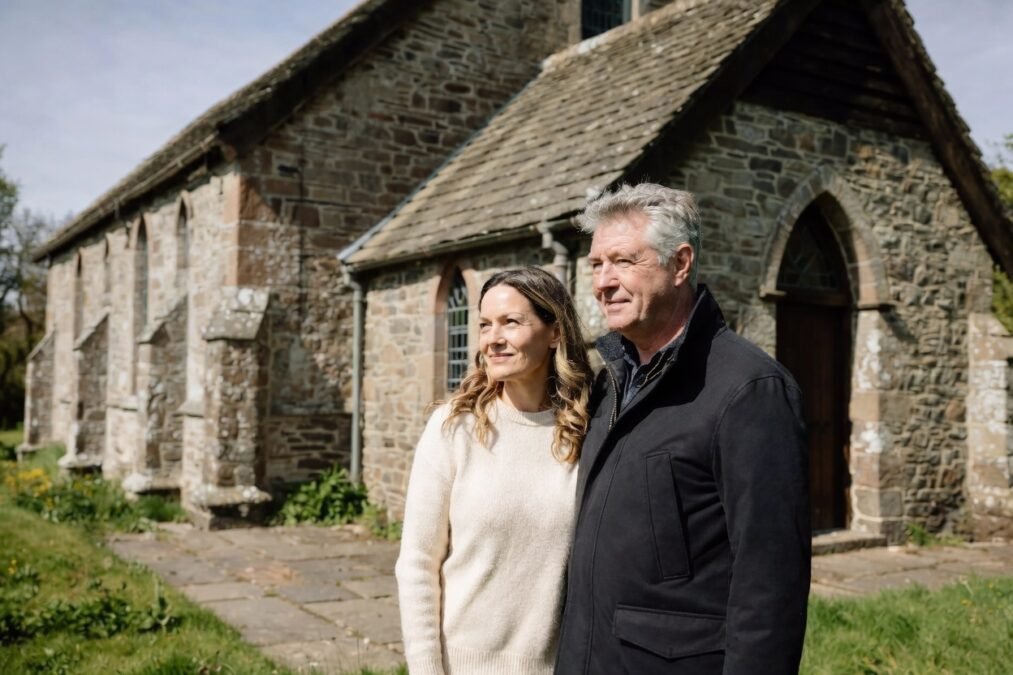
The project that’s introduced Marj Hogarth to her widest audience yet is the restoration of Capel Salem, a derelict nineteenth-century chapel in Pwllheli, North Wales. Abandoned for more than a decade before the couple took it on, the building was in genuinely dire condition — missing roof slates, water damage, extensive dry rot, and, memorably, a long-term pigeon population that resisted every eviction attempt. The couple’s journey rebuilding it into a home, working studio, and creative hub has been documented in Channel 4’s Our Welsh Chapel Dream.
What makes this project compelling isn’t just the scale of the renovation — it’s the honesty with which Marj Hogarth talks about it. As she’s put it herself, a project of this size and history is “never going to be finished,” a sentiment that resonates with anyone who’s taken on a major restoration. The couple relocated over 300 miles from their previous home on the Kentish coast to a part of Wales neither of them had strong ties to, choosing ambition over familiarity. That leap —
somewhere with no built-in support network, then having to “cut your coat according to your cloth” financially while still thinking big creatively — is a big part of what has made Marj Hogarth relatable to viewers navigating their own midlife pivots.
Marj Hogarth Quick Facts
| Category | Details |
|---|---|
| Profession | Actress, designer, business owner |
| Nationality | Scottish |
| Known for | Still Game, Fags Mags and Bags, The Karen Dunbar Show |
| Design venture | Hook & Hatchet (sustainable bags and crafts) |
| Partner | Keith Brymer Jones, ceramicist and TV presenter |
| Notable project | Restoration of Capel Salem, North Wales |
| TV appearance | Our Welsh Chapel Dream (Channel 4) |
| Public profile | Limited social media presence; values privacy |
Why Marj Hogarth’s Story Resonates With Audiences
A large part of Marj Hogarth’s appeal comes down to timing and tone. Her story isn’t framed as a dramatic comeback or a manufactured rebrand — it’s presented as continuous, organic growth across decades. That distinction matters to audiences who are increasingly skeptical of curated reinvention narratives and more drawn to people whose evolution feels earned rather than staged.
There’s also a strong midlife-reinvention thread running through her recent visibility, particularly through the chapel renovation. Marj Hogarth and Keith Brymer Jones took on Capel Salem later in life, without a hometown safety net, while managing real financial constraints and years of physically demanding work. For viewers weighing their own big life changes — a career shift, a relocation, a creative business launched from scratch — watching Marj Hogarth navigate uncertainty with humour and persistence offers something more useful than aspirational fantasy: it offers proof that starting again, even imperfectly, is possible.
Frequently Asked Questions About Marj Hogarth
Who Is Marj Hogarth?
Marj Hogarth is a Scottish actress and designer known for roles in Still Game, Fags Mags and Bags, and The Karen Dunbar Show, as well as her sustainable design business, Hook & Hatchet. She’s also widely recognised through her relationship with ceramicist Keith Brymer Jones and their chapel renovation project featured on Channel 4.
What is Marj Hogarth’s Television and Radio Career?
Marj Hogarth is best known for supporting comedy roles in Scottish television, including appearances in Still Game and Rab C. Nesbitt, as well as her recurring voice role as Joan Begg in BBC Radio 4’s long-running sitcom Fags, Mags and Bags.
How was Marj Hogarth’s Life With Keith Brymer Jones?
Yes, Marj Hogarth is married to Keith Brymer Jones, the ceramicist and television presenter best known for judging The Great Pottery Throw Down. The couple share both a personal partnership and a very public creative project in the restoration of their Welsh chapel home.
When Marj Hogarth and Hook & Hatchet design ventured?
Hook & Hatchet is Marj Hogarth’s design venture, launched in 2020, focused on producing practical, sustainably made bags and crafted goods. Rather than leaning on upcycling as a marketing term, she approaches each piece from a materials-first, craftsmanship-led perspective.
How is Marj Hogarth and the Capel Salem Renovation?
Marj Hogarth currently lives in Capel Salem, a restored nineteenth-century chapel in Pwllheli, North Wales, which she and Keith Brymer Jones have been transforming from a derelict building into a home, studio, and creative hub, as documented in Our Welsh Chapel Dream.
Final Thoughts on Marj Hogarth
Marj Hogarth’s career resists easy categorisation, and that’s precisely why it holds up to closer examination. From pantomime stages in Inverness to sketch comedy, radio sitcoms, a sustainable design brand, and now a very public chapel restoration, she’s built a body of work defined by craftsmanship rather than spectacle. Whether you first encountered Marj Hogarth through Still Game, through Hook & Hatchet, or through the dry rot and dramatic renovation footage of Our Welsh Chapel Dream, the throughline is consistent: genuine skill, quiet persistence, and a refusal to let any single chapter define the whole story. That’s ultimately what makes Marj Hogarth worth following — not one big moment, but a career built patiently, one honest project at a time.