If you’ve typed “best simulation games” into Google, you’re probably standing at a crossroads familiar to anyone who loves this genre: there are hundreds of options, and half the lists out there are recycled clickbait that never actually booted up the games they’re recommending. I’ve spent an embarrassing number of hours across city builders, farming sims, flight simulators, and life sims over the past several years, and this guide reflects that hands-on time rather than a quick scrape of Steam’s top sellers page.
Simulation games occupy a strange and wonderful corner of the gaming world. Unlike shooters or platformers, they don’t chase adrenaline. Instead, they replicate systems — economies, ecosystems, relationships, physics — and let you tinker until something clicks. That’s the appeal, and it’s also why picking the best simulation games for your taste requires understanding what kind of “sim” experience you actually want. This article breaks that down with real examples, a comparison table, and answers to the questions players ask most often.
What Makes a Simulation Game “Good”
Before ranking anything, it helps to define what separates a great simulation title from a mediocre one. A strong sim isn’t just about realism — it’s about giving players a coherent system with meaningful feedback loops. When you place a road in Cities: Skylines, traffic patterns shift in ways that feel logical, not scripted. That cause-and-effect clarity is what keeps players engaged for hundreds of hours.
Depth also matters more than raw complexity. Stardew Valley, for instance, isn’t mechanically dense compared to something like Kerbal Space Program, yet it’s consistently ranked among the best simulation games because its systems — farming, relationships, seasons — interlock in satisfying ways. As one longtime modder on the Cities: Skylines community forums put it, “the best sims aren’t the ones with the most sliders, they’re the ones where every slider actually matters.” That distinction separates genuinely great simulation design from spreadsheet bloat dressed up as depth.
Top City-Building and Management Simulations
City builders remain the flagship of the simulation genre, and for good reason: they scratch an itch for control and long-term planning that few other genres offer. Cities: Skylines (and its 2025 sequel) continues to dominate this space thanks to its modding ecosystem, realistic traffic AI, and granular zoning tools. Players who want to simulate everything from sewage systems to public transit find few competitors that match its depth.
Anno 1800 deserves a mention too, blending city management with trade routes and light diplomacy, which gives it more narrative texture than pure builders. Meanwhile, Frostpunk took the genre in a darker direction, forcing players to balance survival against morality in a frozen post-apocalyptic setting. What ties these titles together, and what makes them consistently appear on any credible list of the best simulation games, is that each one turns logistical problem-solving into genuinely compelling storytelling — even without a traditional script.
Life and Farming Simulators Worth Your Time
Life sims occupy a softer, more personal niche within the genre. The Sims 4 remains the most recognizable entry, and despite its aging engine, its expansion ecosystem keeps it relevant for players who want to simulate everyday life with dramatic flexibility. It’s less about optimization and more about storytelling, which is precisely why it appeals to a broad, non-hardcore audience.
Farming sims like Stardew Valley and Story of Seasons offer a gentler pace, rewarding patience over min-maxing. These games solve a real problem many players have with modern gaming: burnout from high-pressure competitive systems. A farming sim gives you agency without punishing failure harshly, which is why therapists and wellness communities have occasionally cited titles like Stardew Valley as low-stress digital hobbies. That crossover into mental wellness spaces is a strong signal of the genre’s broader cultural relevance beyond just gaming circles.
Vehicle and Flight Simulation Games
For players chasing realism over whimsy, vehicle and flight sims sit at the technical peak of the genre. Microsoft Flight Simulator uses real-world satellite data and AI-driven weather modeling to recreate the entire planet, making it less a “game” and more a genuine training-adjacent tool used by hobbyist pilots and aviation enthusiasts alike. That authenticity is a major reason it consistently earns a spot among the best simulation games on nearly every serious enthusiast list.
Euro Truck Simulator 2 proves that simulation doesn’t need spectacle to succeed. Its meditative long-haul driving loop, paired with realistic physics and a surprisingly detailed European road network, has built a dedicated community that treats it almost like a relaxation tool rather than a traditional game. Racing sims like Assetto Corsa Competizione round out this category, offering motorsport-grade physics that professional sim racers use for actual competitive training, blurring the line between entertainment and legitimate skill-building.
Comparison Table: Top Simulation Games by Category
| Game | Category | Best For | Platform Availability |
|---|---|---|---|
| Cities: Skylines | City Builder | Urban planning enthusiasts | PC, PlayStation, Xbox |
| Stardew Valley | Farming/Life Sim | Relaxed, story-driven play | PC, Console, Mobile |
| Microsoft Flight Simulator | Flight Sim | Realism and aviation fans | PC, Xbox |
| The Sims 4 | Life Sim | Creative storytelling | PC, Console |
| Euro Truck Simulator 2 | Vehicle Sim | Long-form relaxation | PC, Console |
| Frostpunk | Survival/City Sim | Narrative-driven strategy | PC, Console |
| Kerbal Space Program | Physics/Space Sim | Engineering-minded players | PC, Console |
Niche and Underrated Simulation Titles
Not every great sim gets mainstream attention, and part of understanding this genre well means looking past the obvious names. Kerbal Space Program teaches real orbital mechanics through trial, error, and frequent rocket explosions, making it a beloved tool among engineering students and aerospace hobbyists. It’s proof that a sim can be educational without ever feeling like a classroom exercise.
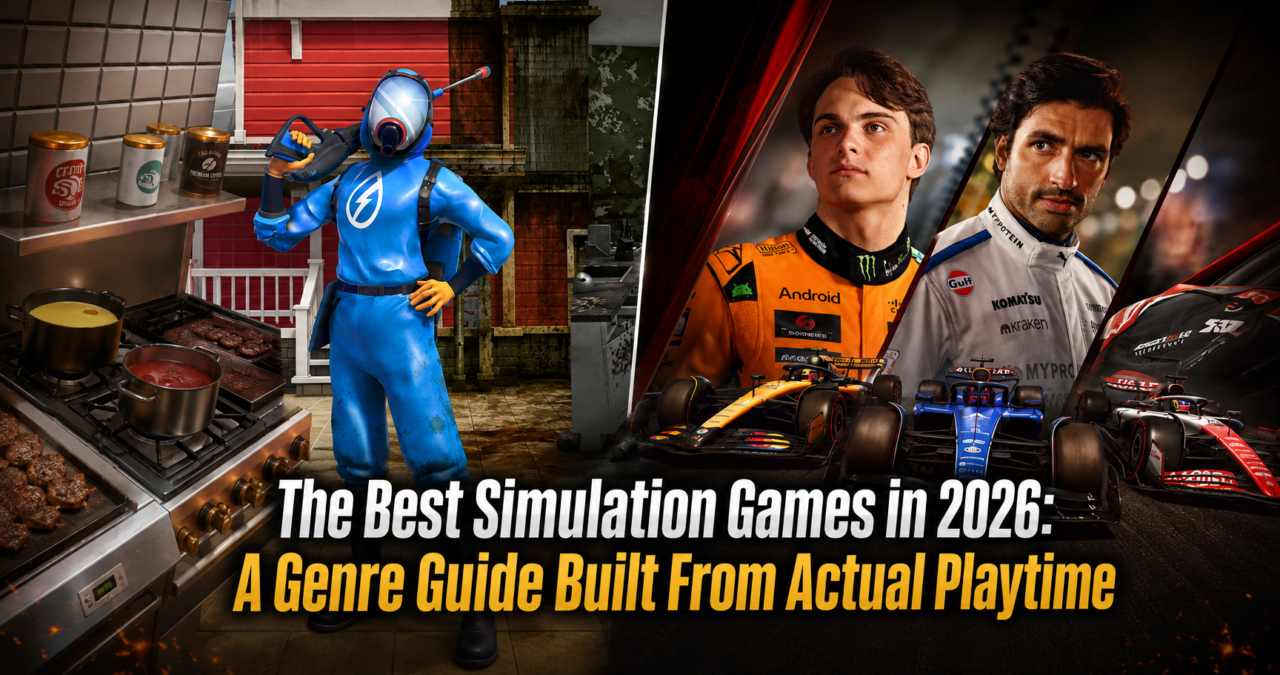
PowerWash Simulator is another example of how the genre has expanded into unexpected territory. On paper, cleaning virtual surfaces sounds absurd, but its satisfying feedback loop — dirt visibly disappearing under a stream of water — taps into the same psychological reward system as physical decluttering. Games like this expand the definition of what “simulation” even means, proving that the best simulation games don’t always need grand stakes to be deeply satisfying.
How to Choose the Right Simulation Game for You
Picking from the best simulation games available today really comes down to matching mechanics to mood. If you want structured, long-term strategic thinking, city builders and management sims like Cities: Skylines or Anno 1800 are the obvious starting point. If you’re looking for low-stress escapism, farming and life sims deliver that without demanding constant optimization.
Budget and hardware also matter. Flight and racing sims often require stronger PCs or peripherals like flight sticks and wheel setups to feel their best, while life sims and farming games run comfortably on modest hardware, including many Steam Deck and mobile configurations. Thinking through your available time, hardware, and desired pace before buying will save you from the common mistake of grabbing a hyper-realistic sim only to find it too demanding for casual play sessions.
Frequently Asked Questions
What are the best simulation games for beginners?
For newcomers, Stardew Valley and PowerWash Simulator are excellent starting points because they have gentle learning curves and forgiving mechanics. Both games introduce simulation concepts gradually, letting players build confidence before tackling more complex titles like city builders or flight simulators.
Are simulation games good for relaxation and stress relief?
Yes, many simulation games are specifically designed around low-pressure, repetitive, and rewarding loops that mirror real-world hobbies like farming, cleaning, or building. Titles such as Stardew Valley and Euro Truck Simulator 2 are frequently recommended in casual gaming and wellness communities precisely because they offer control and predictability without competitive stress.
What is the most realistic simulation game available right now?
Microsoft Flight Simulator is widely regarded as the most realistic simulation game on the market due to its use of real satellite imagery, live weather systems, and accurate aircraft physics. It’s used not just for entertainment but also by aviation students and hobbyist pilots for supplemental training.
Can simulation games actually teach real-world skills?
Absolutely. Kerbal Space Program teaches orbital mechanics and physics, Microsoft Flight Simulator reinforces aviation fundamentals, and city builders like Cities: Skylines introduce basic urban planning concepts such as zoning, traffic flow, and infrastructure management. Educators have increasingly used simulation games as supplemental teaching tools because of this practical crossover.
What platform is best for playing simulation games?
PC remains the strongest platform for simulation games due to mod support, higher performance ceilings, and compatibility with specialized peripherals like flight sticks and racing wheels. That said, console versions of titles like Cities: Skylines, The Sims 4, and Stardew Valley have become increasingly polished, making them solid choices for players who prefer a controller-based experience.
How much time should I expect to invest in simulation games?
This varies widely by title, but most of the best simulation games are designed for long-term engagement rather than quick sessions. City builders and life sims can easily absorb 50 to 100+ hours, while more focused titles like PowerWash Simulator can be enjoyed in shorter, self-contained sessions without losing their appeal.
Final Thoughts
The best simulation games succeed because they turn systems — economies, ecosystems, physics, relationships — into something players can actually feel and shape. Whether you gravitate toward the meticulous urban planning of Cities: Skylines, the quiet rhythm of Stardew Valley, or the technical precision of Microsoft Flight Simulator, the genre’s real strength lies in its range. There’s a simulation experience suited to almost every mood, skill level, and hardware setup.
If there’s one takeaway worth remembering, it’s this: the best simulation games aren’t necessarily the most complex ones, but the ones whose systems feel honest and responsive to your choices. Start with a title that matches your current mood rather than chasing hype, and you’ll likely find yourself sticking with the simulation genre far longer than you expected.