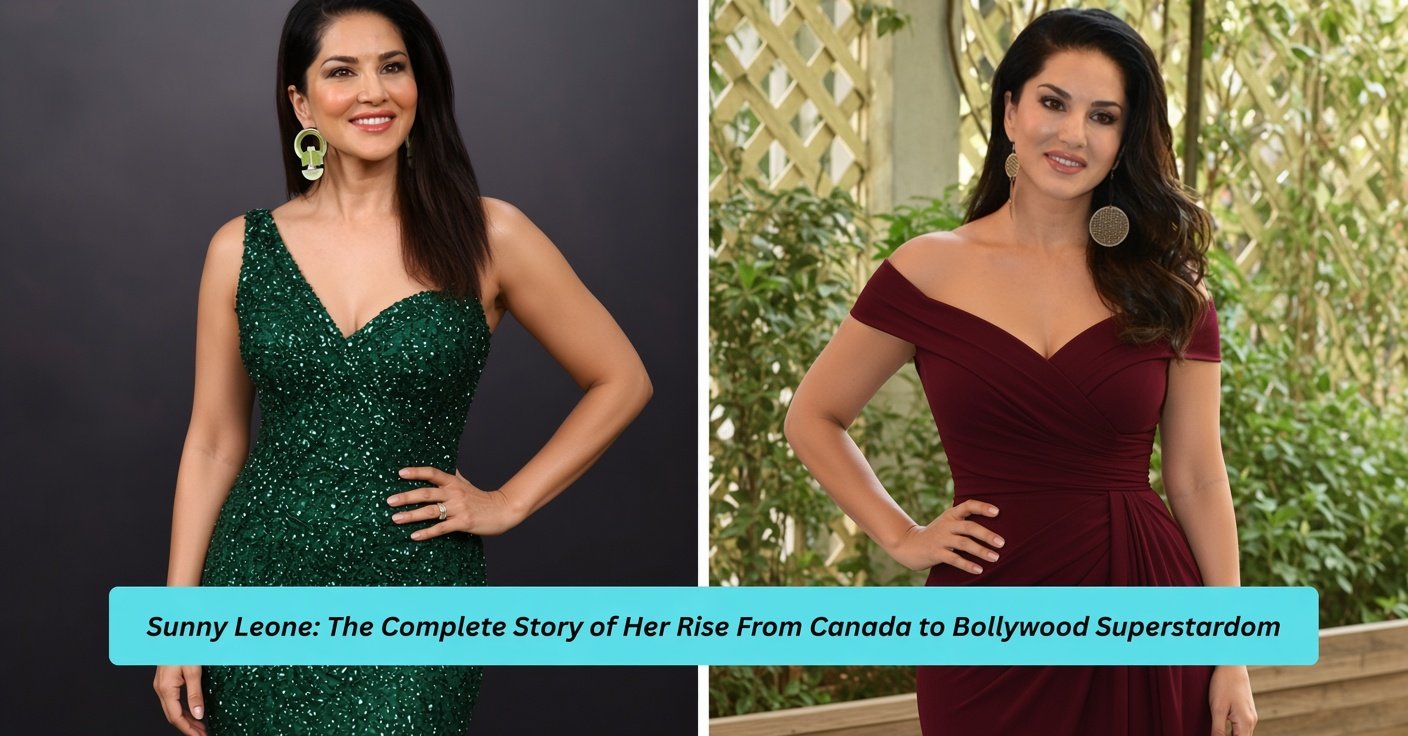
Few names in Indian entertainment generate as much curiosity, conversation, and consistent search traffic as Sunny Leone. For years running, she topped lists of the most-searched celebrities in India, and that fascination hasn’t faded — if anything, it’s evolved. What started as public curiosity about an unconventional entrant into Bollywood has turned into genuine respect for a woman who built a multi-industry career largely on her own terms. This article takes a close, honest look at who Sunny Leone actually is, how she built her career, and why she remains one of the most talked-about personalities in Indian pop culture today.
Understanding Sunny Leone means understanding a genuinely unusual career arc. She didn’t grow up dreaming of Bollywood, didn’t train at a Mumbai film school, and didn’t come from a film family. Instead, she carved a path that took her from a suburban Canadian upbringing to reality television, then to mainstream Hindi cinema, and eventually into boardrooms as a business owner. That trajectory alone makes her one of the more interesting case studies in modern celebrity reinvention.
Who Is Sunny Leone?
Sunny Leone was born Karenjit Kaur Vohra on May 13, 1981, in Sarnia, Ontario, Canada, to Sikh Punjabi parents. She grew up in a fairly traditional household, and by her own account, she originally aspired to become a pediatric nurse — a detail that surprises a lot of people given how her career actually unfolded. She holds dual Canadian and American citizenship and has spoken openly, over the years, about the cultural balancing act of growing up between two identities: a Punjabi household at home and a Western upbringing outside it.
Her professional name itself has an origin story worth knowing. “Sunny” came from a nickname used for her within her family, while “Leone” was chosen for her by Bob Guccione, the founder of Penthouse magazine, during the early years of her modeling career. That naming moment, small as it sounds, essentially created the public identity that would eventually become one of the most searched names in Indian entertainment — a strange bit of trivia when you consider how far removed it is from her current life as a Bollywood actress, producer, and entrepreneur.
The Early Career That Built Her Public Profile
Sunny Leone’s professional path began in the adult entertainment industry in the early 2000s, where she quickly built a substantial following and was named Penthouse Pet of the Year in 2003. This chapter of her career is impossible to leave out of any honest account of who she is, because it’s genuinely the reason she later became a household name in India — but it’s also the part of her story that tends to get sensationalized rather than understood.
What’s often missed is how deliberately she has spoken about that period. In interviews, she has consistently declined to express regret or shame, framing it instead as a professional chapter that shaped her discipline and eventually opened the door to everything that followed. That kind of framing matters because it reflects something larger about her overall brand: she doesn’t present herself as someone running from her past, but as someone who integrated it into a broader, ongoing story of reinvention. It’s a distinction that separates Sunny Leone from many public figures who try to scrub inconvenient chapters from their history — she’s taken the opposite approach, treating transparency as a strength rather than a liability.
Bigg Boss and the Turning Point Toward Bollywood
The real pivot in Sunny Leone’s career came in 2011, when she entered the Indian reality show Bigg Boss (the Hindi-language adaptation of Big Brother). For Indian audiences who had only heard her name in passing, the show served as a genuine introduction — viewers got to see her personality, humor, and comfort in front of a camera in a format completely different from anything she’d done before.
That appearance caught the attention of filmmaker Mahesh Bhatt, who cast her in the lead role of the erotic thriller Jism 2 (2012), directed by Pooja Bhatt. The decision to cast Sunny Leone in a mainstream Hindi film was, at the time, genuinely controversial — plenty of industry commentators and moral gatekeepers predicted she’d be rejected by Indian audiences or restricted to a single type of role. Instead, Jism 2 became a commercial talking point, and Leone’s performance, while met with mixed critical reviews, was widely seen as more than capable. It opened the door to a mainstream Bollywood career that has now spanned well over a decade.
Building a Genuine Bollywood Filmography
What’s easy to overlook amid all the noise around her background is that Sunny Leone has actually built a substantial acting career. Following Jism 2, she appeared in Ragini MMS 2 (2014), a horror-thriller that performed well commercially and further established her box-office draw. She went on to appear in over twenty Indian films across Bollywood and regional cinema, working alongside some of the industry’s biggest names — including a role in Raees (2017) opposite superstar Shah Rukh Khan, one of the most significant Bollywood actors of his generation.
Her range has extended into other formats as well. She hosted MTV’s Splitsvilla, one of India’s longest-running reality dating shows, for multiple seasons, showcasing a hosting style that helped normalize her presence on mainstream Indian television beyond film. In 2016, a documentary titled Mostly Sunny premiered at the Toronto International Film Festival, tracing her journey from adult entertainment to Bollywood stardom — a sign that her story had, by that point, become culturally significant enough to warrant serious documentary treatment rather than tabloid coverage alone. Her life was also later dramatized in the web series Karenjit Kaur: The Untold Story of Sunny Leone, which explored her personal history in a scripted format.
From Actress to Entrepreneur
One of the most underreported aspects of Sunny Leone’s career is just how far she has expanded beyond acting. She founded her own production company, variously referred to as Sun City Pictures or Sunny Leone Entertainment, giving her creative control and ownership stakes rather than relying purely on acting fees. She also launched StarStruck, her own cosmetics line, tapping into the same beauty-and-lifestyle market that many entertainers try to enter but few manage to sustain long-term.
Her business interests don’t stop there. She became a co-owner of the Mumbai Tigers, a franchise in Indian box cricket, and has maintained an active presence in real estate and personal investments. In 2016, Sunny Leone became the first Indian celebrity to launch her own dedicated mobile app, an early move into direct-to-fan digital engagement that many celebrities have only caught up to in recent years. Taken together, this business portfolio tells a story that’s very different from the one-dimensional public image she’s sometimes reduced to: a calculated, multi-industry entrepreneur who has treated her fame as a platform to build lasting ventures, not just a temporary spotlight.
Personal Life, Family, and Public Advocacy
Sunny Leone is married to Daniel Weber, a former musician and now her business partner across several of her ventures, including her production company. In July 2017, the couple adopted their first child, a daughter named Nisha, from Latur, a village in Maharashtra, India — a decision that generated substantial media attention given the relatively rare nature of celebrity adoptions in India at the time. The couple later welcomed twin sons via surrogacy. By multiple accounts, Weber and Leone have structured their professional lives so that one parent is generally available at home, a scheduling choice that reflects a fairly deliberate approach to balancing high-profile careers with family stability.
Beyond her family life, Leone has used her platform for causes including animal welfare, working with organizations like PETA, and HIV/AIDS awareness campaigns — an area where her personal history has arguably given her a more credible, less performative voice than many celebrity ambassadors typically bring to the cause. She has also spoken about her decision never to endorse tobacco products, a choice she has connected to her father’s death from cancer. These details matter for understanding the fuller picture of Sunny Leone: a public figure whose personal choices, both in business and advocacy, have consistently reflected more intention than the tabloid version of her story usually allows for.
Sunny Leone: Quick Facts Table
| Category | Details |
|---|---|
| Birth name | Karenjit Kaur Vohra |
| Born | May 13, 1981, Sarnia, Ontario, Canada |
| Nationality | Canadian and American (dual citizenship) |
| Bollywood debut | Jism 2 (2012) |
| Notable films | Jism 2, Ragini MMS 2, Raees |
| Business ventures | Sun City Pictures, StarStruck cosmetics, Mumbai Tigers (co-owner) |
| Spouse | Daniel Weber |
| Children | One adopted daughter, twin sons via surrogacy |
| Advocacy | Animal welfare (PETA), HIV/AIDS awareness |
Why Sunny Leone Continues to Dominate Search Trends
It’s worth asking directly why Sunny Leone has remained one of the most consistently searched celebrities in India for over a decade. Part of the answer is simple curiosity about her origin story, but that alone doesn’t explain the staying power. The bigger factor is that she represents a genuinely rare kind of career transformation — very few public figures manage to cross from adult entertainment into mainstream national stardom, and fewer still manage to sustain that mainstream career for more than a decade while also building an independent business empire alongside it.
There’s also a cultural angle that shouldn’t be ignored. India’s relationship with Sunny Leone has often mirrored broader tensions in the country around conservative social values versus a rapidly modernizing, increasingly connected younger audience. She’s frequently been treated as something of a cultural lightning rod, a name that critics invoke to make points about morality and a name that fans invoke to make points about resilience and self-determination. That duality — being simultaneously polarizing and popular — is a big part of why her name keeps trending, film after film, controversy after controversy, year after year.
Frequently Asked Questions
What is Sunny Leone’s real name?
Sunny Leone’s birth name is Karenjit Kaur Vohra. She was born to Sikh Punjabi parents in Sarnia, Ontario, Canada, and adopted the professional name Sunny Leone early in her modeling career, with “Leone” reportedly chosen for her by Penthouse founder Bob Guccione.
How did Sunny Leone become famous in India?
Sunny Leone gained mainstream recognition in India after appearing on the reality show Bigg Boss in 2011. That appearance led filmmaker Mahesh Bhatt to cast her in the lead role of Jism 2 (2012), marking her Bollywood debut and beginning her transition from adult entertainment into mainstream Indian cinema.
Is Sunny Leone married, and does she have children?
Yes, Sunny Leone is married to Daniel Weber, a former musician who now works alongside her as a business partner in several of her ventures. The couple adopted a daughter named Nisha in 2017 and later had twin sons via surrogacy, and both parents have spoken about deliberately structuring their careers to prioritize time at home with their children.
What businesses does Sunny Leone own?
Sunny Leone has built a diversified business portfolio that includes her own production company, often referred to as Sun City Pictures or Sunny Leone Entertainment, as well as her cosmetics brand StarStruck. She is also a co-owner of the Mumbai Tigers box cricket franchise and has been involved in real estate investments, reflecting a career strategy that extends well beyond acting.
What films is Sunny Leone best known for?
Sunny Leone is best known in Bollywood for her debut film Jism 2 (2012), the horror-thriller Ragini MMS 2 (2014), and her role in Raees (2017) alongside Shah Rukh Khan. She has appeared in more than twenty Indian films across Bollywood and regional cinema and has also hosted MTV’s Splitsvilla for multiple seasons.
Final Thoughts
Sunny Leone’s story is ultimately one of reinvention executed with unusual consistency. From a Sikh Punjabi upbringing in small-town Canada, through an unconventional early career, into a genuine, long-running Bollywood filmography, and finally into a self-built business empire spanning cosmetics, production, and sports ownership — her path doesn’t fit neatly into any typical celebrity narrative. Whatever opinions people hold about her past, the throughline of her career has been consistent reinvention backed by real business instinct, not just persistence in front of a camera. That combination is exactly why Sunny Leone remains one of the most searched, discussed, and, in her own way, respected names in Indian entertainment today.