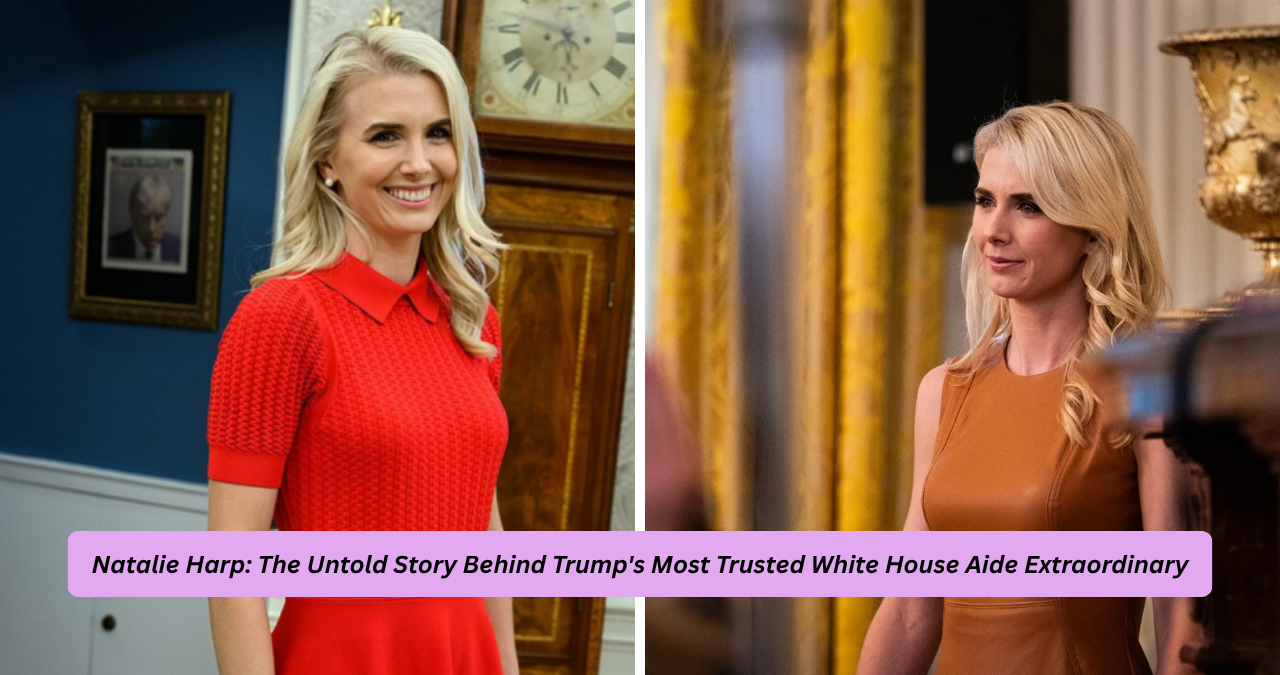
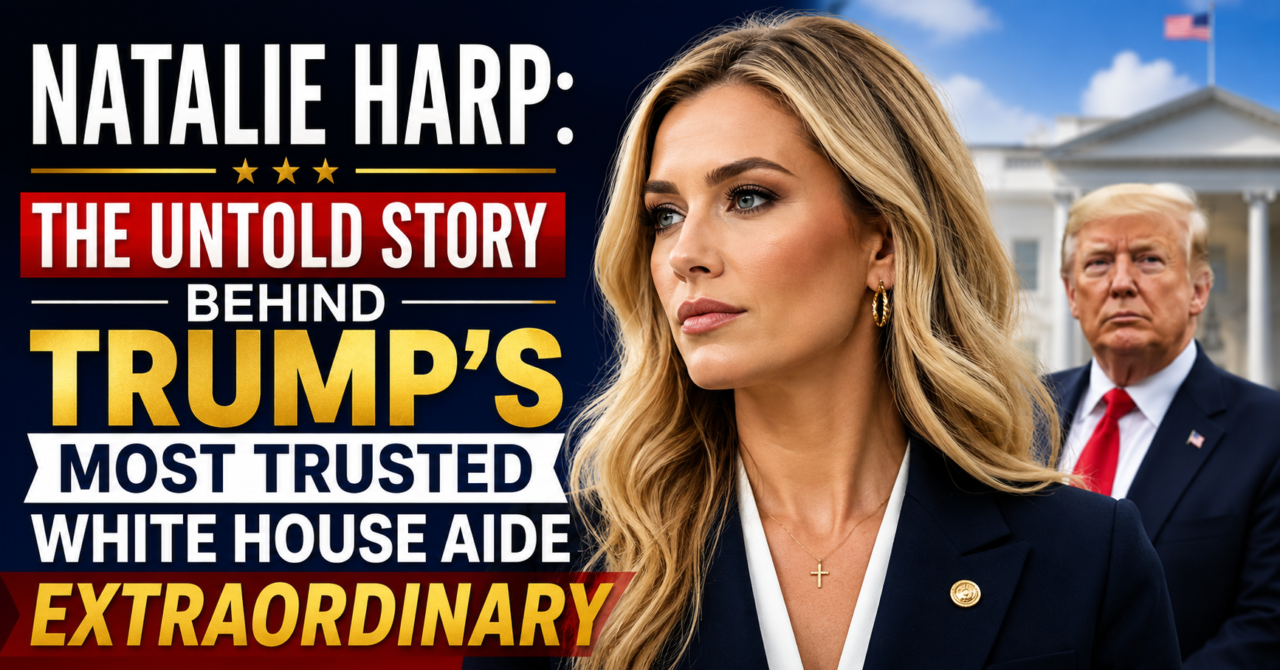
If you’ve followed recent political headlines closely, you’ve probably come across the name Natalie Harp more than once in the past few weeks. She isn’t a cabinet secretary. She isn’t a household name like a press secretary or chief of staff. Yet Natalie Harp has become one of the most talked-about figures in Washington, and for good reason — her proximity to President Donald Trump has made her an unusually powerful presence inside the West Wing.
This article breaks down exactly who Natalie Harp is, how she rose from a cable news correspondent to one of the most trusted aides in the Trump administration, and why her name suddenly became a flashpoint in a public dispute with a sitting U.S. senator. Whether you’re searching for background on a political story you saw trending, or you want a genuinely comprehensive look at her career trajectory, this guide covers it all with depth, context, and clarity.
Who Is Natalie Harp?
Natalie Harp currently serves as executive assistant to the president, a title that sounds administrative on paper but carries far more weight in practice. Officially, her formal positions include special assistant to the president and executive assistant to the president — titles that don’t fully capture the level of access she has to Donald Trump on a daily basis.
Born around 1990 or 1991, Harp is a graduate of Point Loma Nazarene University and later earned an MBA from Liberty University in 2015. Before her political career took shape, she built a public profile as a television host and correspondent, most notably with One America News Network (OANN), a conservative cable outlet, where she worked from roughly 2020 to 2022. It was during her time in conservative media that she first crossed paths with Trump in a way that would eventually reshape her career entirely. Natalie Harp’s journey from broadcast journalism to the inner circle of the presidency is a case study in how personal loyalty and consistent visibility can translate into extraordinary access in politics.
How Natalie Harp Rose to Prominence
Harp’s public rise didn’t start in the White House — it started with a personal health story that captured national attention back in 2019. She credited a federal right-to-try law, signed by Trump, with giving her access to experimental treatment that she says played a role in her recovery from a serious illness. That story resonated with Trump personally, and it opened a door that would define the next several years of her career.
Following that moment, Trump invited her onto the advisory board for his 2020 presidential campaign, and she was given a speaking slot at the 2020 Republican National Convention — a significant platform for someone who wasn’t a career politician or party insider. After stepping away from OANN in 2022, Natalie Harp began working directly alongside Trump rather than covering him from a distance. By the time the 2024 campaign was in full swing, she had become a fixture around him, often traveling with him and managing a steady stream of printed material, news clips, and social media content he
to review. This hands-on, almost old-fashioned method of curating information for a modern president is part of what makes her role so distinctive compared to typical White House staff positions.
What Does Natalie Harp Actually Do in the White House?
This is where things get interesting, and where a lot of the public curiosity stems from. Officially, Natalie Harp holds administrative titles. Unofficially, multiple reports describe her as functioning like a filter or gatekeeper — someone who curates the news articles, social media posts, and messages that reach the president’s desk. Some reporters have gone so far as to nickname her Trump’s “human printer,” a reference to her habit of physically printing out articles, memos, and social media content for him to read, since he’s known to prefer paper documents over scrolling through a screen.
Think of her role less like a traditional policy advisor and more like an information concierge with unusually deep trust from the boss. In most administrations, the flow of information to a president passes through several layers — chiefs of staff, communications directors, national security advisors. With Harp, that pipeline appears to be far more direct. This matters because whoever controls what a president sees and reads can, in subtle but real ways, shape decision-making, public statements, and even policy reactions. It’s a role built almost entirely on trust rather than formal hierarchy, and that’s precisely why Natalie Harp has become such a compelling subject for political reporters trying to understand how information really moves inside this White House.
The Ossoff Controversy: Why Natalie Harp Became a Trending Topic
In August 2026, Natalie Harp found herself at the center of an unusually public spat between the White House and Georgia Senator Jon Ossoff. The Democratic lawmaker publicly suggested that President Trump was prioritizing personal travel and leisure — specifically naming his time with Harp — over his official duties. The remark was viewed by many as an implication about the closeness of their working relationship, and it triggered a sharp, defensive response from the administration.
White House communications director Stephen Cheung fired back at Ossoff directly, while White House spokesman Davis Ingle publicly defended Harp, calling her one of the most loyal and hardest-working aides on the president’s team. The dispute quickly became a media story in its own right, less about policy and more about the optics of access and influence inside the West Wing. It’s a good example of how, in modern politics, a previously low-profile aide can become the center of a national conversation practically overnight simply because of how visible and symbolically significant their access to power appears. For a figure who had spent years operating just outside the spotlight, this controversy pushed Natalie Harp squarely into it.
Natalie Harp’s Relationship With Trump: What Reporters Have Found
Journalistic accounts, including reporting from The Washington Post and Bloomberg, consistently describe Harp as one of Trump’s most loyal and longest-serving aides. In their book “Regime Change,” New York Times journalists Maggie Haberman and Jonathan Swan reported that Trump once told staffers something telling about her devotion, essentially noting that unlike others who would eventually leave for better-paying jobs, she never would.
That kind of remark says a lot about how Trump himself perceives her value — not necessarily as a policy expert, but as someone whose loyalty is unwavering. In a White House where staff turnover has historically been high and public infighting has occasionally spilled into the press, having an aide regarded as unfailingly loyal is its own kind of currency. This dynamic also explains why Natalie Harp was reportedly included among a small group — alongside figures like Defense Secretary Pete Hegseth and aides Walt Nauta and Dan Scavino — on a notably secretive flight, while several cabinet members traveled separately. Being included in that kind of inner circle isn’t about job title. It’s about trust, discretion, and years of proximity.
Natalie Harp: Quick Reference Table
| Category | Details |
|---|---|
| Full Name | Natalie J. Harp |
| Current Role | Executive Assistant to the President / Special Assistant to the President |
| Assumed Office | January 20, 2025 |
| Born | Around 1990–1991 |
| Education | BA, Point Loma Nazarene University; MBA, Liberty University (2015) |
| Prior Career | Television host/correspondent, One America News Network (2020–2022) |
| Political Party | Republican |
| Known For | Close, trusted access to President Trump; curating news and information he reviews |
| Nickname in Media | “Human printer” |
| Recent Controversy | Public dispute with Sen. Jon Ossoff over her proximity to Trump (August 2026) |
Why Natalie Harp’s Role Matters for Understanding Modern White House Dynamics
It would be easy to dismiss an “executive assistant” title as a minor administrative role, but that framing misses the bigger picture entirely. In the modern presidency, information control is one of the most powerful and least visible forms of influence available. Whoever decides what a president reads, watches, or is handed first can shape the emotional tone of a news cycle, reinforce certain narratives, and filter out perspectives that might complicate a preferred storyline.
Natalie Harp’s position illustrates a broader truth about how power actually functions in Washington: formal titles often tell you very little about real influence. A senior cabinet secretary might have enormous statutory authority but limited daily access to the president, while an aide with a modest-sounding title can have outsized informal power simply by being in the room, on the plane, or at the desk when decisions are being shaped. This is precisely why political reporters, researchers, and everyday news consumers alike have taken such interest in understanding exactly what Natalie Harp does and how she got there.
story is a window into how access, loyalty, and personal trust can matter just as much — sometimes more — than an official organizational chart.
Frequently Asked Questions About Natalie Harp
Who is Natalie Harp in the White House?
Natalie Harp is a White House aide who currently serves as executive assistant to the president and special assistant to the president under Donald Trump. While her titles sound administrative, reporting from multiple major outlets describes her as functioning like a gatekeeper who curates the news, social media content, and printed materials that reach the president each day.
What did Natalie Harp do before working for Trump?
Before joining Trump’s inner circle full-time, Natalie Harp worked as a television host and correspondent for One America News Network, a conservative cable channel, from around 2020 to 2022. Prior to that, she gained national attention in 2019 after crediting a federal right-to-try law with helping her access experimental medical treatment during a serious illness, which brought her into contact with Trump and eventually led to a role on his 2020 campaign advisory board.
Why is Natalie Harp called Trump’s “human printer”?
The nickname stems from her habit of physically printing out news articles, memos, and social media posts for President Trump to read, since he’s known to prefer reviewing information on paper rather than a screen. Reports indicate Natalie Harp regularly travels with a printer and laptop specifically to keep this steady stream of material flowing to him wherever he is.
What is the controversy involving Natalie Harp and Senator Jon Ossoff?
In August 2026, Democratic Senator Jon Ossoff publicly suggested that President Trump was prioritizing personal travel time with Harp over his official responsibilities, a comment the White House viewed as an inappropriate insinuation. The remark triggered a strong public defense of Natalie Harp from White House officials, including communications director Stephen Cheung and spokesman Davis Ingle, and turned her into a widely discussed political topic almost overnight.
Does Natalie Harp have formal policy influence in the administration?
Officially, Natalie Harp does not hold a traditional senior policy role, cabinet position, or formal national security title. However, because she controls much of the information and media content that reaches the president directly, many political observers argue her informal influence over his daily awareness and reactions can rival that of more formally titled advisors.
Final Thoughts on Natalie Harp
Natalie Harp’s story is a genuinely fascinating case study in how modern political power actually works behind the scenes. She didn’t rise through a traditional political career path filled with elected offices or decades of policy experience. Instead, her influence grew out of personal loyalty, consistent proximity, and an ability to make herself indispensable in the day-to-day rhythm of a presidency that runs on information, optics, and trust.
Whether you view her as an underappreciated backbone of White House operations or as a symbol of how access can outweigh formal authority in Washington, one thing is clear: Natalie Harp has become a genuinely important figure to understand if you want a real picture of how information and influence flow around Donald Trump. Her name may not carry a cabinet-level title, but her role offers one of the clearest windows available into how modern presidential power actually operates day to day.