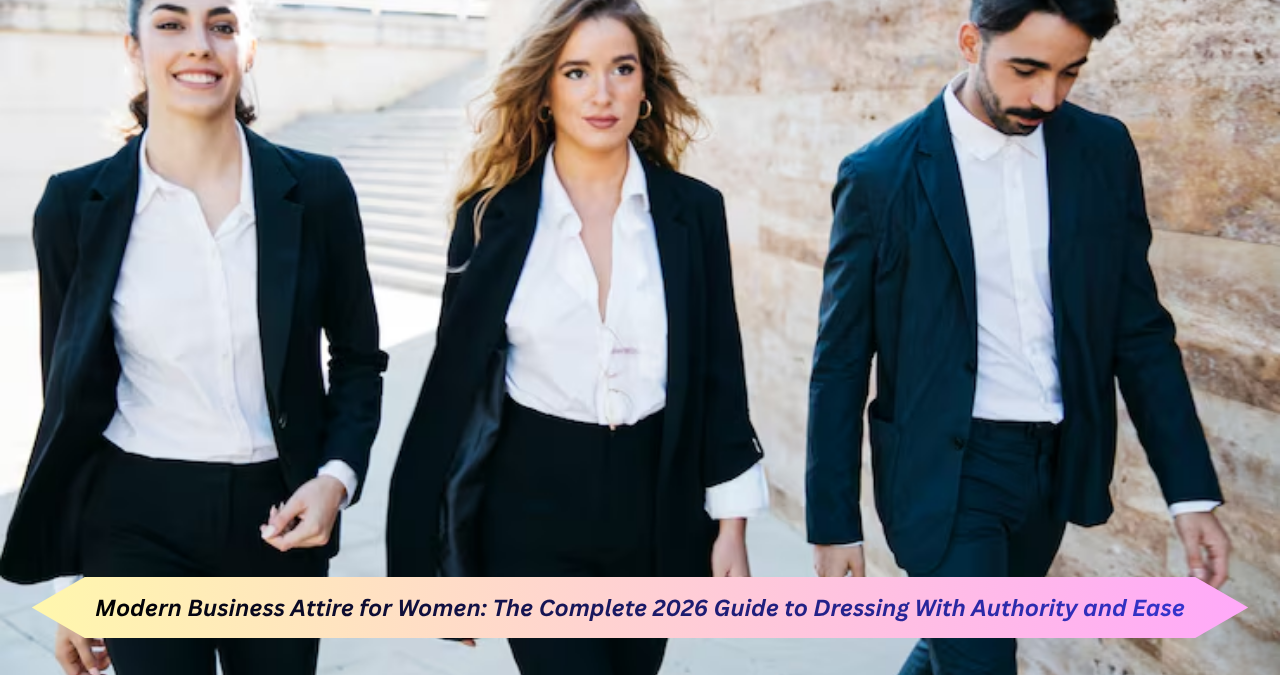
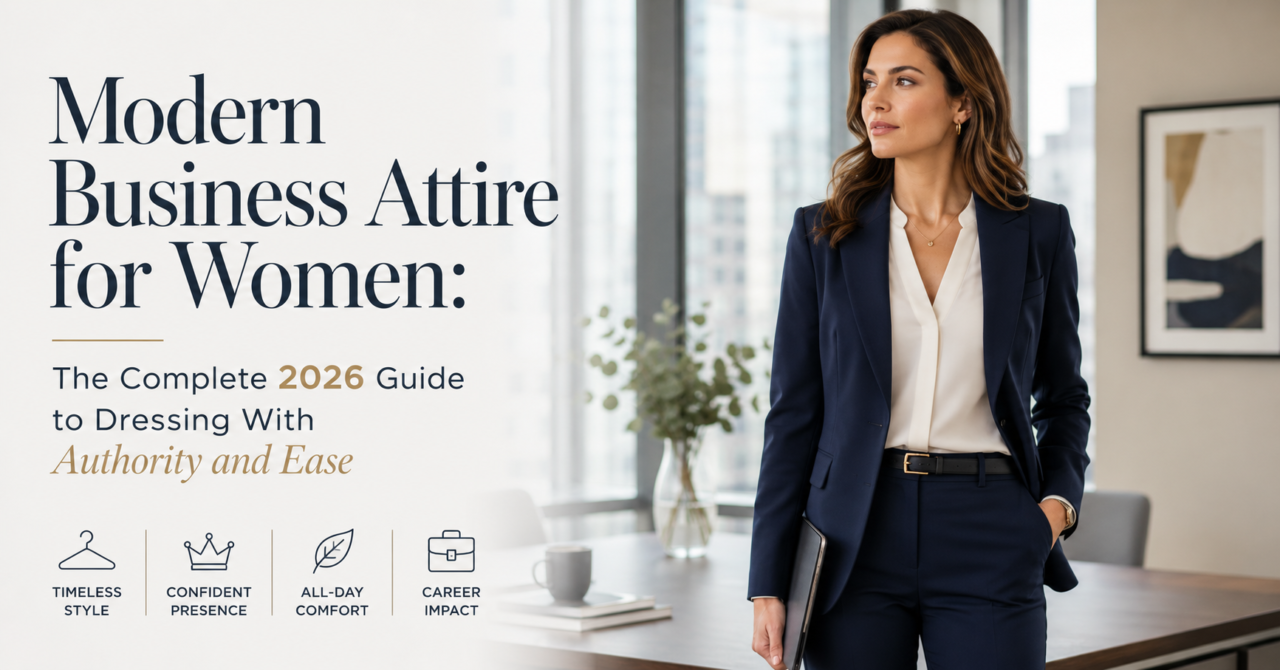
The rigid, one-size-fits-all corporate uniform is officially a relic. Modern business attire for women in 2026 has moved decisively away from the stiff, shrunken blazers and pencil-skirt formality that defined office dressing a decade ago, replaced instead by a wardrobe built around comfort, personal expression, and sharp tailoring that doesn’t sacrifice either. As one industry executive put it, the modern work wardrobe is “less about rigid rules and formality and more about functionality, ease and feeling confident in what you’re wearing.”
This guide breaks down exactly what modern business attire for women looks like right now, why the definition has shifted so dramatically since the pandemic reshaped office culture, and how to build a wardrobe that reads as polished without feeling restrictive. Whether you’re dressing for a boardroom, a hybrid office three days a week, or a creative studio with no formal dress code at all, this covers the pieces, colors, and styling logic actually driving the category forward.
What Counts as Modern Business Attire for Women Today?
Modern business attire for women no longer maps neatly onto the old binary of “business formal” versus “business casual.” A decade ago, the choice was essentially a matching two-piece suit or slacks paired with an uninspired cardigan. That rigid framework has been replaced by a much wider spectrum that blends tailoring with genuine comfort, allowing a single wardrobe to flex across client pitches, casual Fridays, and everything in between.
What defines modern business attire for women now is intentional polish rather than strict formality. Tailored trousers, elevated knitwear, structured blazers, and closed-toe flats or loafers form the backbone, but the silhouettes and fabrics have loosened considerably compared to the fitted, shrunken cuts popular in the 2010s. Sali Christeson, founder and CEO of workwear brand Argent, has described this shift plainly, noting that today’s office wardrobe favors “great tailoring and elevated staples that feel polished without any sacrifices.” That balance — looking sharp without feeling constrained — is the single clearest throughline across everything currently defined as modern business attire for women.
The Silhouettes Defining Modern Business Attire for Women in 2026
Trousers have become the true foundation of modern business attire for women this year, and the shape has changed considerably. Wide-leg trousers, often high-waisted with deep pleats, have effectively replaced the skinny pants and tight pencil skirts that dominated office dressing for much of the 2010s, offering genuine comfort while maintaining a sharp, architectural line. For those wanting an even bolder statement, balloon and harem-inspired trousers have appeared across recent runway collections, though the more classic wide-leg trouser remains the dependable workhorse for most professional settings. Clare Hornby, founder and CEO of Me+Em, has called trousers the essential foundation of a working wardrobe, noting that a well-cut pair proves “more versatile than a lot of people think.”
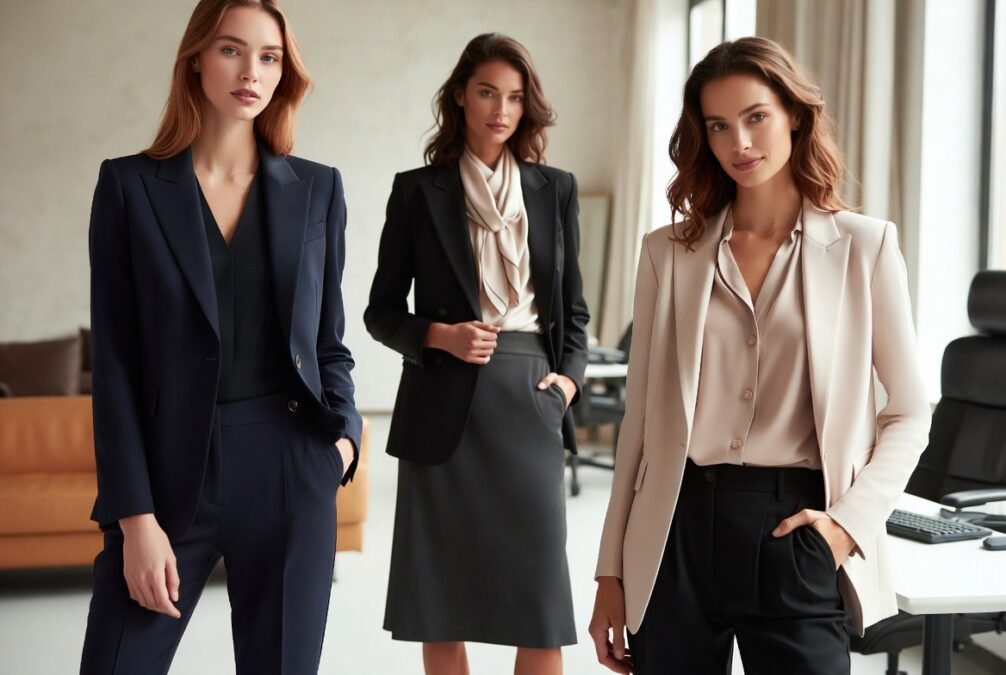
Blazers have undergone a parallel transformation. The fitted, shrunken blazers once considered essential have given way to a slightly oversized silhouette with a relaxed drape and a strong shoulder — a single piece capable of formalizing almost anything worn underneath it, from a silk camisole to a simple T-shirt. Midi skirts, reworked suiting separates, and even collarless blazers have also entered the rotation this season, softening the formality of traditional office dressing without abandoning structure altogether. Together, these shifting silhouettes are what stylists mean when they describe modern business attire for women as having moved past rigid corporate uniforms toward something that feels more like a genuine extension of personal style.
Color and Fabric Choices Shaping Modern Business Attire for Women
Color has become a much bigger part of the conversation around modern business attire for women than it was even a few years ago. Deep burgundy, sometimes referred to as merlot in trend reports, has emerged as a favored power color precisely because it reads as less severe than black while still feeling more intentional than navy. Green tones, particularly pistachio and other softer shades beyond traditional olive, have also gained traction, while pops of red are increasingly paired with staples like chocolate brown and grey to add energy without undermining professionalism.
Fabric choices have shifted just as meaningfully. Ponte knit, prized for its stretch and reliable bounce-back recovery, has become a favorite among stylists building flexible workwear, since it moves with the body without permanently stretching out the way many stretch jeans do. Leather trousers, once considered strictly evening wear, have moved into daytime professional territory as well, provided the cut stays relaxed and the color remains neutral. This willingness to experiment with texture and color, while keeping the overall silhouette clean, is a defining feature of how modern business attire for women has evolved beyond the flat black-and-navy palette that once dominated corporate dress codes.
Styling Formulas That Simplify Modern Business Attire for Women
One of the most useful shifts in how people approach modern business attire for women is the move toward repeatable outfit formulas rather than one-off outfit planning every morning. A reliable starting formula pairs dress pants with a tucked button-down and a blazer, finished with loafers or low heels — a combination that works across nearly any industry, season, or color palette. A second formula swaps trousers for a midi dress layered under a blazer, which simplifies decision-making since there’s only a single garment to coordinate rather than matching separate pieces.
Accessories play a genuinely functional role in these formulas rather than serving as an afterthought. Stylists consistently recommend choosing one focal accessory — a pair of drop earrings or a single statement necklace — rather than layering multiple bold pieces at once, since restraint tends to read as more polished in a professional setting. A structured tote or top-handle bag in a neutral tone remains the most versatile choice, and a slim leather belt, ideally matched to footwear, sharpens the silhouette of both trousers and dresses alike. These small, considered choices are ultimately what separates modern business attire for women that looks effortlessly put-together from an outfit that simply follows a dress code on paper.
How Workplace Culture Has Reshaped Modern Business attire for Women
The definition of modern business attire for women has shifted alongside broader changes in how and where people actually work. Hybrid schedules, which now have professionals splitting time between home offices and collaborative workspaces, have made rigid, heavily structured suits far less practical for daily wear. As image consultant Sharonda Davila-Irving has observed, most offices have settled into an “elevated casual” approach rather than returning to strict business formal standards. Comfort and credibility are no longer treated as opposing goals.
At the same time, there’s been a notable pushback against overly exaggerated interpretations of office dressing, sometimes referred to as the “office siren” aesthetic — tight pencil skirts, stilettos, and skin-tight power suits. Stylists broadly agree that this exaggerated version has fallen out of favor, replaced by something more genuinely wearable. UK-based stylist Ali Lees has summarized the shift by noting that dress codes have relaxed considerably since hybrid work became standard, and that style “doesn’t need to be stiff to be smart.” That philosophy — professional without being punishing — is arguably the clearest definition available of what modern business attire for women actually means heading into the rest of the decade.
Modern Business Attire for Women: Quick Reference Guide
| Category | 2026 Standout Choice | Why It Works |
|---|---|---|
| Trousers | High-waisted wide-leg | Comfortable, architectural, endlessly versatile |
| Outerwear | Slightly oversized blazer | Instantly formalizes casual pieces underneath |
| Color | Burgundy or merlot | Reads as powerful but softer than black |
| Fabric | Ponte knit | Stretches and recovers without losing shape |
| Footwear | Loafers or low block heels | Professional polish without sacrificing comfort |
| Accessories | One focal piece (earrings or necklace) | Adds personality without overwhelming the outfit |
Frequently Asked Questions About Modern Business Attire for Women
What is considered modern business attire for women in 2026?
Modern business attire for women in 2026 generally includes tailored wide-leg trousers, a slightly oversized blazer, elevated knitwear, and closed-toe shoes like loafers or low heels. The overall approach favors polish and comfort over the rigid, heavily structured suiting that defined office dressing in previous decades.
How is modern business attire for women different from business casual?
Modern business attire for women typically sits on a spectrum rather than a fixed category, with business casual leaning more relaxed through pieces like dressy denim or knit tops, while more formal business attire incorporates structured blazers and tailored suiting. The line between the two has blurred considerably as hybrid work has made rigid dress codes less common.
What colors work best for modern business attire for women?
Deep burgundy, soft green tones like pistachio, and classic neutrals such as navy, black, and camel remain strong choices for modern business attire for women, offering a way to feel current without straying from professional expectations. Burgundy in particular has emerged as a popular alternative to black for those wanting a slightly bolder statement.
Are wide-leg trousers appropriate for modern business attire for women?
Yes, wide-leg trousers have become one of the defining silhouettes of modern business attire for women, largely replacing skinny pants and tight pencil skirts. High-waisted styles with a straight or gently flared leg are widely considered appropriate across most professional settings, from client meetings to internal reviews.
How can I build a modern business attire for women wardrobe without overspending?
The most cost-effective approach to modern business attire for women is investing in a small number of high-quality, versatile pieces — a well-cut blazer, a reliable pair of trousers, and neutral footwear — rather than buying many trend-driven items that don’t coordinate well together. Repeatable outfit formulas built around these staples reduce the need for a constantly expanding wardrobe.
Final Thoughts on Modern Business Attire for Women
Modern business attire for women has moved decisively away from rigid corporate uniforms toward a wardrobe built on comfort, intentional tailoring, and genuine personal style. From wide-leg trousers and oversized blazers to a color palette that now embraces burgundy and soft greens alongside traditional neutrals, the pieces defining professional dressing today are the ones that let women feel confident and unrestricted rather than boxed into an outdated dress code. Building a wardrobe around a handful of reliable, well-made staples remains the smartest long-term strategy, and understanding what modern business attire for women genuinely requires today makes getting dressed for work a far simpler decision than it used to be.