Few genres in gaming spark as much genuine excitement as open world titles. There’s something almost primal about stepping into a massive, living map with no invisible walls, no forced hallways, and no one telling you which direction to walk. If you’ve ever lost three hours just wandering a fictional countryside instead of doing the main quest, you already understand the pull. This guide breaks down what actually makes the best open world games stand out, how the genre evolved, which titles consistently earn a spot on best-of lists, and how to choose the right one based on your personal taste, hardware, and time commitment.
Open world design isn’t just a marketing buzzword anymore — it’s become a full discipline within game development, blending systems design, environmental storytelling, AI behavior, and world-building into one cohesive experience. When it’s done right, you stop thinking about “playing a game” and start thinking about “existing in a place.” That shift is exactly why so many players chase the best open world games year after year, even as the market gets flooded with imitators.
What Actually Defines an Open World Game
At its core, an open world game gives players a large, explorable environment they can traverse largely at their own pace, often with minimal linear restrictions. But that simple definition undersells how much nuance separates a mediocre sandbox from something genuinely great. The best open world games treat the map itself as a character — every hill, ruin, and side alley is placed with intent, not just to pad runtime.
Developers like CD Projekt Red, Rockstar Games, and Nintendo have shown that scale alone means nothing without density of interesting content. A 30-square-kilometer map filled with copy-pasted collectibles feels smaller than a tightly designed 5-kilometer map where every corner hides a story. This is why terms like “world density,” “emergent gameplay,” and “systemic design” show up constantly in discussions among game designers and critics analyzing the genre. Emergent gameplay in particular — where unscripted, player-driven moments arise from overlapping systems like AI, physics, and weather — is often the secret ingredient that separates forgettable sandboxes from titles people still talk about a decade later.
The Evolution of Open World Design Over the Years
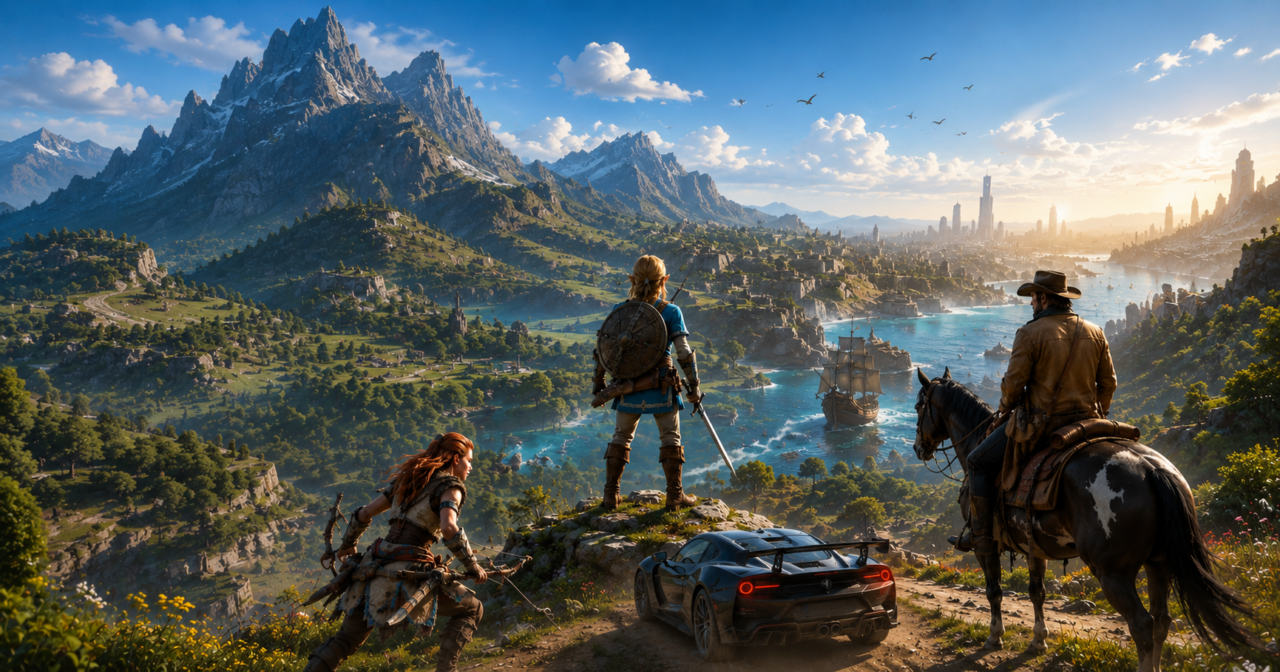
Open world gaming didn’t appear overnight. Titles like The Legend of Zelda on the NES and later Grand Theft Auto III in 2001 laid early groundwork by proving players wanted freedom over rigid linearity. GTA III in particular is widely credited by historians and journalists as the moment 3D open world design became a mainstream commercial force, influencing nearly every major studio that followed.
From there, the genre exploded in ambition. The Elder Scrolls IV: Oblivion introduced dynamic NPC schedules and radiant AI. Skyrim refined that formula into something almost meditative. Then games like The Witcher 3: Wild Hunt proved that narrative depth and open exploration weren’t mutually exclusive — you could have a sprawling map and still deliver Emmy-worthy writing. More recently, Elden Ring merged Soulslike combat with open exploration, and Breath of the Wild threw out traditional quest markers entirely in favor of physics-driven discovery. Each generation didn’t just add size; it added intelligence to how that size was used, which is exactly the throughline connecting nearly every entry on lists of the best open world games today.
Standout Titles That Set the Benchmark
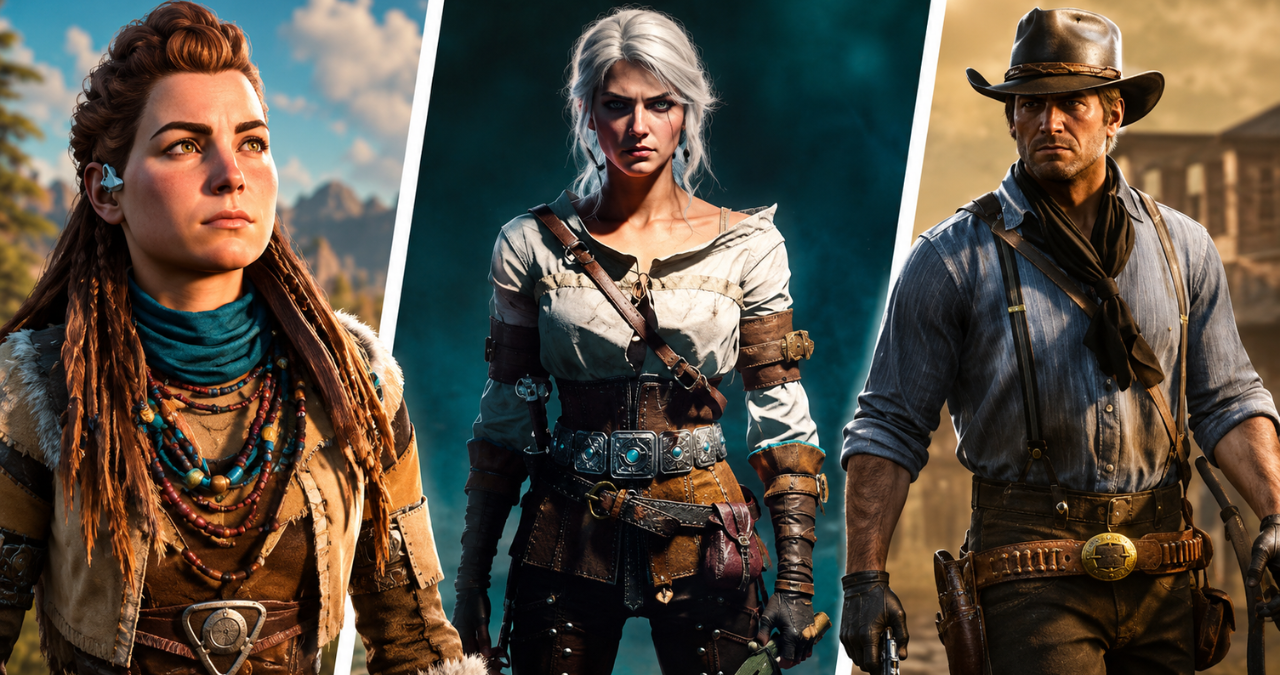
Every gaming publication has its own ranking, but certain names appear again and again because they fundamentally changed how the genre is judged. Red Dead Redemption 2 is frequently cited for its unmatched atmosphere and ambient storytelling — weather systems, animal behavior, and NPC routines all combine to make its American frontier feel disturbingly alive. The Witcher 3 remains a gold standard for side-quest writing, where even minor contracts carry moral weight and narrative payoff most main campaigns in other games fail to reach.
Elden Ring deserves mention for reinventing verticality and player-guided pacing — there’s no hand-holding, and that design philosophy has influenced countless titles since its release. Grand Theft Auto V, despite its age, still tops sales charts because its multiplayer ecosystem, satire-driven writing, and three-protagonist structure gave open world storytelling a format nobody had tried at that scale. And Breath of the Wild, alongside its sequel Tears of the Kingdom, proved that open world design could thrive on creative freedom and physics-based puzzle systems rather than raw scale or realism. These games consistently rank among the best open world games because they each solved a different design problem better than anyone before them.
Why Players Keep Coming Back to These Worlds
There’s a psychological hook baked into strong open world design. Human curiosity is naturally rewarded by exploration — spotting a distant mountain and being able to walk there triggers a small dopamine payoff that linear games simply can’t replicate as often. Game designer Hideo Kojima once described this feeling in interviews about Death Stranding, noting that the joy of traversal itself, not just the destination, was central to his design philosophy. That idea resonates across the genre: the best open world games aren’t just about where you end up, but about how satisfying the path getting there feels.
There’s also a social and cultural layer to this. Open world games generate massive online communities dedicated to theory-crafting, speedrunning, mod creation, and lore analysis. Skyrim’s decade-plus modding scene and GTA V’s thriving roleplay servers are proof that a well-built world can outlive its original release cycle by years, sometimes generating more cultural conversation than the game’s launch did. This longevity is a major reason publishers keep greenlighting massive open world budgets — the return on engagement, community content, and word-of-mouth marketing is enormous compared to shorter linear experiences.
Comparing Some of the Top Open World Games
| Game | Setting | Standout Feature | Best For |
|---|---|---|---|
| The Witcher 3: Wild Hunt | Fantasy medieval Europe | Deep narrative side quests | Story-focused players |
| Red Dead Redemption 2 | American frontier | Immersive ambient simulation | Atmosphere and realism fans |
| Elden Ring | Dark fantasy realm | Challenging exploration and combat | Players who enjoy difficulty |
| The Legend of Zelda: Tears of the Kingdom | Fantasy sky islands and land | Physics-based creative puzzles | Creative, sandbox-style thinkers |
| Grand Theft Auto V | Modern satirical city | Multiplayer and heist missions | Social and competitive players |
This kind of comparison matters because “best” is genuinely subjective depending on what a player values — narrative weight, mechanical challenge, social features, or pure sandbox creativity all pull in different directions.
How to Choose the Right Open World Game for You
Picking from the best open world games available today really comes down to matching the game’s pacing to your own play style. If you crave narrative depth and want every choice to matter, something like The Witcher 3 or Red Dead Redemption 2 will reward patience with unforgettable character arcs. If you’d rather experiment with physics, crafting, and creative problem-solving, Nintendo’s Zelda titles hand you tools instead of instructions and let you build your own solutions.
Hardware and time investment also matter more than people admit. Some of these games demand 80 to 150 hours for full completion, which is a serious commitment compared to a 10-hour linear campaign. If you’re limited on time, look for titles with strong “fast travel” systems and modular questlines rather than dense interconnected narratives that punish stepping away for weeks. Reading recent user reviews and community discussions on platforms like Reddit or Steam can also reveal how a game feels after the initial “wow” factor of the map fades — that’s often where the real quality differences between the best open world games and merely good ones become obvious.
Common Problems Players Face and How to Solve Them
A frequent complaint about open world games is “map fatigue” — the feeling that a world is technically huge but emotionally empty, filled with repetitive icons and busywork. The solution isn’t avoiding open world games altogether, but being selective about titles known for handcrafted content density rather than procedurally bloated maps. Checking whether a game emphasizes quality-over-quantity design, a phrase you’ll see often in reviews of the best open world games, is a reliable filter.
Another common issue is choice paralysis, where players feel overwhelmed by too many systems, markers, and side activities at once. Turning off unnecessary HUD elements, following a single questline until it naturally branches, or simply setting a personal goal for each session can restore that sense of purposeful exploration the genre is supposed to deliver in the first place.
Frequently Asked Questions
What makes a game count as “open world” rather than just having big levels?
An open world game allows largely unrestricted movement across a connected environment without loading screens breaking up exploration, whereas big-level games often still funnel players through structured, disconnected areas. The distinction is about continuity and freedom of movement, not just raw map size.
Are the best open world games always the biggest ones?
Not at all — map size is far less important than content density and design intent. Some of the best open world games have relatively modest maps but pack every section with meaningful encounters, story beats, or discoveries, which ultimately matters more to player satisfaction than sheer scale.
Do I need a powerful PC or console to enjoy open world games?Many of the best open world games are optimized to run on a range of hardware, including mid-range PCs and last-generation consoles, though newer titles with advanced physics and lighting may need stronger specs for the smoothest experience. Checking official system requirements before purchase is always a smart move.
How long does it typically take to finish an open world game?
Completion time varies widely, but many of the best open world games take between 40 and 100 hours for full completion, including side content, while a focused main-story playthrough can often be finished in 20 to 30 hours depending on the title.
Are open world games better for single-player or multiplayer experiences?
Both formats thrive in this genre — single-player open world games tend to emphasize narrative and atmosphere, while multiplayer-focused titles lean into social systems, competition, and shared world events, so the right choice depends entirely on whether you prefer solo immersion or community interaction.
Can open world games have strong, focused stories despite their size?
Yes, and this is one of the biggest misconceptions about the genre. Titles like The Witcher 3 and Red Dead Redemption 2 prove that scale and narrative focus aren’t opposites; skilled writing and pacing can guide players through a coherent emotional arc even within a massive, freely explorable world.
Final Thoughts
The best open world games succeed because they respect player freedom without sacrificing craftsmanship, turning exploration itself into a meaningful reward rather than empty filler. Whether you’re drawn to the emotional weight of Red Dead Redemption 2, the mechanical brilliance of Elden Ring, or the pure creative sandbox of Tears of the Kingdom, the genre offers something for nearly every kind of player willing to slow down and actually look around. The real takeaway is simple: a great open world isn’t measured in square kilometers, it’s measured in how often it makes you want to stop, look at the horizon, and just go see what’s over there.