
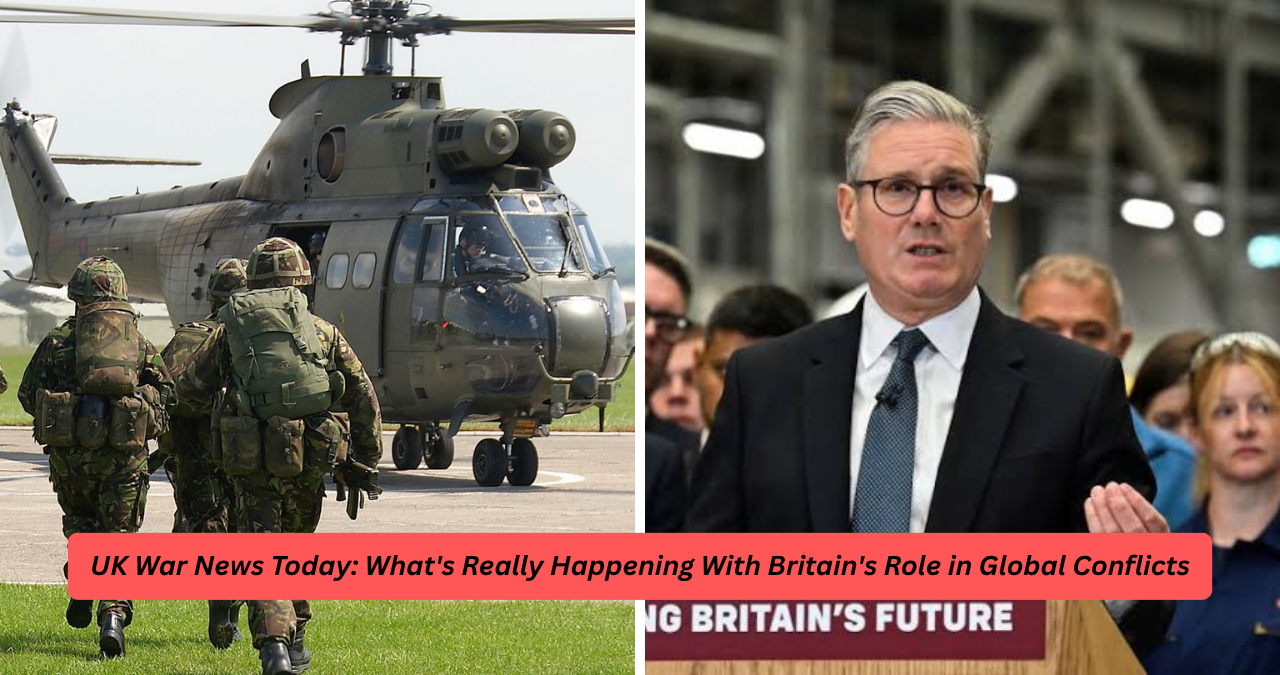
If you’ve been following UK war news lately, you’ve probably noticed how much the story has shifted from a single overseas conflict to a much wider web of defence politics, funding disputes, and shifting alliances. It’s no longer just about troop movements or battlefield updates; it’s about budgets, political resignations, and long-term strategic commitments that will shape Britain’s military posture for the next decade. That’s what makes this such a rich topic to unpack right now, because the headlines only tell part of the story.
Understanding UK war news requires looking at several moving parts at once: continued British backing for Ukraine against Russia’s invasion, a domestic political fight over how much money defence actually gets, and Britain’s broader obligations inside NATO. Each of these threads feeds into the others, and missing one usually means missing why a particular headline matters. This article walks through all of it in plain language, with the kind of context that turns a scattered news cycle into something you can actually follow and explain to someone else.
Britain’s Ongoing Support for Ukraine
The single biggest driver of UK war news over the past several years has been Britain’s response to Russia’s full-scale invasion of Ukraine. What started in February 2022 as an emergency response has evolved into a long-term commitment involving military hardware, financial assistance, and diplomatic pressure campaigns aimed at isolating Moscow. British officials have repeatedly framed this support as non-negotiable, arguing that Ukraine’s fight is directly tied to European security more broadly, not just a regional dispute that Britain can afford to watch from a distance.
More recently, that support has taken a sharper edge. Reporting from mid-2026 describes Russian officials accusing the UK of direct involvement in Ukrainian strikes, including claims tied to long-range missile support, which drew a
warning from Russia’s foreign ministry that such involvement could be treated as active participation in the war. British leadership pushed back firmly rather than backing down, insisting that supporting Ukraine’s ability to defend itself isn’t the same as entering the conflict directly. This kind of exchange is a recurring feature of UK war news: Britain expands its support, Russia escalates its rhetoric, and the UK holds its position rather than retreating from it. It’s a pattern that has repeated itself enough times that it’s become almost predictable, even as the specific weapons and tactics involved keep evolving.
Financially, the numbers behind this commitment are substantial. UK support to Ukraine now totals in the tens of billions of pounds when military assistance, humanitarian aid, and reconstruction funding are combined. That includes support for war crimes investigations, funding for landmine clearance, and programs helping displaced Ukrainians resettle in the UK. This isn’t a short-term aid package; it’s closer to a standing national commitment that touches nearly every government department with any connection to foreign policy or defence.
The Domestic Political Fight Over Defence Spending
While Ukraine dominates the international side of UK war news, a quieter but equally important story has been playing out inside Westminster: how much Britain should actually be spending on defence, and who gets to decide. This debate boiled over in mid-2026 when the sitting defence secretary resigned, citing frustration that funding commitments weren’t matching the scale of the threats being described publicly. That resignation wasn’t just a political footnote; it exposed a real gap between the ambitious targets Britain has set for itself and the budget realities the Treasury is willing to sign off on.
The core tension comes down to NATO’s spending targets. Britain has committed to reaching higher defence spending thresholds over the coming decade, with figures as high as 3.5% of GDP being floated as a long-term goal. Getting there from current levels requires tens of billions of pounds in additional annual spending, and that kind of money doesn’t appear without trade-offs elsewhere in the budget. Analysts covering UK war news from a policy angle have pointed out that this isn’t just a Ministry of Defence problem; it touches international aid budgets, domestic spending priorities, and the broader question of how much economic pain the public is willing to accept in the name of national security.
A former NATO secretary-general weighed in on this exact tension, warning that a widening UK spending gap would become a genuine concern for the alliance as a whole, not just a domestic embarrassment. That kind of external pressure adds another layer to the story, because it means the UK isn’t just answering to its own voters on this issue; it’s answering to allies who are watching closely to see whether Britain’s rhetoric about leadership on European security is actually backed by cash.
NATO Commitments and the Bigger Picture
Zooming out from Ukraine specifically, UK war news increasingly overlaps with broader NATO strategy. Britain has positioned itself as one of the alliance’s leading voices on Ukraine policy, co-leading coalition efforts alongside France and pushing other member states to match their own spending and support commitments. This leadership role comes with expectations, and part of the ongoing defence spending controversy stems from the gap between the leadership Britain claims on the world stage and the funding decisions being made at home.
NATO’s collective spending picture has changed dramatically over the past decade. Where only a handful of member states hit the alliance’s 2% GDP spending target a decade ago, nearly all members are now expected to meet or exceed it, with some, including the UK, aiming considerably higher under newer targets agreed among allies. This shift reflects a broader recalculation across Europe about what deterrence actually requires in an era of renewed great-power competition, rather than the post-Cold War assumption that large-scale conflict in Europe was effectively off the table. For anyone trying to make
of UK war news in context, this NATO-wide shift is essential background, because Britain’s individual decisions rarely happen in isolation from what the rest of the alliance is doing.

| Topic | Key Development | Why It Matters |
|---|---|---|
| Ukraine support | Continued military, financial, and humanitarian assistance since 2022 | Reflects Britain’s long-term strategic commitment to European security |
| Defence secretary resignation | Resigned in June 2026 over funding shortfalls | Exposed a gap between rhetoric and budget reality |
| NATO spending target | UK aiming for 3.5% of GDP by 2035 | Requires tens of billions in additional annual spending |
| Russian rhetoric | Warnings over UK involvement in Ukrainian strikes | Raises questions about escalation risk |
| Public opinion | Majority still support Ukraine assistance | Shapes political viability of continued funding |
Public Opinion and Why It Shapes Policy
One part of UK war news that doesn’t always get enough attention is how ordinary public opinion feeds back into government decision-making. Polling conducted in the past year shows that a solid majority of Britons continue to support UK assistance to Ukraine, even as concerns grow about the broader economic impact of the war, including higher energy costs and the strain of continued sanctions on Russia. That combination, strong support alongside real anxiety about cost, creates an interesting political dynamic where the government has room to keep backing Ukraine but not unlimited room to raise taxes or cut other services to pay for it.
This is where UK war news intersects directly with kitchen-table economics. Concerns about national security sit alongside worries about household budgets, and politicians have to navigate both simultaneously. When a large share of the public says they’re worried about the war’s impact on their own personal finances, that’s not just a talking point; it’s a real constraint that shapes how aggressively any government can expand defence commitments without risking a backlash. Understanding this dynamic helps explain why defence spending arguments in Westminster get so heated, since it’s rarely just about military strategy in isolation.
What Makes This Moment Different From Past UK Conflicts
Historically, UK war news has tended to follow a familiar shape: a conflict begins, Britain commits forces or resources, and coverage fades once the immediate crisis passes. What’s notable about the current period is how long this particular cycle has run without fading. Britain’s involvement in supporting Ukraine has now stretched across multiple prime ministers and defence secretaries, outlasting the usual news cycle that tends to move on after the first year or two of any given conflict.
This durability changes how the public and policymakers need to think about the situation. It’s no longer being treated as an emergency response but as a structural feature of British foreign and defence policy, similar in some ways to Cold War-era commitments that were built to last for decades rather than months. That shift in framing matters because it changes the kinds of questions worth asking. Instead of asking when support will end, more of the serious analysis around UK war news now focuses on how sustainable current funding models are and what happens if political will in Britain or among its allies begins to soften over time.
How to Follow UK War News Responsibly
Given how much this topic touches politics, economics, and international diplomacy all at once, it’s worth being deliberate about how you follow UK war news rather than just skimming headlines. Official government sources, including Ministry of Defence updates and Parliament’s own research briefings, tend to offer more grounded detail than fast-moving social media commentary, especially on numbers like spending figures or aid totals, which get distorted easily when repeated without context.
It’s also worth paying attention to the difference between announcements and actual delivery. Governments frequently announce funding packages or spending targets that later face delays, revisions, or outright funding shortfalls, as seen with the recent defence secretary resignation. A healthy approach to UK war news involves tracking not just what’s promised, but what’s actually funded and delivered months or years down the line. That distinction is often where the most important, and most underreported, parts of the story actually live.
Frequently Asked Questions
What is the latest UK war news regarding Ukraine?
The latest UK war news around Ukraine centers on continued British military, financial, and humanitarian support for Kyiv, including long-range missile assistance that has drawn sharp criticism from Russian officials. British leaders have consistently reaffirmed their commitment to Ukraine despite this pressure, framing it as a defensive necessity rather than direct entry into the war.
Why did the UK defence secretary resign in 2026?
The defence secretary resigned in June 2026 after concluding there was no realistic path to meeting NATO’s long-term spending targets given the funding levels the Treasury was willing to commit. This resignation became a major thread in UK war news because it highlighted a real gap between Britain’s public rhetoric on defence leadership and its actual budget decisions.
How much has the UK spent supporting Ukraine?
UK support for Ukraine now totals tens of billions of pounds when military aid, humanitarian assistance, and reconstruction funding are combined. This figure includes support for war crimes investigations, landmine clearance programs, and resettlement assistance for Ukrainians who have relocated to Britain since the invasion began.
Is Britain likely to go to war directly with Russia?
Most defence analysts covering UK war news agree that a direct war between Britain and Russia remains unlikely in the near term, even though tensions between the two countries are at some of their highest levels since the Cold War. Deterrence through NATO, continued diplomatic pressure, and ongoing support for Ukraine are viewed as the preferred path rather than direct confrontation.
Why does UK war news keep mentioning NATO spending targets?
NATO spending targets keep appearing in UK war news because Britain has committed to significant increases in defence spending over the next decade, and meeting those targets requires substantial new funding that has to come from somewhere in the national budget. This connects military strategy directly to domestic political and economic decisions, which is why the two topics are so often covered together.
Final Thoughts
Following UK war news right now means holding several storylines in your head at once: a long-running commitment to Ukraine that shows no signs of ending soon, a genuine political fight over how much Britain can afford to spend on defence, and a broader NATO context that keeps raising the bar for what allied nations are expected to contribute. None of these threads exist in isolation, and understanding how they connect is what separates a surface-level read of the
from a real grasp of where British defence policy is heading. If there’s one takeaway worth remembering, it’s that UK war news today is as much a story about budgets and political will as it is about battlefields, and both sides of that equation deserve equal attention.