Europe has a way of rearranging your expectations. You arrive thinking you know what to expect from a “European vacation,” and then you’re standing in a cobblestone square at sunset, wine in hand, wondering why nobody told you it would feel like this. That’s the thing about the best places to visit in Europe — they rarely match the postcard. They tend to be better, messier, more textured, and far more personal than any brochure could capture.
I’ve spent years crisscrossing this continent, from budget hostels in Lisbon to family-run trattorias tucked into the hills above Florence, and one lesson keeps repeating itself: Europe rewards curiosity more than itineraries. This guide pulls together the destinations that consistently earn their reputation, along with a few that deserve far more attention than they get. Whether you’re chasing art, food, mountains, or simply a change of pace, you’ll find a starting point here that actually fits how you like to travel.
Why Europe Remains the World’s Most Rewarding Travel Destination
Ask ten travelers why Europe tops their list and you’ll get ten different answers, yet they all circle back to the same idea: density of experience. Nowhere else can you cross a national border by train in under two hours and land in a completely different language, cuisine, and architectural tradition. That compactness is Europe’s quiet superpower, and it’s a huge part of why the best places to visit in Europe so often end up on repeat visits rather than one-time checkmarks.
There’s also the matter of layered history. Walking through Rome means stepping over two thousand years of civilization in a single afternoon — Roman ruins beneath Renaissance palaces beneath modern apartment buildings with laundry hanging from the windows. This isn’t curated for tourists; it’s simply how these cities function. That authenticity is part of what separates a genuinely great European destination from a manufactured one. A local historian I once shadowed in Prague put it well: “Our city wasn’t built to impress visitors. It was built to survive empires, and the beauty came afterward.” That sentiment applies across the continent, and it’s why so many of Europe’s top destinations feel earned rather than staged.
Western Europe’s Iconic Cities That Define the Continent
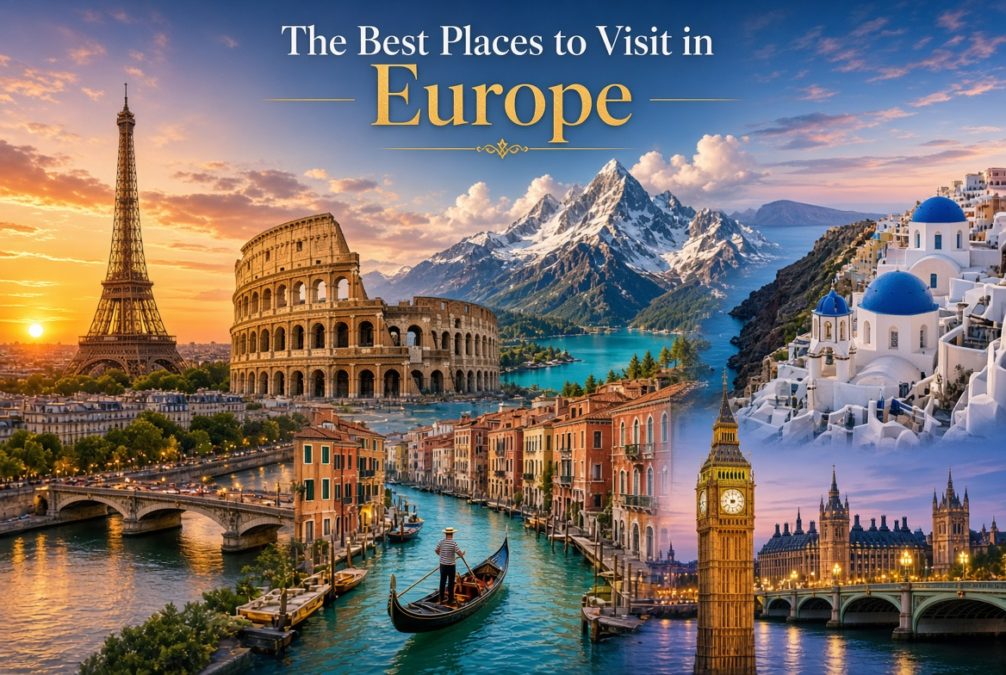
When people picture the best places to visit in Europe, Western Europe’s flagship cities usually come to mind first, and for good reason. Paris remains the benchmark against which other cities measure their charm, but it’s worth going beyond the Eiffel Tower and Louvre. The Marais district, with its narrow lanes and independent bookshops, gives you a far more intimate sense of Parisian life than the tourist-heavy boulevards ever could. Meanwhile, London balances royal history with cutting-edge culture — you can tour Westminster Abbey in the morning and be standing in a Shoreditch street-art alley by afternoon.
Amsterdam deserves special mention for how effortlessly it blends practicality with beauty. The canal ring isn’t just scenic; it’s a functioning transportation network that shapes how the entire city moves. Renting a bike here isn’t a novelty activity, it’s simply how locals get to work. Barcelona, meanwhile, offers something different entirely: Gaudí’s architecture turns the city itself into an open-air gallery, and the Gothic Quarter’s maze-like streets make getting lost feel like the intended experience rather than a mistake. Each of these cities proves that Western Europe’s reputation isn’t just marketing — it’s built on genuinely distinct identities that reward repeat exploration.
Southern Europe’s Sun-Soaked Escapes and Coastal Wonders
Southern Europe operates on a different rhythm, and that’s precisely its appeal. The Amalfi Coast in Italy is frequently cited among the best places to visit in Europe for good reason — the cliffside towns of Positano and Ravello seem to defy gravity, with pastel buildings stacked against the Tyrrhenian Sea. But the real magic happens off-season, in late spring or early autumn, when the crowds thin and the light turns golden earlier in the day.
Greece offers a similar coastal appeal but with an entirely different texture. Santorini’s whitewashed villages and blue-domed churches get most of the attention, yet islands like Naxos or Milos deliver comparable beauty with a
of the tourist density. This is a recurring theme across Southern Europe: the famous destination often has a quieter sibling nearby that locals actually prefer. Portugal’s Algarve region follows the same pattern — while Lagos draws the crowds, the nearby town of Tavira offers similar coastal charm with none of the queues. A hospitality manager in Porto once told me, “Tourists chase the name they’ve heard of. Locals chase the beach nobody’s talking about yet.” That advice has shaped how I plan nearly every Southern European trip since.
Central and Eastern Europe’s Underrated Cultural Capitals
If Western and Southern Europe get the lion’s share of travel guides, Central and Eastern Europe are where seasoned travelers go to feel like they’ve discovered something. Prague’s Old Town Square, with its astronomical clock and Gothic spires, offers a fairy-tale atmosphere without the price tag of Western European capitals. Budapest goes a step further by combining stunning architecture with functioning thermal baths — soaking in the Széchenyi Baths at sunset, surrounded by Neo-Baroque buildings, is an experience with no real equivalent elsewhere on the continent.
Poland’s Kraków deserves far more recognition than it typically receives. Its medieval market square is among the largest in Europe, and the nearby Wieliczka Salt Mine offers a genuinely unusual day trip carved entirely from rock salt over centuries of mining. Croatia’s Dubrovnik, meanwhile, has become a case study in how a destination can go from hidden gem to global phenomenon almost overnight, largely thanks to its dramatic city walls and coastal setting. These Central and Eastern European cities consistently rank among the best places to visit in Europe for travelers who want cultural depth without Western European price inflation, and that value proposition only becomes more apparent the more you compare cost-of-travel across the continent.
Northern Europe’s Natural Landscapes and Scandinavian Charm
Northern Europe attracts a different kind of traveler — one drawn to landscapes over landmarks. Norway’s fjords are the obvious headline act, and destinations like Geirangerfjord genuinely live up to the hype, with waterfalls cascading directly into deep blue water framed by near-vertical cliffs. But Norway’s appeal extends beyond scenery into lifestyle: the concept of “friluftsliv,” or open-air living, shapes how Norwegians structure their entire relationship with nature, and experiencing even a small piece of that mindset changes how you travel afterward.
Iceland, though technically its own island nation rather than mainland Europe, is almost always included in conversations about the best places to visit in Europe because of its otherworldly terrain — geothermal pools, volcanic landscapes, and the Northern Lights during winter months. Sweden and Denmark round out the region with a different kind of appeal: design-forward cities like Stockholm and Copenhagen where sustainability, architecture, and everyday livability intersect in ways few other places manage. A Copenhagen city planner once described it to me simply: “We didn’t design this city to be beautiful. We designed it to work, and it turned out beautiful anyway.” That philosophy of function-first beauty defines much of what makes Northern Europe worth the trip.
How to Choose the Right European Destination for Your Travel Style
With so many strong contenders, narrowing down where to go becomes less about finding “the best” and more about matching a destination to your actual travel style. Someone chasing art and history will get far more out of Florence or Vienna than they would from a Greek island. Someone craving outdoor adventure will find Slovenia’s Julian Alps or Switzerland’s Bernese Oberland more rewarding than any city itinerary, however packed.
Budget also plays a significant role in shaping which of the best places to visit in Europe actually make sense for your trip. Western European capitals like Paris, London, and Amsterdam tend to command premium prices for accommodation and dining, while Central and Eastern European cities often deliver comparable cultural richness at a fraction of the cost. The table below breaks down several top destinations by travel style, approximate budget level, and ideal season, offering a quick reference for narrowing your shortlist.
| Destination | Best For | Budget Level | Ideal Season |
|---|---|---|---|
| Paris, France | Art, romance, fine dining | High | Spring or fall |
| Prague, Czech Republic | History, architecture, value | Low-Medium | Spring or fall |
| Santorini, Greece | Coastal views, relaxation | High | Late spring |
| Kraków, Poland | Culture, affordability | Low | Summer |
| Norwegian Fjords | Nature, adventure | Medium-High | Summer |
| Barcelona, Spain | Architecture, nightlife, beaches | Medium | Spring or fall |
| Budapest, Hungary | Thermal baths, nightlife, value | Low-Medium | Spring or fall |
Practical Tips for Planning a Multi-Country European Trip
One of the most common mistakes travelers make when researching the best places to visit in Europe is trying to see too much in too little time. Europe’s compact geography creates an illusion of efficiency — yes, you can technically visit five countries in ten days, but doing so usually means spending more time in transit than actually experiencing any single destination. A more sustainable approach is choosing a regional cluster, such as the Benelux countries or the Balkans, and allowing enough time in each stop to actually settle in rather than sprint through.
Transportation planning matters just as much as destination selection. Europe’s rail network, particularly through operators like Eurail and national systems such as Germany’s Deutsche Bahn or France’s SNCF, remains one of the most efficient ways to move between cities without the hassle of airport security lines. Budget airlines like Ryanair and easyJet offer speed for longer distances, though they often come with strict baggage policies that catch first-time visitors off guard. Booking accommodations slightly outside city centers, particularly in expensive destinations like Paris or Amsterdam, can meaningfully reduce costs without sacrificing access, since most European cities have reliable public transit connecting outer neighborhoods to central attractions within twenty or thirty minutes.
Frequently Asked Questions
What are the best places to visit in Europe for first-time travelers?
First-time visitors typically get the most value from a mix of iconic and manageable cities such as Paris, Rome, and Amsterdam, since these destinations offer strong public transportation, English-friendly signage, and a dense concentration of major landmarks within walking distance. Starting with a single-country trip rather than a multi-country tour also helps first-timers avoid the fatigue that comes from constant packing and transit, allowing more time to actually absorb each city’s character.
When is the best time of year to visit Europe?
Late spring, from April through early June, and early fall, from September through October, are widely considered the best times to visit most European destinations, since temperatures remain mild and crowds are noticeably thinner than during peak summer months. Winter travel can also be rewarding for specific experiences, such as Christmas markets in Germany and Austria or the Northern Lights in Scandinavia, though shorter daylight hours and colder weather require different planning.
Is it cheaper to visit Western Europe or Eastern Europe?
Eastern and Central Europe generally offer significantly lower costs for accommodation, food, and local transportation compared to Western European hubs like Paris, London, or Zurich, while still delivering comparable historical and cultural depth. Cities such as Kraków, Budapest, and Sofia allow travelers to stretch their budget considerably further without sacrificing the quality of the overall experience.
How many days should I spend in each European city?
Most travel experts recommend spending at least three to four full days in a major European city to see key attractions without rushing, allowing time for at least one day of unstructured exploration where you simply wander rather than follow a checklist. Smaller towns or day-trip destinations, on the other hand, can often be experienced meaningfully in a single day if transportation is well planned.
What is the best way to travel between countries in Europe?
Train travel remains the most popular and often most scenic method for moving between neighboring European countries, particularly across well-connected regions like Western and Central Europe, where high-speed rail can cover hundreds of kilometers in just a few hours. Budget airlines offer a faster alternative for longer distances, though travelers should factor in airport transfer time and baggage restrictions, which can sometimes offset the time savings compared to a direct train journey.
Final Thoughts on Exploring Europe’s Most Remarkable Destinations
Narrowing down the best places to visit in Europe ultimately comes down to understanding what kind of traveler you are and matching that identity to the right region, rather than chasing a universal ranking that treats every destination as interchangeable. Western Europe’s iconic cities offer polish and world-famous landmarks, Southern Europe delivers sun-drenched coastlines and unhurried pacing, Central and Eastern Europe provide cultural depth at a fraction of the cost, and Northern Europe rewards those chasing dramatic, untouched landscapes.
The real takeaway isn’t which single destination wins — it’s that Europe’s greatest strength lies in its diversity, and the most memorable trips tend to come from combining a few of these regions rather than picking just one. Wherever you decide to go first, approach it with the same curiosity that makes the best places to visit in Europe so consistently unforgettable: slow down, wander off the main square, and let the destination surprise you the way it has surprised travelers for centuries.