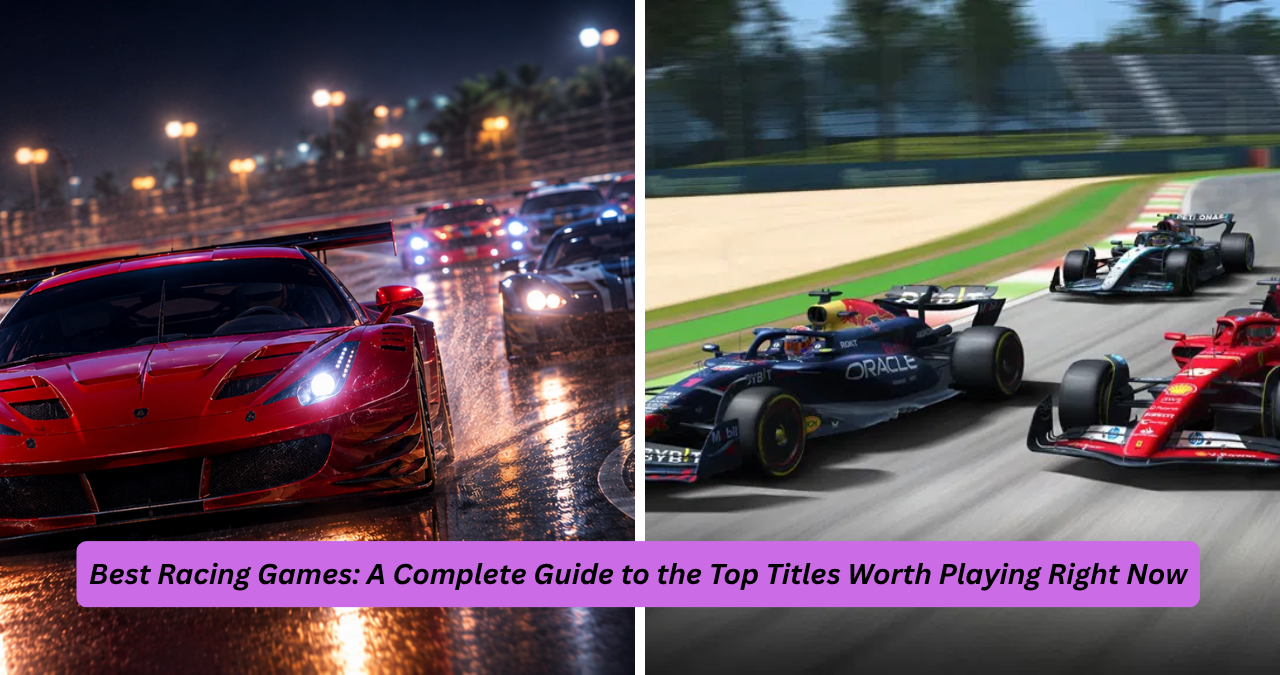
Few genres in gaming offer the sheer range that racing does. One week you might be drifting through neon-lit streets in an arcade title, and the next you’re white-knuckling a wheel setup trying to nail a braking point in a hardcore simulator. Finding the best racing games for your specific taste isn’t always straightforward, especially with new entries dropping constantly and older classics still holding their own years after release. This guide breaks down the genre by category, explains what separates a great racing game from a forgettable one, and points you toward titles that actually deliver on the promise of speed, precision, and fun.
What makes this genre so tricky to navigate is that “racing game” covers an enormous spectrum. Kart racers, open-world arcade titles, hyper-realistic simulators, motorbike games, and even rally-focused experiences all fall under the same umbrella term, yet they play nothing alike. Someone searching for the best racing games because they loved Mario Kart is going to have a very different experience recommending iRacing to a friend than someone chasing lap-time perfection on a force-feedback wheel. This article accounts for that diversity so you can find exactly what fits your playstyle.
What Actually Makes a Racing Game “Great”
Before diving into specific titles, it helps to define what separates the best racing games from the merely average ones. The first factor is handling model fidelity, which refers to how accurately or intentionally a game simulates vehicle physics. Some titles, like iRacing, aim for near-perfect realism, modeling tire degradation, fuel consumption, and weather effects with scientific precision. Others, like Mario Kart, intentionally abandon realism in favor of pure arcade fun, prioritizing tight controls and chaotic multiplayer moments over physical accuracy. Neither approach is objectively better; they simply serve different audiences.
The second factor worth considering is content depth and replayability. A racing game with a huge roster of licensed vehicles, varied track locations, and strong progression systems tends to hold player interest far longer than one that peaks after a few hours. Forza Horizon 5, for example, built its reputation on an enormous open world filled with side activities, seasonal events, and a constantly rotating car list that kept players engaged for years after launch. Community and
infrastructure matters too. Games like iRacing thrive because of structured, competitive online racing with ranking systems and safety ratings, creating a sense of stakes that casual arcade racers simply don’t offer. When people search for the best racing games, they’re often unconsciously weighing these exact factors, even if they couldn’t name them outright.
Arcade Racers: Pure Fun Without the Learning Curve
Arcade racing games remain the most accessible entry point into the genre, and for good reason. These titles prioritize immediate fun over technical accuracy, which makes them ideal for casual players, families, or anyone who just wants to unwind after a long day. Mario Kart has long been the gold standard here, and the newer entries in the series continue to dominate multiplayer game nights thanks to their combination of simple controls, chaotic item-based combat, and genuinely well-designed tracks. There’s a reason Nintendo’s kart racer consistently ranks among the best racing games regardless of when the list is compiled; it simply never stops being fun in a group setting.
Beyond Mario Kart, franchises like Need for Speed have carved out their own arcade identity by leaning into street racing culture, customization, and narrative-driven campaigns. Need for Speed Unbound, for instance, distinguished itself with a stylish visual flair and a risk-reward structure where players build up cash multipliers during races but risk losing everything if they crash or get busted by police. As one gaming hardware editor put it in a review roundup, the title succeeds specifically because it “attempts something different” rather than just iterating on old formulas. This willingness to experiment within the arcade space is part of why the subgenre continues to attract new fans even as sim racing grows in popularity elsewhere.
Open-World Racing Games and the Rise of the Driving Playground
Somewhere between pure arcade racing and full simulation sits the open-world racing subgenre, and no series has defined this space quite like Forza Horizon. These games trade tight, structured circuits for sprawling, explorable maps filled with hidden collectibles, photo opportunities, and side missions that have nothing to do with actual racing. The appeal here is less about competitive lap times and more about the joy of exploration paired with genuinely satisfying driving mechanics. Playground Games has built an entire identity around this formula, setting recent entries in vividly realized versions of real-world locations, with the newest installment transporting players to a richly detailed rendition of Japan.
This open-world approach solves a real problem that traditional racing games often face: repetition fatigue. Circuit-based racers can start to feel stale once you’ve mastered a handful of tracks, but open-world titles constantly introduce new terrain, weather conditions, and side activities to keep things fresh. It’s a smart design solution, and it’s a major reason why Forza Horizon games consistently rank among the best racing games on every major platform. The tradeoff, of course, is that hardcore sim racing fans sometimes find the physics too forgiving for their taste, which is exactly why the genre benefits from having multiple subcategories rather than a one-size-fits-all approach.
Simulation Racing: Precision Over Spectacle
On the opposite end of the spectrum sits the sim racing category, where titles like iRacing, Assetto Corsa Competizione, and Le Mans Ultimate cater to players who want an experience as close to real motorsport as technology allows. These games model everything from tire wear and brake temperature to aerodynamic drag and fuel strategy, often requiring specialized hardware like force-feedback wheels and pedal sets to fully appreciate the experience. iRacing in particular has built its reputation on structured, competitive multiplayer racing that runs continuously, with a licensing system that gates access to higher-tier series based on demonstrated skill and clean driving history.
Assetto Corsa Competizione takes a slightly different approach by focusing entirely on GT racing, offering what many enthusiasts consider some of the best tire physics and force feedback modeling in the industry, all while remaining more accessible and affordable than iRacing’s subscription-based structure. Le Mans Ultimate, meanwhile, has quickly
momentum as the official endurance racing simulation tied to the World Endurance Championship, giving players an authentic taste of multi-hour races with pit strategy, driver rotation, and mechanical reliability all factored into the experience. For players serious about the best racing games in the simulation space, the real decision often comes down to whether they want the sprawling competitive infrastructure of iRacing or the more focused, GT-specific depth of Assetto Corsa Competizione.
Comparing Racing Game Styles at a Glance
| Game Style | Example Titles | Best For | Learning Curve |
|---|---|---|---|
| Arcade | Mario Kart, Need for Speed Unbound | Casual play, group multiplayer sessions | Low |
| Open-World | Forza Horizon 5, Forza Horizon 6 | Exploration paired with driving fun | Moderate |
| Simulation | iRacing, Assetto Corsa Competizione | Competitive, realistic motorsport experiences | High |
| Endurance Sim | Le Mans Ultimate | Long-form strategic racing | High |
| Destruction/Chaos | Wreckfest 2 | Players who enjoy demolition-style racing | Low to Moderate |
| Rally/Off-Road | Assetto Corsa Rally, JDM: Japanese Drift Master | Fans of technical driving on varied terrain | Moderate to High |
This table isn’t meant to crown a single winner, because the honest answer to “what’s the best racing game” always depends on what kind of experience you’re chasing. Someone who wants relaxed, social fun should look toward the arcade or open-world categories, while players craving authentic motorsport tension should head straight for the simulation tier.
Niche Subgenres Worth Exploring
Beyond the major categories, several niche racing subgenres have carved out passionate followings. Rally and off-road racing, for example, has seen a genuine resurgence thanks to titles like JDM: Japanese Drift Master, which impressed players with its dedicated focus on drift mechanics rather than treating drifting as a side activity bolted onto a broader arcade experience. Assetto Corsa Rally similarly earned praise for delivering technically demanding off-road physics that reward precision over raw speed, filling a gap that mainstream racing games often overlook.
Destruction-focused racers like Wreckfest 2 represent another compelling niche, blending traditional racing objectives with demolition derby chaos where crashing into opponents is often just as valid a strategy as outdriving them. These games appeal to players who find pure lap-time competition a little too serious, offering a more chaotic, physics-driven alternative that still requires genuine skill to master. Motorbike racing titles and even licensed Formula 1 games round out the landscape further, proving that the racing genre as a whole has matured into dozens of distinct experiences rather than a single monolithic
. Recognizing these niche options is essential for anyone compiling a truly comprehensive list of the best racing games, since ignoring them would leave out some of the genre’s most creative recent work.
How to Choose the Right Racing Game for You
Given how fragmented the racing genre has become, picking the right title starts with an honest assessment of what you actually want from the experience. If your priority is stress-free fun with friends or family, arcade titles and kart racers remain unbeatable, since their low learning curve means everyone can compete on relatively even footing regardless of skill level. If you’re drawn to exploration and want a driving game that doubles as a virtual travel experience, open-world titles in the Forza Horizon mold deliver that in spades, letting you soak in beautifully rendered environments between races.
For players who crave authenticity and are willing to invest in a wheel and pedal setup, simulation racing offers a depth that arcade titles simply can’t match, though it does come with a steeper learning curve and, in some cases, a subscription cost. It’s also worth considering multiplayer infrastructure specifically. A game might have phenomenal physics but a dead online community, which effectively kills the competitive aspect that draws many players to the genre in the first place. Reading recent player counts and community forums before committing to a sim racing purchase can save you from investing in a title that looks great on paper but lacks the active player base needed for meaningful competition.
Frequently Asked Questions
What are the best racing games for beginners?
Arcade-style titles like Mario Kart and Need for Speed are generally the best racing games for newcomers because they emphasize accessible controls and forgiving physics over technical precision. These games let new players enjoy competitive racing without needing to understand concepts like tire degradation or braking zones, making them ideal starting points before moving on to more complex simulations.
Do I need a racing wheel to enjoy sim racing games?
While it’s technically possible to play simulation racing games with a standard controller, most enthusiasts agree that a force-feedback wheel and pedal set dramatically improves the experience, particularly in titles like iRacing and Assetto Corsa Competizione. The added precision and tactile feedback make it easier to judge braking points and vehicle weight transfer, which are central to succeeding in realistic racing simulations.
What makes open-world racing games different from traditional circuit racers?
Open-world racing games trade fixed circuits for sprawling, explorable environments filled with side content like collectibles, photo challenges, and optional events. This structure, popularized by the Forza Horizon series, appeals to players who enjoy exploration and variety alongside traditional racing, whereas circuit-based games focus purely on lap times and structured competition.
Are simulation racing games worth the investment for casual players?
It depends on how much realism appeals to you personally. Simulation titles offer unmatched depth and authenticity, but they also demand more time to learn and often benefit from dedicated hardware. Casual players who just want quick, satisfying races are usually better served by arcade or open-world titles, while those genuinely passionate about motorsport tend to find the investment in sim racing worthwhile.
How do I find the best racing games currently available on my platform?
Checking recent reviews from established gaming outlets, browsing active player counts on platforms like Steam, and reading community forums are reliable ways to identify the best racing games available for your specific console or PC setup. Since new titles and major updates release frequently, cross-referencing multiple sources helps ensure you’re getting current, accurate recommendations rather than outdated rankings.
Final Thoughts
The racing genre has never been more diverse, and that diversity is exactly what makes tracking down the best racing games such a personal exercise rather than a one-size-fits-all list. Whether you gravitate toward the chaotic joy of kart racing, the sprawling exploration of open-world driving games, or the demanding precision of full simulation racing, there’s a corner of this genre built specifically for your taste. The real insight here is that the “best” racing game was never meant to be singular. It’s whichever title matches the kind of thrill you’re actually chasing behind the wheel.