
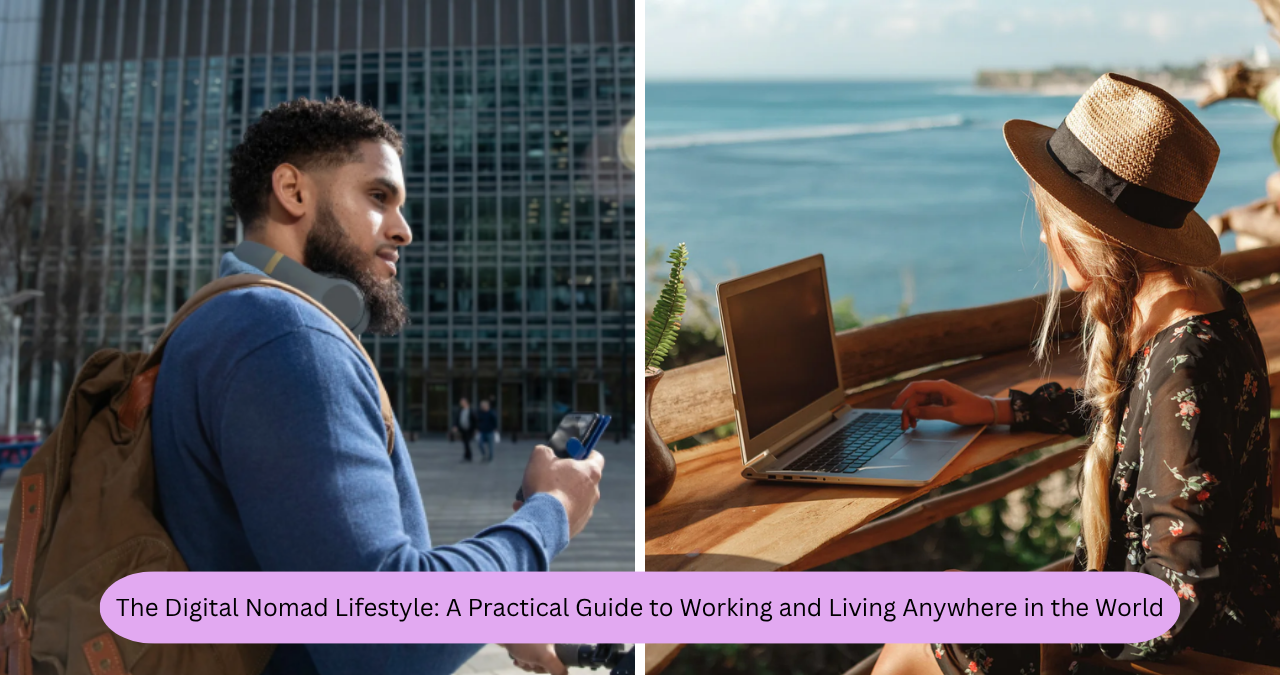
The digital nomad lifestyle sounds like a dream sold on Instagram: laptop open on a beach, coconut in hand, deadline nowhere in sight. The reality is a little messier and a lot more interesting. It’s less about the beach and more about building a system — income, logistics, routine, and mindset — that lets you work from wherever you happen to be standing, whether that’s a co-working space in Lisbon or a rented apartment in Chiang Mai.
At its core, the digital nomad lifestyle means earning a living through remote work while living a location-independent life, often moving between cities or countries every few weeks or months. It’s not a vacation. It’s a way of structuring work and life so that geography stops being a constraint. For some people that means freelancing from a different country every quarter; for others it means settling into one city abroad for a year while keeping a remote job. Both count.
What the Digital Nomad Lifestyle Actually Looks Like
Most people picture nomads as bloggers or Instagram influencers, but the actual population is dominated by software developers, marketers, designers, customer support specialists, virtual assistants, and consultants. According to multiple annual surveys from remote-work platforms, the majority of digital nomads hold full-time remote jobs rather than freelance gigs — a shift from the freelancer-heavy scene of a decade ago. That matters because it changes the risk profile: a steady paycheck from a remote employer looks very different from chasing client invoices across time zones.
A typical week doesn’t look like nonstop sightseeing. It looks like a normal workday — video calls, deadlines, Slack notifications — just relocated to a different backdrop. The novelty of a new city fades fast once you realize you still need reliable Wi-Fi, a quiet room for calls, and a desk that doesn’t wreck your back. One nomad who’s been at it for six years put it this way: “The first month in a new place is exploring. The second month is just living there with better weather.” That’s the honest version of the digital nomad lifestyle — routine wrapped in variety, not endless adventure.

Income Strategies That Actually Sustain the Lifestyle
The single biggest reason people fail at the digital nomad lifestyle isn’t homesickness or burnout — it’s cash flow. Building location-independent income before you leave is the difference between a sustainable lifestyle and a stressful three-month experiment that ends with an emergency flight home. There are three broad income paths: remote employment with an existing company, freelancing or contracting across multiple clients, and running an online business such as e-commerce, coaching, or content.
Remote employment is the most stable option because income doesn’t fluctuate, but it comes with constraints — fixed working hours that may clash with your new time zone, and employer policies around where you’re legally allowed to work from. Freelancing offers more schedule flexibility but less income predictability, which is why financial experts who work with remote workers usually recommend three to six months of expenses saved before transitioning full-time. Online businesses take the longest to build but scale independently of your hours worked, which is why many long-term nomads eventually migrate toward this model. Whichever path you choose, diversifying income sources — even modestly — reduces the risk that one lost client or one company layoff derails your entire lifestyle.
Visas, Legal Status, and Tax Considerations
This is the part of the digital nomad lifestyle that gets glossed over in aspirational blog posts but trips up more people than bad Wi-Fi ever will. Tourist visas were never designed for remote workers staying months at a time, which is why over 65 countries have introduced dedicated digital nomad visas since 2020, including Portugal, Croatia, Spain, Estonia, and Costa Rica. These visas typically require proof of remote income above a minimum threshold, health insurance, and sometimes a clean background check.
Tax residency is a separate and often more confusing issue. Most countries consider you a tax resident once you spend more than 183 days there in a calendar year, regardless of where your employer is based or where your passport is from. This means a nomad who splits time evenly across three countries might avoid tax residency anywhere, while one who settles in a single country for eight months could unknowingly trigger local tax obligations. Consulting an accountant familiar with cross-border remote work isn’t optional paranoia — it’s a core part of doing the digital nomad lifestyle responsibly, especially once income grows beyond hobby level.
| Consideration | Traditional Employment | Digital Nomad Lifestyle |
|---|---|---|
| Work location | Fixed office or home | Any location with internet access |
| Income stability | Generally stable, single employer | Varies: stable if remote-employed, variable if freelance |
| Visa requirements | None (local resident) | Tourist or dedicated nomad visa, renewed periodically |
| Tax residency | Straightforward, single jurisdiction | Depends on days spent per country, often complex |
| Healthcare | Employer or national plan | Private international insurance usually required |
| Social connections | Built over years locally | Rebuilt repeatedly, often via co-living or co-working spaces |
Building a Sustainable Routine and Avoiding Burnout
Novelty is exciting, but it’s also exhausting on a nervous system that wasn’t built for constant change. One of the most underrated skills in the digital nomad lifestyle is deliberately creating boring, repeatable routines inside an environment that changes every few weeks. That might mean always finding a gym within the first three days of arriving somewhere new, or keeping the same morning coffee ritual regardless of country. Structure isn’t the enemy of freedom here — it’s what makes the freedom sustainable.
Burnout among long-term nomads is well documented, and it usually stems from two things: working across mismatched time zones for too long, and never establishing a stable social circle. Loneliness is a genuine risk factor, which is part of why co-living spaces and nomad-focused communities like those in Canggu, Medellín, and Chiang Mai have grown so quickly — they solve the social problem structurally rather than leaving it to chance. Slow travel, meaning staying in one place for two to three months instead of hopping weekly, has also become the preferred approach among experienced nomads specifically because it allows for real routines and real relationships to form, rather than constant reintroduction fatigue.

Essential Gear and Tools for Remote Work Abroad
Technology failures are the most common disruptor to the digital nomad lifestyle, and they’re almost entirely preventable with the right setup. A dependable laptop, a portable Wi-Fi hotspot or local eSIM data plan, noise-canceling headphones for shared co-working spaces, and a universal power adapter form the baseline kit. Many experienced nomads also carry a portable monitor — a small addition that dramatically improves productivity compared to hunching over a single laptop screen for eight hours a day.
Beyond hardware, workflow tools matter just as much. Cloud-based project management platforms, VPN services for secure access to work systems, and time-zone conversion apps prevent the small errors that snowball into missed meetings or blown deadlines. “I lost a client in my first year because I miscalculated a time difference during daylight saving changes,” one nomad marketer shared. “Now I run everything through a world clock app, no exceptions.” That kind of operational discipline is what separates people who sustain the digital nomad lifestyle for years from those who burn out after a single trip.
Choosing the Right Destinations
Not every city that looks good on a travel blog works well for remote work. The destinations that consistently rank well among experienced nomads share a specific combination: fast and stable internet infrastructure, a reasonable cost of living relative to income, a supportive visa pathway, and an existing community of other remote workers. Cities like Lisbon, Bali’s Canggu district, Mexico City, and Bangkok have become long-running favorites precisely because they check all four boxes simultaneously, not just one.
Cost of living deserves particular attention because it directly shapes lifestyle sustainability. A nomad earning in US dollars or euros can often live comfortably in Southeast Asia or Latin America on a fraction of what the same income would afford in Western Europe. That arbitrage is a major driver of the digital nomad lifestyle’s appeal, but it comes with an ethical dimension worth acknowledging: rapid nomad influxes have contributed to housing cost increases in cities like Lisbon and Mexico City, sparking local pushback. Being a thoughtful long-term visitor — learning basic local language, engaging with local businesses rather than exclusively nomad-oriented ones — goes a long way toward making the lifestyle sustainable for both the nomad and the host community.
Frequently Asked Questions
What exactly is the digital nomad lifestyle?
The digital nomad lifestyle refers to earning income through remote work while living without a fixed permanent address, often moving between cities or countries every few weeks to several months. It combines the flexibility of remote employment or freelancing with intentional travel, and it typically requires a reliable income source, appropriate visas, and tools that support working from anywhere with internet access
How much money do you need to start the digital nomad lifestyle?
There’s no single number, since costs vary enormously by destination, but most people starting out benefit from having three to six months of living expenses saved as a buffer before relying solely on remote income. Southeast Asian and Latin American destinations often allow a comfortable lifestyle on $1,500 to $2,500 per month, while European hubs like Lisbon or Barcelona can require $2,500 to $4,000 monthly depending on housing choices.
Do you need a special visa for the digital nomad lifestyle?
Many countries now offer dedicated digital nomad visas specifically designed for remote workers, including Portugal, Spain, Croatia, and Costa Rica, and these typically require proof of remote income, valid health insurance, and sometimes a minimum stay commitment. In countries without a specific nomad visa, people often rely on tourist visas and visa runs, though this approach carries more legal ambiguity and is generally less sustainable long term.
Is the digital nomad lifestyle lonely?
Loneliness is one of the most commonly cited challenges, particularly for people who move frequently and never establish a consistent social circle. This is largely why co-living spaces, nomad-focused Slack and Facebook communities, and slower travel paces — staying two to three months per location instead of one or two weeks — have become popular solutions among experienced long-term nomads.
Can you do the digital nomad lifestyle with a regular full-time job?
Yes, and this is actually the most common path today, since a growing share of digital nomads hold full-time remote positions rather than freelance independently. The main considerations are checking your employer’s policy on working from abroad, managing time zone overlaps with your team, and understanding the tax and legal implications of working remotely from a country different from your employer’s home base.
What’s the biggest mistake new digital nomads make?
The most frequent mistake is underestimating the financial and legal groundwork required before departure — leaving without an income buffer, without researching visa requirements, or without a basic understanding of tax residency rules. The romanticized version of the digital nomad lifestyle skips these details, but they’re precisely what determines whether the lifestyle lasts six months or six years.
Final Thoughts
The digital nomad lifestyle isn’t a permanent vacation, and treating it like one is usually what causes it to fail. It’s a deliberate way of structuring income, legal status, routine, and community so that where you live becomes a choice rather than a constraint. The people who sustain this lifestyle for years, not months, are the ones who treat the boring parts — tax planning, visa research, stable Wi-Fi, consistent routines — with as much seriousness as they treat the exciting parts. Get the fundamentals right, and the digital nomad lifestyle stops being a gamble and starts being simply how you live and work.